How to Grow Rutabaga
Brassica napus subsp. rapifera

By Efraín Vega · Published November 16, 2026
Sun
Full sun (6+ hours of direct sunlight daily; tolerates light afternoon shade in warm zones)
Water
Consistent moisture (1–1.5 inches per week; moisture swings cause cracked or woody roots)
Spacing
6–8 in apart within rows; 18–24 in between rows
Soil pH
6.0–6.8 (ideal 6.5; acidic soils promote clubroot disease)
Days to maturity
90–120 days from seed (harvest roots at 3 to 5 inches in diameter)
Hardiness zones
Zones 3–9 (cool-season annual; mature roots survive ground freezes down to 20°F under mulch)
When to plant: Midsummer (direct sow 90–100 days before your first average fall freeze) • Calculate planting dates for your city →
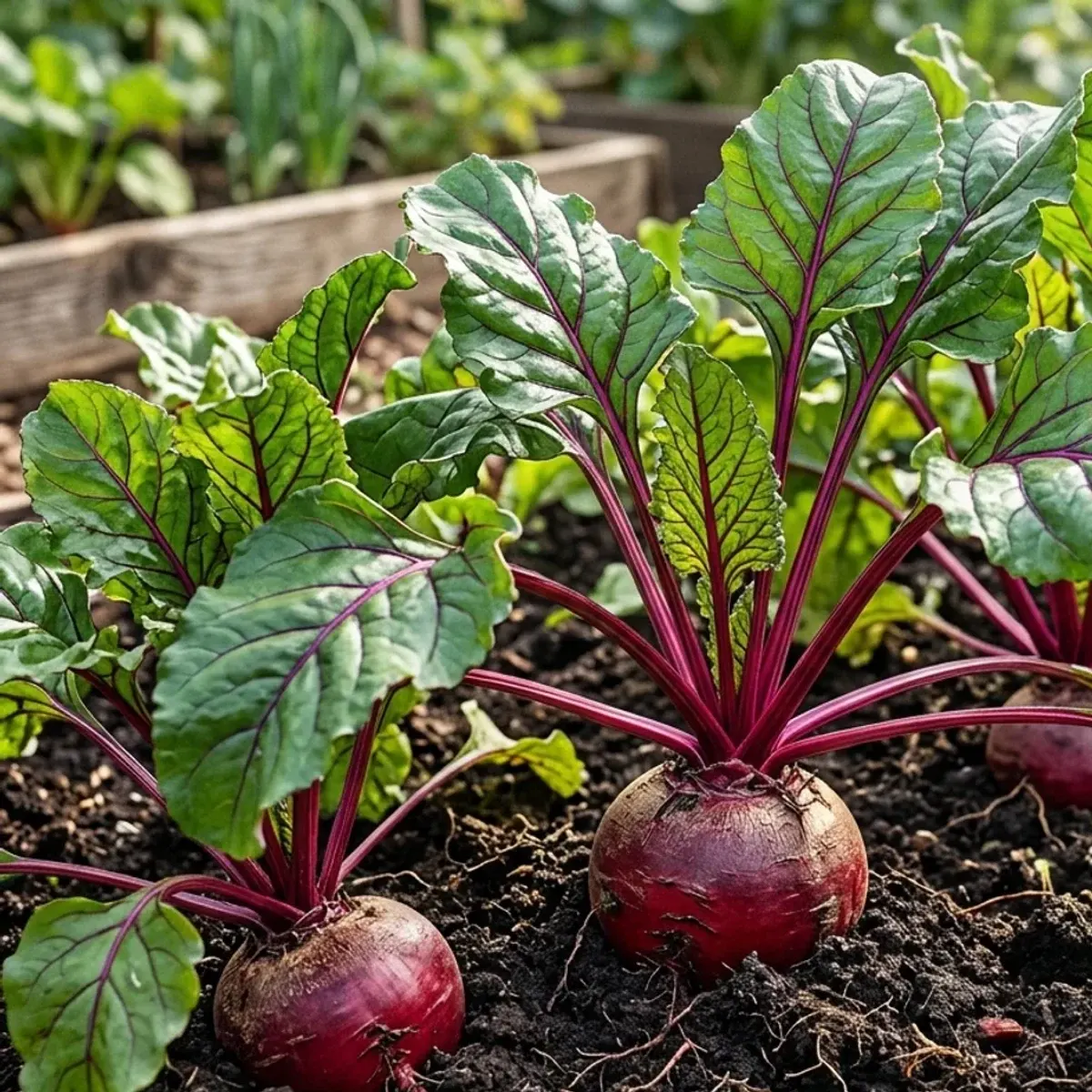
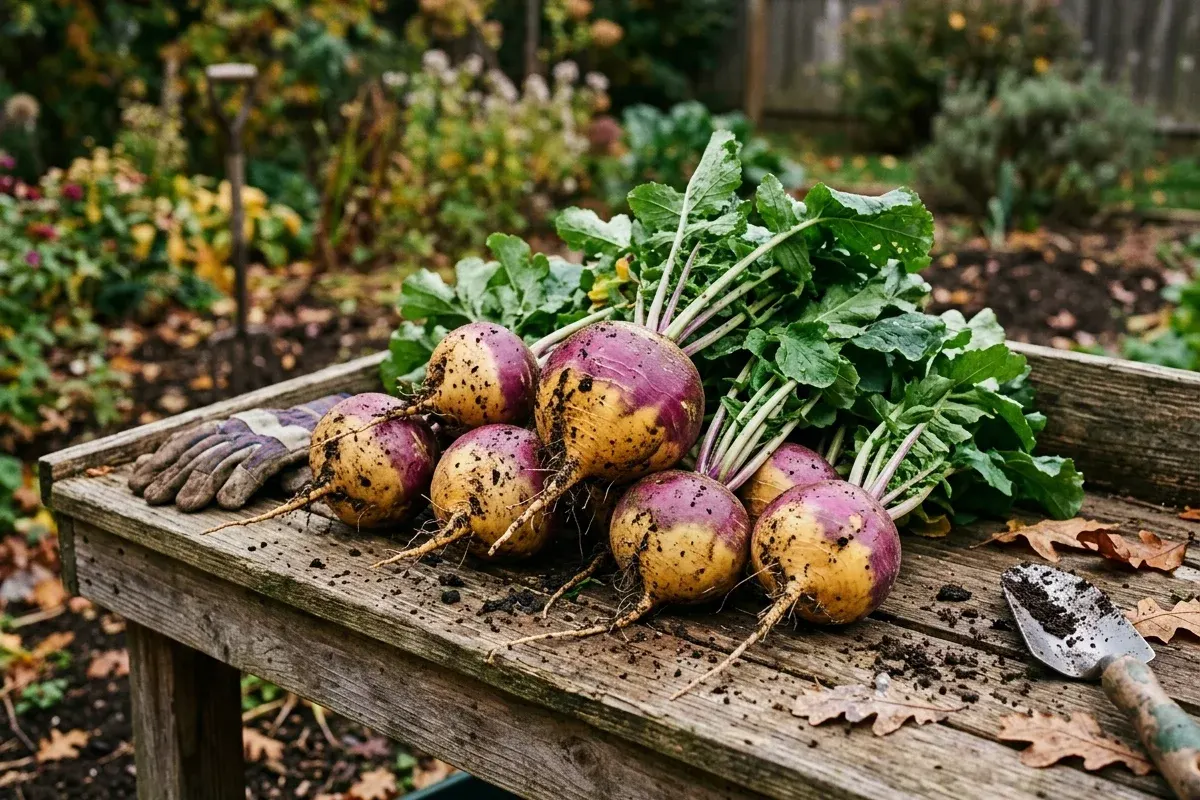
The rutabaga (Brassica napus subsp. rapifera)—known across Britain, Ireland, and Canada as the "Swede" or "neep"—is the undisputed heavyweight champion of cold-season root cellaring. A historic botanical hybrid of the turnip and wild Savoy cabbage dating to 17th-century Scandinavia, the rutabaga produces large, dense, solid globes featuring deep purple shoulders blending into rich buttery-gold flesh.
While summer radishes and baby turnips provide quick spring satisfaction, rutabagas are built for the long game: taking 90 to 120 days to mature, they swell underground throughout the crisp autumn months, sweetening with every successive frost and sustaining homestead kitchens straight through midwinter.
Rutabaga vs. Turnip: How to Tell Them Apart
Gardeners frequently confuse rutabagas and turnips, but their physiology, growth cycle, and kitchen qualities are starkly distinct:
| Botanical Metric | Heirloom Rutabaga (B. napus) | Purple Top Turnip (B. rapa) |
|---|---|---|
| Days to Harvest | 90 – 120 Days (Long autumn crop) | 40 – 60 Days (Quick spring/fall crop) |
| Interior Flesh Color | Golden-yellow to creamy apricot | Pure paper-white |
| Foliage Characteristics | Smooth, thick, waxy, blue-green (cabbage-like) | Rough, hairy, light green leaves |
| Harvest Size | 3.5 to 5.5 inches (dense 1–3 lb globes) | 2 to 3 inches (lighter 0.5 lb roots) |
| Culinary Texture | Dense, sweet, nutty, buttery when roasted/mashed | Crisp, watery, mildly peppery |
| Root Cellar Storage | 4 to 6 months (exceptional longevity) | 1 to 2 months |
RUTABAGA MORPHOLOGY:
                 \  ||  /   <-- Smooth, waxy, blue-green cabbage-like greens
                  \ || /        (Delicious steamed as autumn pot greens)
                 ===++===
                /        \
              /  PURPLE   \  ◄── Deep violet upper shoulder (sun-exposed)
             |  SHOULDER   |
             |-------------|
             |   GOLDEN    |  ◄── Rich yellow subterranean root body
              \   FLESH   /       (Enzymatically converted to sweet sugars)
               \         /
                \_______/
                    |
                    |        ◄── Single deep taproot (stone-free soil needed)
Best Soil for Rutabagas: Texture, Drainage & Boron
As deep root crops, rutabagas demand loose, friable ground without stones or hardpan compaction:
| Soil Factor | Optimal Requirement | Practical Garden Application |
|---|---|---|
| Soil pH Range | 6.0 – 6.8 (Target 6.5) | Rutabagas are susceptible to clubroot (Plasmodiophora brassicae), an aggressive slime mold that deforms root vegetables in soils below pH 6.0. Add agricultural lime if testing indicates acidity. |
| Soil Texture | Deep sandy loam | Heavy clay causes stunted, bifurcated (forked) roots. Amend clay beds with coarse compost and expanded shale using our guide on fixing clay soil. |
| Nitrogen Feeds | Low to Moderate | Avoid raw manure or high-nitrogen fertilizers (10-10-10), which produce giant lush greens but leave roots small, cracked, and split. |
| Boron Levels | Critical Trace Element | A deficiency in soil boron causes brown heart (water-soaked, glassy, or hollow brown centers). In low-boron soils, dissolve 1 level tablespoon of household borax in 3 gallons of water and sprinkle evenly across 100 feet of row. |
Planting Calendar & Spacing
Because rutabagas turn woody and unpleasantly pungent in summer heat, they should almost always be grown as an autumn-maturing crop:
- Timing the Sowing Window: Count backward 90 to 100 days from your first average fall frost date (typically mid-to-late June in northern zones 3–5, and July to early August in mid-temperate zones 6–8). Consult our Frost Dates Calculator to pinpoint your window.
- Sowing Depth: Sow seeds 1/4 to 1/2 inch deep in damp soil. Seeds germinate rapidly within 4 to 8 days in warm summer soil.
- Thinning (Essential): Once seedlings develop their first 2 true leaves, thin ruthlessly to 6 to 8 inches apart. Crowded rutabagas will choke each other out and fail to develop rounded globes.
- Between Rows: Space rows 18 to 24 inches apart to allow easy hoeing and cultivation.
PLANTING & THINNING SPACING TIMELINE:
  Seed Sowing:   (*) (*) (*) (*) (*) (*)  (Seeds 1" apart, 1/2" deep)
                      │
                      ▼ (At 2-3" seedling height)
  Thinned Crop:  ( R ) ◄──── 6" - 8" ────► ( R ) ◄──── 6" - 8" ────► ( R )
                 (Allows uninterrupted 4-5" globe expansion without crowding)
The Cold-Hardening Biology: Starch to Sugar Conversion
Like collard greens and parsnips, rutabagas undergo profound physiological changes once autumn temperatures drop:
- Cold-Shock Amylase Activation: When soil temperatures fall below 40°F and ambient air experiences repeated nighttime freezes (28°F to 32°F), the plant activates hydrolytic enzymes that break down long-chain insoluble starches into glucose, fructose, and sucrose.
- Natural Antifreeze Action: Concentrated dissolved sugars lower the freezing threshold of cell cytoplasm, shielding the swollen storage root from freezing and cellular lysis down to 20°F.
- Flavor Transformation: The sharp glucosinolates (the mustard oils characteristic of brassicas) diminish, giving the flesh a sweet, complex flavor that pairs naturally with butter, nutmeg, and roasted root medley dishes.
Harvesting & Long-Term Root Cellar Storage
When to Harvest:
- Allow your rutabagas to experience at least 2 to 3 moderate autumn frosts before pulling.
- Harvest when roots reach 3.5 to 5 inches in diameter. Oversized roots left in the ground past maturity (larger than 6 inches) can develop fibrous, corky cores.
- For winter garden storage, you can leave rutabagas right in the garden bed: simply bury the bed under a 6- to 8-inch blanket of shredded fall leaves or clean straw to prevent the ground from freezing solid. Dig roots fresh as needed throughout December and January.
Root Cellar Storage (6-Month Method):
- The Gentle Lift: Loosen the soil with a garden spading fork 6 inches away from the root. Never yank on the tops.
- Trim Tops & Taproot: Slice greens cleanly 1/2 inch above the root crown. Leaving long stems invites rotting, while cutting into the root skin invites fungal molds. Trim the slender bottom taproot to 1 inch.
- Curing: Brush off loose soil with a soft brush (do not wash with water). Let skins air-dry in a cool, ventilated shed for 24 hours.
- Pack in Sand: Pack the dry roots into wooden crates layered with slightly damp builder's sand or moist peat moss. Store at 33°F to 38°F with 90% to 95% humidity. Check our comprehensive guide on how to store root vegetables for winter.
Companion Planting Pairs & Protections
- Beneficial Garden Allies:
- Alliums (Garlic, Shallots, Onions): Disguise the scent of brassicas from the cabbage root fly (Delia radicum) and deter aphids.
- Aromatic Herbs (Dill, Mint, Thyme): Dill flowers attract braconid wasps and hoverflies whose larvae devour flea beetles and cabbage caterpillars.
- Legumes (Peas, Fava Beans): Early summer peas enrich the soil with symbiotic nitrogen before midsummer rutabaga succession sowing.
- Harmful Plants to Avoid:
- Nightshades (Tomatoes, Bell Peppers): Heavy root zone competition and excessive canopy shading.
- Fennel: Releases allelopathic chemicals that stunt root expansion in all brassica crops.
Beneficial Companion Plants for Rutabaga
FAQ
What is the difference between a rutabaga and a turnip?
While both are brassica root crops, the rutabaga (Brassica napus) is an ancient natural cross between a turnip (Brassica rapa) and wild cabbage (Brassica oleracea). Rutabagas are larger, denser, and take nearly twice as long to mature (90–120 days vs 40–55 days for turnips). Rutabagas feature yellowish, creamy flesh with smooth cabbage-like foliage, whereas turnips have stark white flesh and rough, hairy leaves.
Why should you wait until after a frost to harvest rutabagas?
Cold temperatures below 32°F (0°C) stimulate the root to convert complex starches into concentrated simple sugars as a natural survival antifreeze. This enzymatic reaction mellows the bitter sulfur glucosinolates, giving the golden flesh a rich, sweet, buttery flavor reminiscent of roasted sweet potatoes and sweet carrots.
What is the best soil mix for growing rutabagas?
Rutabagas require deep, stone-free sandy loam packed with aged compost with a pH of 6.2 to 6.8. Heavy compacted clay leads to misshapen, forked roots, while fresh high-nitrogen animal manure causes excessive leaf growth and hollow heart in the center of the root.
How do you store rutabagas for winter eating?
Rutabagas are one of the longest-storing vegetables known to gardeners. Trim leafy tops to 1/2 inch and brush off loose soil without washing. Store in damp sand or perforated polyethylene bags at 33°F–38°F with 90%–95% humidity in a cold root cellar or basement refrigerator for up to 6 months. Commercial growers dip them in food-grade paraffin wax to prevent skin desiccation.
What makes rutabagas turn woody or bitter?
Woody roots are caused by two factors: heat stress and irregular watering. Rutabagas that mature during hot midsummer weather (above 80°F) or suffer drought develop tough lignified fibrous rings and sharp bitterness. Always plant them in midsummer so bulk root enlargement coincides with cool autumn temperatures.
How do you protect rutabaga seedlings from flea beetles and root maggots?
Cover the bed with a 0.5 oz floating row cover or insect netting immediately upon sowing seeds. This physical barrier blocks adult cabbage root flies from laying eggs at the root crown and prevents flea beetles from riddling cotyledons with shotgun holes.