How to Grow Artichoke
Cynara cardunculus var. scolymus

By Efraín Vega · Published November 15, 2026
Sun
Full sun: 6–8+ hours of direct sunlight daily. Cannot tolerate dense shade
Water
Even, deep moisture; 1 to 1.5 inches weekly. Deep taproots tolerate brief drought once established
Spacing
36–48 inches apart. Massive architectural plants spreading 3 to 4 feet wide and 4 to 5 feet tall
Soil pH
6.5–7.5; deep, fertile, fast-draining sandy loam with abundant organic compost
Days to maturity
85–100 days from transplanting for annual varieties; perennial production for 4–6 years in zones 7–11
Hardiness zones
Perennial in USDA Zones 7–11; grown successfully as a vernalized annual in Zones 3–6
When to plant: Start indoors 8–10 weeks before last spring frost; vernalize seedlings in early spring before outdoor planting • Calculate planting dates for your city →
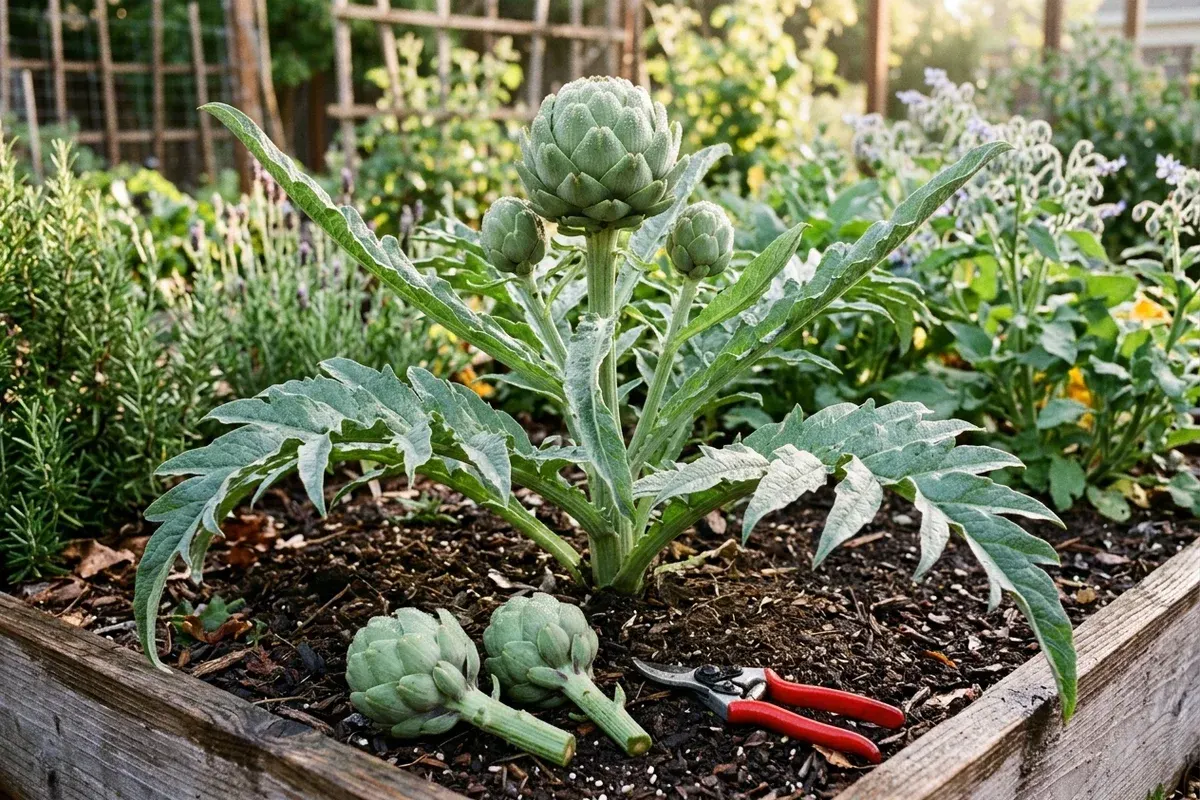
The globe artichoke (Cynara cardunculus var. scolymus) is the crowning glory of the Mediterranean vegetable garden. An imposing, architectural relative of the wild thistle, the plant features dramatic, deeply serrated silvery-gray-green foliage and produces succulent, edible flower buds crowned with dense, fleshy scales and tender hearts.
While traditionally grown as a perennial in coastal California, the Pacific Northwest, and the American South (USDA Zones 7 through 11), gardeners in northern states can harvest dozens of gourmet artichokes in a single season using cold-vernalized annual varieties.
The Vernalization Secret for Northern Gardeners
In their native Mediterranean habitat, artichokes grow vegetative foliage in year one, survive a mild winter, and bloom in year two. To produce heavy yields in a single cold-climate season (Zones 3 through 6), you must artificially trick the seedling:
        THE NORTHERN VERNALIZATION SEQUENCE:

  1. INDOOR SOWING (Jan–Feb):
     Sow seeds in 4" pots under lights at 65°F–70°F (18°C–21°C).
     Grow seedlings until they have 5–6 true leaves.
                 │
                 ▼
  2. ARTIFICIAL CHILLING (March):
     Move pots to an unheated garage, cold frame, or covered porch.
     Hold at 45°F–50°F (7°C–10°C) for 250 hours (10–14 days).
     *Protect from freezing temps below 30°F (-1°C).*
                 │
                 ▼
  3. EARLY SPRING TRANSPLANT:
     Plant into rich raised beds 2–3 weeks before last frost.
     The plant triggers flowering hormones -> Sets chokes by July!
Best Varieties for Annual vs Perennial Growing:
- Imperial Star (Annual Winner): Specifically bred by breeders to flower without prolonged winter chilling. Delivers 6 to 8 chokes in its first 90 days.
- Colorado Star (Annual Red): Early-maturing variety with striking purple-hued scales and nutty flavor.
- Green Globe (Perennial Classic): The standard commercial variety grown along the California coast. Immense 4-to-5-inch buds; requires Zone 7+ to survive winter.
Planting Space and Soil Nutrition
Artichokes are horticultural heavyweights. A single mature plant easily reaches 4 feet in diameter and 4 to 5 feet in height:
           ARTICHOKE RAISED BED FOOTPRINT:

       ◄─────────────── 48 Inches ───────────────►
       ┌─────────────────────────────────────────┐
       │                \   │   /                │
       │                 \  │  /                 │
       │            ───────(O)───────            │ ◄── Main Central Choke
       │                 /  │  \                 │
       │                /   │   \                │
       └─────────────────────────────────────────┘
        Requires full 4' x 4' corner of a raised bed
        or dedicated 15-gallon container.
- Spacing: Space plants at least 36 to 48 inches apart. Planting closer causes foliage crowding, reduces airflow, and invites powdery mildew and gray mold (Botrytis).
- Deep Soil Preparation: Artichokes send down a massive, fleshy taproot extending 3 to 4 feet deep. Prepare beds with loose, crumbly soil to a depth of at least 18 inches. Calculate bed soil mix with our Raised Bed Soil Calculator.
- Fertility: Mix in 3 to 4 inches of aged compost and a balanced organic fertilizer (5-5-5) before planting. Side-dress with high-potassium organic fertilizer (such as kelp meal or sulfate of potash) when flower stalks begin elongating in midsummer. Sizing bulk compost needs with our Compost Calculator.
- Moisture: Provide 1 to 1.5 inches of water weekly. While drought-tolerant once established, drought during bud formation results in small, tough, bitter chokes.
Check regional planting windows with our First and Last Frost Date Guide or customize dates with our interactive Planting Calendar Tool.
Companion Planting Matrix
Pairing artichokes with aromatic herbs deters sap-sucking pests without interfering with the plant's massive foliage canopy:
- Lavender & Rosemary (Lavender, Rosemary): Complementary Mediterranean sub-shrubs that thrive in similar dry-soil border conditions and repel deer and rabbits.
- Thyme (Thyme Profile): Low-growing evergreen herb that acts as a living weed barrier around the base of the central artichoke stalk.
- Sunflowers (Sunflower): Matches the grand architectural scale of artichoke foliage and draws native bumblebees and beneficial hoverflies.
- Marigolds (Marigold): Diverts black bean aphids and thrips away from developing flower buds.
Incompatible Plants to Avoid
Avoid planting artichokes near Potatoes (which compete aggressively for potassium and harbor common verticillium fungal pathogens) or Fennel, whose allelopathic root exudates stunt thistle crown expansion. Cross-check your garden beds using our Companion Plant Checker.
Harvesting Technique & Choke Anatomy
            THE ANATOMY OF A PRIME ARTICHOKE:

                     Tightly Overlapping Scales
                     (Fleshy Bracts - Edible Base)
                            ╭───────╮
                         ╭──╯       ╰──╮
                        [███████████████]
                        │   \░░░░░░░/   │ ◄── The "Choke" (Fuzzy Thistle)
                        └─── ═══════ ───┘ ◄── The "Heart" (Prized Cut)
                             ║     ║
                             ║  █  ║ ◄── 2"–3" Tender Edible Stem
- The King Choke First: Harvest the terminal central bud first when it reaches 3 to 4 inches in diameter and feels firm and heavy. Sever the stalk with sharp bypass pruners 2 to 3 inches below the base of the bud (the upper stem is an extension of the tender heart).
- Secondary Flush: Removing the main king choke forces the plant to channel energy into 3 to 5 lateral side branches, which produce smaller 2-to-3-inch baby artichokes over the following 3 weeks.
- If You Wait Too Long: If you fail to harvest within 7 to 10 days of the scales loosening, leave the bud alone. Within two weeks, it will burst open into an electric violet-blue, honey-scented flower that native bumblebees adore.
Overwintering Perennial Artichoke Crowns
In USDA Zones 7 through 9, artichoke crowns survive winter freezes and return with greater vigor every spring:
               WINTER CROWN PROTECTION IN ZONE 6–7:

                      Sub-Freezing Winter Air
                      ▼▼▼▼▼▼▼▼▼▼▼▼▼▼▼▼▼▼▼▼▼▼▼
                   ┌───────────────────────────┐ ◄── Inverted Bushel Basket
                   │ ░░░░░░░░░░░░░░░░░░░░░░░░░ │     Or Wooden Box (Shops Rain)
                   │ ░ 12" Dry Straw Mulch   ░ │
                   │ ░░░░░░░░░░░░░░░░░░░░░░░░░ │
                   └───══╤═══════════════╤─────┘
                       [██] Stalk Trimmed to 10"
                      ═══════════════════════════
                         Living Root Crown
- Cut Back Stalks: After the first autumn freeze blackens the leaves, cut the main stems back to 8 to 10 inches above ground level.
- Dry Mulch Blanket: Heap 12 to 18 inches of clean, dry straw or shredded fall leaves directly over the crown.
- Waterproof Shield: Invert an old wooden bushel basket, wooden box, or wax-lined cardboard produce carton over the straw mound. Cold rain causes the crown to rot; keeping the mulch dry ensures winter survival down to 10°F (-12°C).
- Spring Awakening: In spring, as soon as soil warms and nighttime temperatures stabilize above 30°F, pull the straw back to allow sunshine to warm the crown and stimulate new shoots.
Related Guides & Planning Tools
- Raised Bed Soil Calculator — Sizing deep, rich organic loam beds.
- First & Last Frost Dates by City — Precise spring transplant scheduling.
- How to Protect Plants from Frost — Cloches, row covers, and thermal shielding.
- How to Prepare Raised Beds for Winter — Bed winterization and perennial mulching.
- Companion Plant Checker — Cross-reference optimal pairings across your vegetable beds.
Beneficial Companion Plants for Artichoke
Plant artichoke near: Lavender, Thyme, Rosemary, Sunflower, Marigold.
FAQ
Can you grow artichokes in cold northern climates (Zones 4–6)?
Yes, by growing annual cultivars like 'Imperial Star' or 'Colorado Star' and using the vernalization technique. Expose 6- to 8-week-old seedlings to 10 to 14 days of cool temperatures between 45°F and 50°F (7°C–10°C) in early spring. This triggers the plant's hormonal flowering response, forcing it to produce abundant prime chokes in its first summer before winter arrives.
How do you know when an artichoke is ready to pick?
Harvest when the flower bud is firm, plump, and 3 to 4 inches in diameter, with tight, fleshy, overlapping scales. If the outer scales begin to flare outward or separate, harvest immediately; once the bud opens, the edible heart turns fibrous and woody as it prepares to bloom into a vivid purple thistle flower.
How many artichokes does one plant produce?
A healthy first-year annual plant produces 4 to 6 chokes: one large central 'king' choke on the main stem, followed by several smaller secondary chokes on lower lateral branches. Established perennial plants in mild climates can produce 15 to 30 chokes per season across spring and autumn flushes.
How do you overwinter artichokes in Zone 6 or 7?
After the first hard autumn frost kills the outer foliage, cut the main stalks back to 10 inches above the crown. Mound 12 to 18 inches of dry straw or shredded leaves over the crown, and invert a wooden box, hamper, or plastic mulch tunnel over the mound to shed winter rain. Cold-wet winter rot kills more crowns than sub-freezing temperatures.
Why are my artichoke leaves turning yellow and droopy?
Yellowing lower foliage is typically caused by waterlogged clay soil, nitrogen deficiency, or heavy aphid infestations. Artichokes demand rapid drainage; heavy standing water induces crown rot. In dry weather, provide deep weekly soakings to satisfy their deep taproot systems.