How to Grow Asparagus
Asparagus officinalis

By Efraín Vega · Published October 29, 2026 · Last updated November 15, 2026
Sun
Full sun (6–8 hrs daily) for vigorous fern growth and root crown carbohydrate storage
Water
1–2 in/week during the first 2 establishment years; deeply drought-tolerant once established
Spacing
12–18 in apart along trenches spaced 3–4 ft apart
Soil pH
6.5–7.5 (prefers neutral to slightly alkaline, well-aerated sandy loam)
Days to maturity
First light harvest in year 2 or 3; full 6–8 week harvest window from year 4 onward
Hardiness zones
3–8 (requires winter chilling below 40°F to break dormancy)
When to plant: Early spring as dormant 1-year-old crowns, planted 6–8 inches deep in trenches • Calculate planting dates for your city →
Asparagus is unique among backyard garden vegetables: it is a permanent perennial fixture that pays dividends for a quarter of a century. Because the bed remains in place for decades, taking the time to excavate deep trenches and build rich, aerated soil during initial installation is the secret to jumbo-diameter spears.
Best Soil for Asparagus: Drainage, pH & Longevity
Because an asparagus crown expands laterally and anchors fleshy storage roots up to 3 feet into the earth, getting the soil right before planting is paramount:
| Soil Property | Target Requirement | Remediation & Preparation |
|---|---|---|
| Soil pH Range | 6.5 – 7.5 (Neutral to slight alkaline) | Asparagus will not tolerate acidic soils below 6.0. Broadcast agricultural limestone or wood ash 6 months before planting crowns to elevate pH. |
| Drainage Class | Exceptional / Rapid | Perennial crowns will rot in standing winter water. If planting in heavy clay ground, follow our clay soil remediation guide or build dedicated 18-inch deep raised garden beds. |
| Organic Matter | 8% – 12% by volume | Trench-mix equal parts mature compost, well-rotted steer manure, and shredded leaf mold into the excavated subsoil. |
| Mineral Boost | Phosphorus & Potassium | Incorporate rock phosphate or bone meal along the trench floor. Phosphorus is immobile in soil and must be placed deep where perennial feeder roots establish. |
The Asparagus Trench Soil Mix Formula
For every 10 linear feet of asparagus trench (12 inches wide by 8–10 inches deep):
- 1/2 Wheelbarrow (approx. 2 cu ft) Mature Compost: Use our Compost Bin Calculator to plan volumes.
- 1 lb Organic Bone Meal (0-10-0): Feeds crown cell division.
- 1/2 lb Greensand or Sulfate of Potash: Strengthens winter hardiness and stalk rigidity.
Siting & Soil Trenching
Select a dedicated bed along the north or east side of your garden where the 6-foot tall summer ferns won't cast shade over neighboring summer annuals:
- Excavation: Dig a trench 8 to 10 inches deep in loose, stone-free loam.
- Base Nutrition: Line the bottom with 2 inches of aged cow manure or compost and a dusting of bone meal or rock phosphate (phosphorus encourages massive root networks).
- Crown Placement: Lay one-year-old crowns atop small soil mounds spaced 12 to 18 inches apart, spreading the tentacle-like fleshy roots evenly in all directions.
- Gradual Infilling: Cover with 2 inches of soil. As green shoots poke through over the next two months, add 2 more inches of soil until the trench is flush with the garden border.
Harvest Discipline
The primary cause of weak or dying asparagus patches is over-harvesting during the early years:
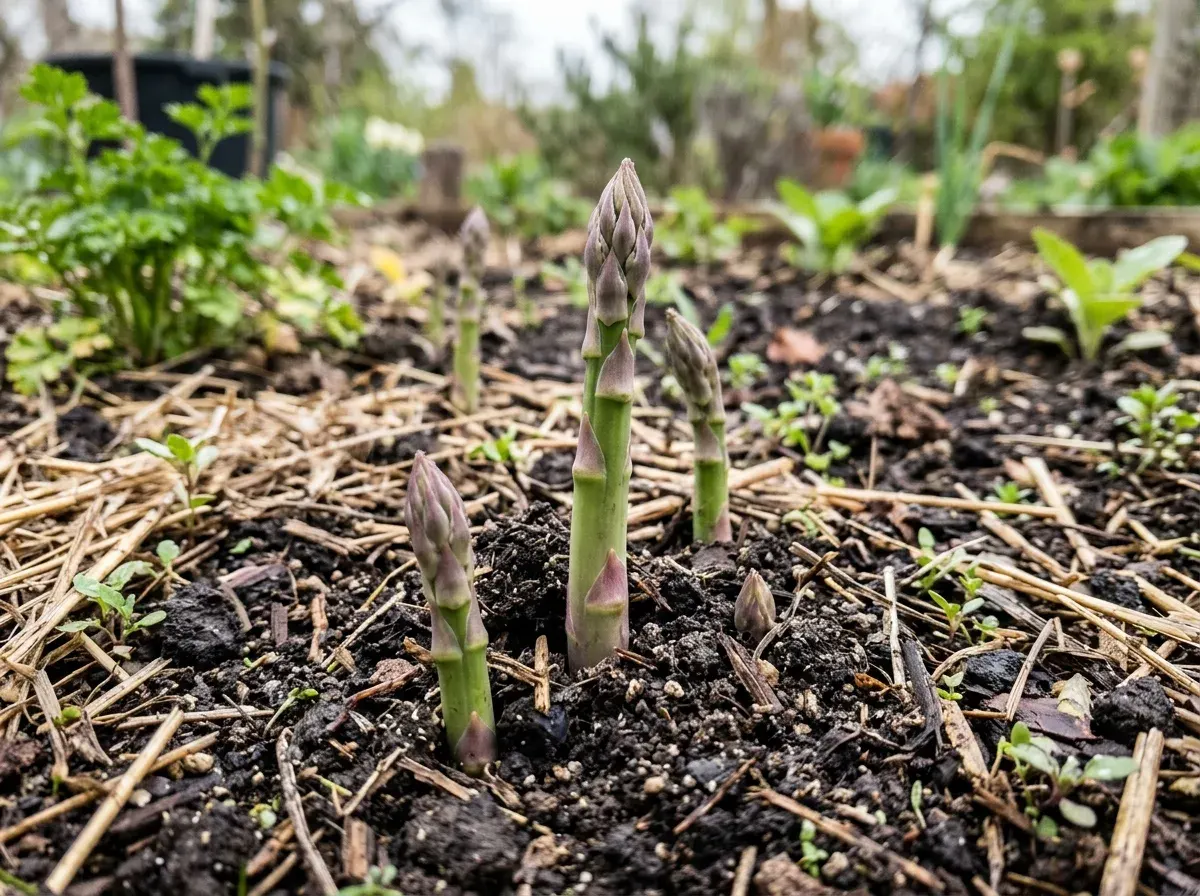
- Year 1: Zero harvest. Let every spear become a fern.
- Year 2: 2 weeks maximum of light picking (stems pencil-thick or larger).
- Year 3+: Harvest all 7- to 9-inch spears for 6 to 8 weeks. Snap spears off cleanly at ground level rather than cutting below the surface to protect developing crown buds.
Beneficial Companion Plants for Asparagus
FAQ
What is the best soil for growing asparagus?
The best soil for asparagus is a deep, fertile, rock-free sandy loam with exceptional drainage and a neutral to slightly alkaline pH between 6.5 and 7.5. Asparagus crowns cannot tolerate standing water or heavy, compacted clay, which causes crown rot and kills the perennial bed.
How many years does an asparagus bed last?
A properly sited and maintained asparagus bed will produce heavy annual spring crops for 15 to 25 years, making it the highest long-term return-on-investment crop in the backyard garden.
Can I harvest asparagus spears the first year after planting crowns?
No. Do not harvest any spears in year 1. Let all spears grow into tall, bushy green ferns so they photosynthesize and store sugars in the underground crown. In year 2, you may harvest for 2 weeks. From year 3 or 4 onward, harvest freely for 6 to 8 weeks every spring.
When and how do I cut down asparagus ferns in the fall?
Wait until the tall green ferns turn completely golden-yellow or brown after the first hard autumn frosts. This ensures all energy has returned to the root crown. Then cut the dry stalks down to 2 inches above the soil surface and top-dress with 3 inches of compost.
What is the trench planting method for asparagus crowns?
Dig a trench 8 to 10 inches deep and 12 inches wide. Create small mounds of compost every 15 inches, place crowns on the mounds with roots splayed outward like an octopus, and cover with 2 inches of soil. Gradually fill in the trench as spears emerge until level with the garden surface.