How Deep Should a Raised Bed Be? (Depth by Crop)

By Rowan Plank · Published September 28, 2026
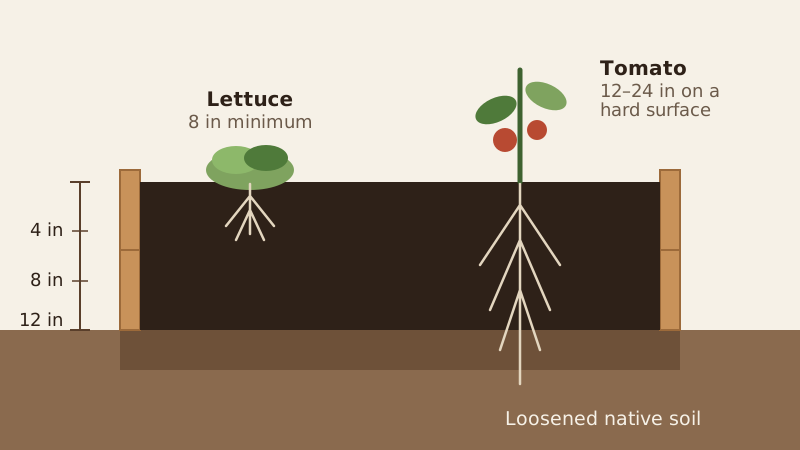
Most raised beds should be 8 to 12 inches deep. That's enough for greens, beans and cucumbers, and most other vegetables when the bed sits on soil roots can grow into. If the bed is on concrete or a patio, go deeper — 12 to 24 inches for tomatoes, peppers and squash.
How deep does each crop need?
University of Maryland Extension gives these minimums for beds built on a hard surface, where roots can't escape into the ground below:
| Crop | Minimum depth on a hard surface |
|---|---|
| Lettuce and leafy greens | 8 in |
| Bush beans | 8 in |
| Cucumbers | 8 in |
| Peppers | 12–24 in |
| Tomatoes | 12–24 in |
| Squash | 12–24 in |
Carrots and other root crops are a special case: they need loose, stone-free soil for the full length of the root. University of Illinois Extension recommends preparing the soil 8 to 9 inches deep so carrots can develop fully; stones and poorly prepared soil cause forked roots.
Does it matter what's under the bed?
A lot. When a bed sits on the ground, the frame height isn't the real limit — roots keep going into the native soil. That's why Utah State University Extension says a bed only needs to be 6 to 12 inches high to handle the rooting depth of most vegetables.
To make that work, loosen the ground first. Oregon State Extension recommends digging or tilling at least 6 inches into the native soil and mixing it into your fill, so there's no hard layer where the two meet. Leave the bottom of the bed open.
On concrete, a patio or heavily compacted fill, the bed is the entire root zone. That's when the deeper numbers in the table matter.
How much more soil does a deeper bed take?
Each extra inch adds up fast. For a 4×8 ft bed:
| Depth | Soil volume |
|---|---|
| 6 in | 16 cu ft (0.59 yd³) |
| 8 in | 21.3 cu ft (0.79 yd³) |
| 12 in | 32 cu ft (1.19 yd³) |
| 18 in | 48 cu ft (1.78 yd³) |
| 24 in | 64 cu ft (2.37 yd³) |
Going from 12 to 24 inches doubles your soil bill. If you're on good ground, a 12-inch bed over loosened soil gives most crops what a 24-inch bed on concrete would.
Fill the bottom of very deep beds cheaply
For beds over 18 in on the ground, some gardeners fill the bottom few inches with coarse untreated wood or leaves and put the good soil mix on top. Expect it to settle as it breaks down, and top it up each spring.
When should you build taller than you need?
Height isn't only about roots. A 24- to 30-inch bed means less bending, which matters for bad backs, knees, or gardening from a seat. It also keeps the soil warmer and drier in cold, wet springs.
Taller beds need a stronger frame. Oregon State Extension notes beds taller than about 18 inches should be reinforced, because wet soil pushes the sides outward. Use corner posts, a stake or brace at the middle of long sides, and thicker boards.
Plug your bed size and depth into the Raised Bed Soil Calculator to get bag counts, then use the Raised Bed Lumber Calculator to see how many rows of boards that height takes. For the soil formula, see how much soil you need for a raised bed.
Sources: Growing Vegetables in Raised Beds — UMD Extension, Raised Bed Gardening — USU Extension, Raised Bed Gardening — OSU Extension, Carrots — Illinois Extension.
FAQ
Is 6 inches deep enough for a raised bed?
Only if the bed sits on loosened native soil that roots can grow into, or you're growing shallow crops like lettuce and radishes. On a hard surface, aim for at least 8 inches for greens and 12 inches or more for tomatoes, peppers and squash.
Does a raised bed need a bottom?
No. On the ground, leave it open so roots can reach the soil below and water drains freely. Loosen the native soil about 6 inches deep before filling. A hardware-cloth bottom is only needed if burrowing animals like gophers are a problem.
How deep should a raised bed be for carrots?
At least 8 to 9 inches of loose, stone-free soil. Carrots need that depth to form straight roots; in rocky or compacted soil they fork or stay stubby.
Do deeper beds need extra support?
Yes. Oregon State Extension recommends reinforcing beds taller than about 18 inches, because the weight of wet soil pushes the sides outward.