How to Winterize Raised Garden Beds: Soil, Mulch & Frost Covers

By Efraín Vega · Published November 15, 2026
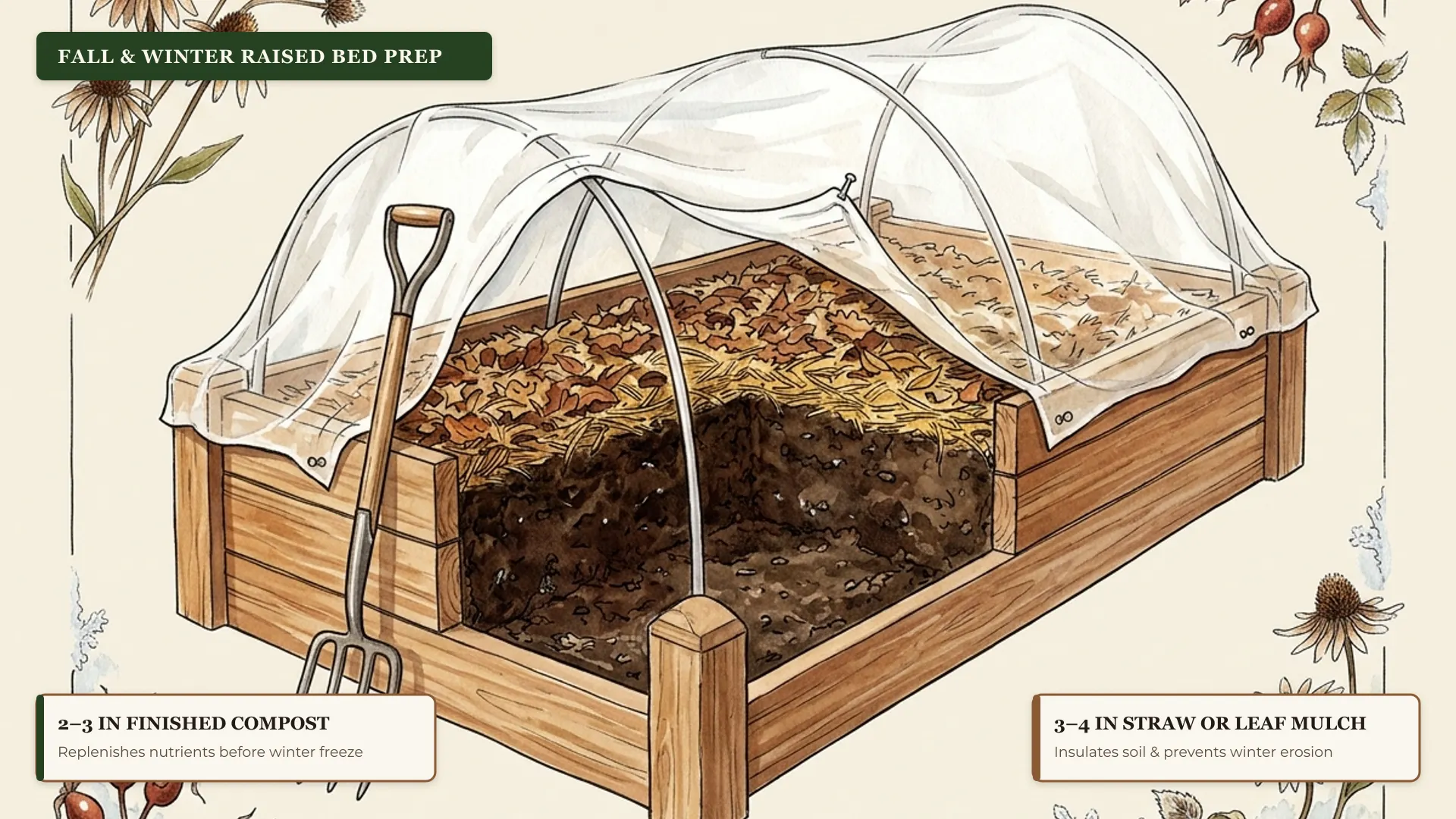
Leaving a raised garden bed bare and exposed through winter invites three major problems: wind erosion strips away finely textured topsoil, heavy winter rains leach soluble nitrogen and minerals deep out of root reach, and extreme freeze-thaw cycles break down wooden frame corners while killing earthworms in the top 6 inches.
Winterizing your raised beds in late autumn takes less than an hour per bed and sets up a rich, nutrient-dense planting environment the following spring.
The 5-Step Raised Bed Winterization Checklist
1. Clear Diseased Crops (Cut Healthy Ones at the Root Collar)
Inspect your plants before pulling:
- Discard diseased plants: Pull all spent tomato, potato, pepper, and squash vines by the roots. Do not leave fallen leaves or mummified fruit in the bed.
- Leave healthy brassica and legume roots in place: For spent beans, peas, and healthy brassicas, slice the stems off at the soil level with pruners. Leaving the root systems underground feeds beneficial microbes as they decompose and preserves soil aggregates without disturbing mycorrhizal networks.
2. Weed Thoroughly While Soil Is Moist
Perennial weeds like dandelion, bindweed, and thistle establish deep taproots before freezing weather. Hand-weed the bed after an autumn rain when roots pull out cleanly. Any weed allowed to overwinter will wake up 3 weeks before your spring vegetables and outcompete young seedlings.
3. Add an Autumn Soil Amendment Blanket
Autumn is the ideal time to feed the soil biology. As winter moisture settles in, microbes slowly incorporate organic amendments without the risk of root burn that occurs in spring.
Spread a 1 to 2-inch top-dressing layer across the entire bed surface:
- Finished compost or composted manure: 1 cubic foot per 8 sq ft of bed surface (approx 4 cu ft for a 4×8 bed).
- Bone meal or rock phosphate: If soil tests show low phosphorus, add it now; phosphorus takes 4 to 6 months to break down into plant-available orthophosphate.
- Agricultural lime or sulfur: If adjusting soil pH, fall application allows winter rain and snow to neutralize acidity before spring seeding.
4. Mulch with 3 to 4 Inches of Organic Insulation
Never leave amended soil bare to the elements. Cover the compost blanket with clean organic mulch:
| Mulch Type | Recommended Depth | Best Application | Cautions |
|---|---|---|---|
| Shredded Autumn Leaves | 3–4 inches | Universal bed insulation | Shred with lawn mower first; whole leaves mat and block water |
| Clean Wheat/Oat Straw | 3–4 inches | Root vegetable overwintering | Ensure it is seed-free straw, not hay |
| Pine Straw (Needles) | 2–3 inches | Strawberries and acid-lovers | Slow breakdown; easy to rake off in March |
| Wood Chips / Bark | 1–2 inches | Perennial fruit beds only | Can temporarily tie up nitrogen if mixed into annual vegetable beds |
5. Install Hoops for Winter Crops or Soil Protection
If you plan to overwinter cold-hardy greens (kale, spinach, claytonia, winter lettuce), bend 1/2-inch schedule 40 PVC conduit or 9-gauge galvanized wire over the bed.
Drape a medium-weight spun-bond agricultural fabric (Agribon AG-30 or AG-50) over the hoops and secure the edges with clips or bricks. This floating row cover raises ambient temperatures by 4°F to 8°F, buffers freezing winds, and allows rain and sunlight to penetrate.
If leaving the bed dormant, staple burlap or breathable canvas over the frame to keep autumn leaf mulch from blowing across the yard during winter gales.
Spring Awakening: What to Do in March
When daytime temperatures consistently reach 50°F (10°C) in late winter or early spring:
- Rake back the coarse mulch layer into garden paths to allow the dark soil beneath to absorb solar heat.
- The compost blanket applied in November will have integrated smoothly with the topsoil, creating a soft, crumbly seedbed ready for direct-sowing peas, radishes, and spinach without tilling.
FAQ
Should I empty my raised bed in winter?
No. Never remove or empty the soil from your raised beds for winter. Soil contains beneficial microbes, mycorrhizal fungi, and worms that overwinter underground. Emptying beds wastes time, destroys the soil food web, and exposes bed wood to premature warping.
What should I cover my raised beds with for winter?
The best winter cover is an organic mulch layer: 3 to 4 inches of shredded autumn leaves, clean weed-free straw, or pine straw, topped with a 1-inch layer of finished compost. If growing hardy winter greens, install a 4-mil clear polyethylene sheet or spun-bond polypropylene floating row cover (Agribon AG-30 or AG-50) over arched PVC hoops.
Should I remove dead tomato and pepper plants in the fall?
Yes. Pull tomato, pepper, squash, and eggplant vines completely out of the bed and discard or hot-compost them. Leaving nightshade or cucurbit plant debris on top of the soil harbors fungal spores (like early blight and powdery mildew) and insect eggs that survive winter and infect next year's crop.
Do raised beds freeze faster than the ground?
Yes. Because raised beds are elevated above grade, cold winter wind strikes all four exposed sidewalls simultaneously. Raised bed soil freezes 7 to 14 days earlier than in-ground garden soil and undergoes more frequent freeze-thaw cycles, which is why a thick insulating layer of mulch is essential.