Square Foot Gardening Spacing Chart: 1, 4, 9, 16 Plant Grid Guide

By Efraín Vega · Published November 12, 2026
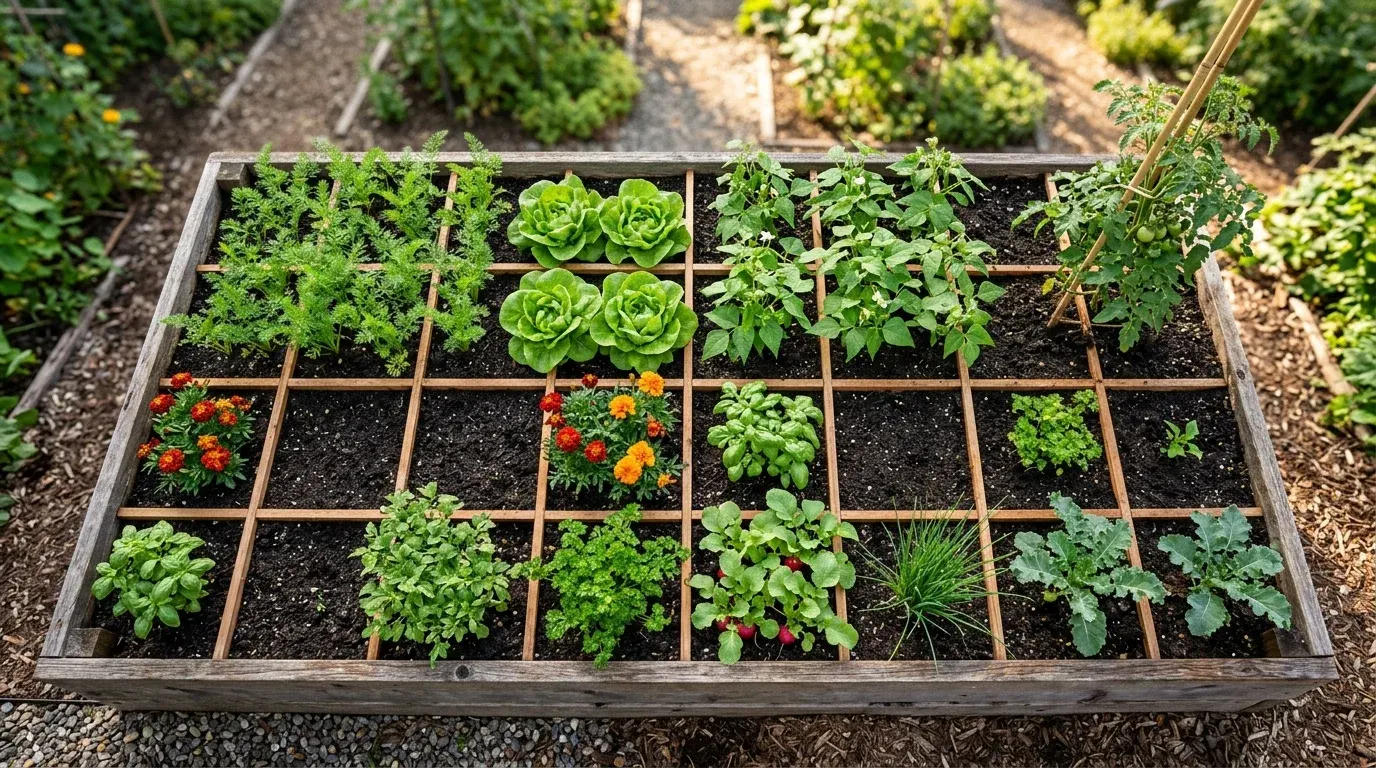
Square Foot Gardening (SFG) is the most efficient planting technique ever designed for backyard raised beds. By dividing a garden bed into a 1-foot by 1-foot grid, you eliminate wasteful walking rows, prevent soil compaction, and produce up to five times more food per square foot than traditional single-row trenches.
The core principle is simple: every crop fits into a density of 1, 4, 9, or 16 plants per square foot based on its mature canopy and root size.
The Master Square Foot Spacing Chart
Here is the exact planting density for every common backyard vegetable, herb, and fruit:
| Plants Per Square | In-Grid Spacing | Crops (Plant Varieties) |
|---|---|---|
| 1 per square (12 in apart) | 1 plant in center | Tomato (staked), Bell Pepper, Eggplant, Broccoli, Cauliflower, Cabbage, Potato, Kale, Rosemary |
| 4 per square (6 in apart) | 2×2 grid | Lettuce (head), Swiss Chard, Spinach, Garlic, Onion (large), Bush Beans, Basil, Thyme |
| 9 per square (4 in apart) | 3×3 grid | Beet, Bush Peas, Spinach (baby cut), Onion (scallions), Turnips, Parsnips |
| 16 per square (3 in apart) | 4×4 grid | Carrot, Radish, Arugula (baby greens), Cilantro |
| 2 Squares (1×2 ft) | Trellised vertical | Cucumber (2 climbing vines per vertical foot), Pole Beans (4 per vertical square) |
| 4 Squares (2×2 ft) | Centered cluster | Zucchini (1 bush plant per 4 sq ft), Summer Squash, Bush Pumpkin |
How to Set Up Your Raised Bed Grid
A 4×4 ft raised bed contains 16 square feet, while a standard 4×8 ft bed contains 32 square feet.
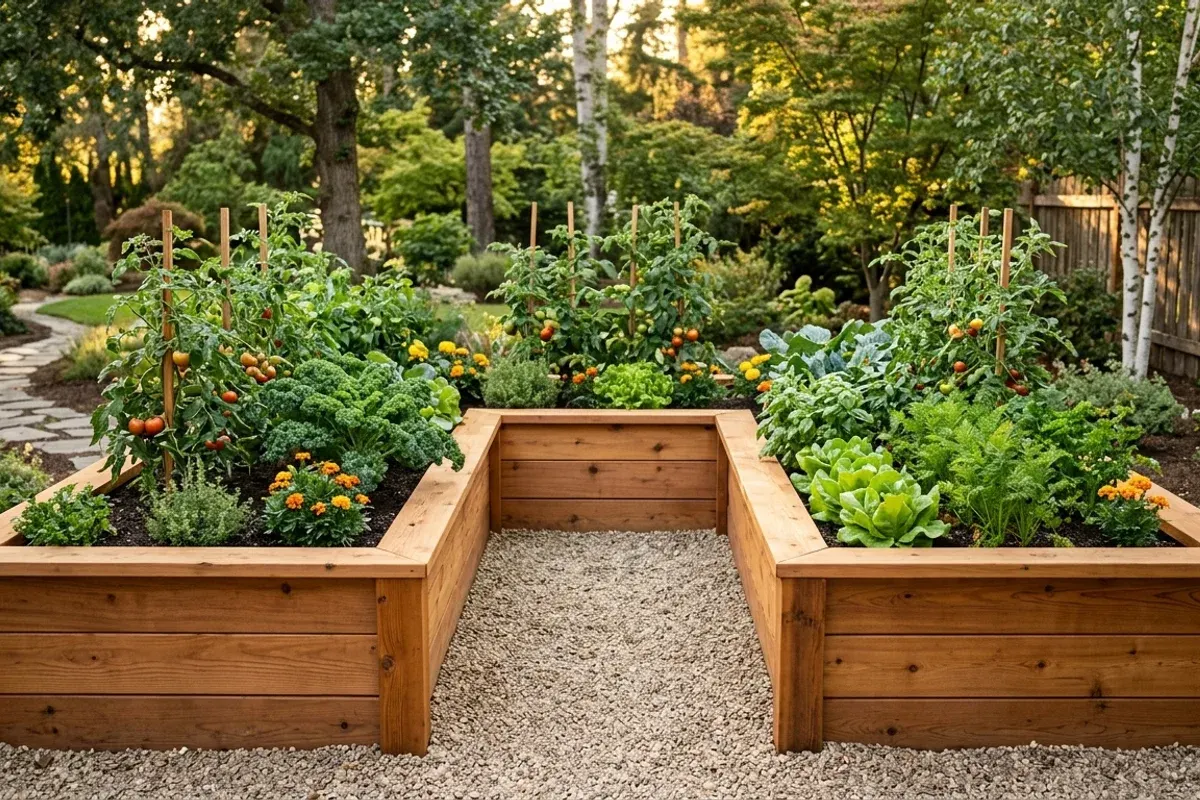
- Build or prep your bed: Build using rot-resistant 2×8 or 2×10 cedar boards. Calculate lumber requirements with our Raised Bed Lumber Calculator.
- Fill with high-porosity soil: Traditional SFG uses Mel's Mix (1/3 compost, 1/3 peat moss/coco coir, 1/3 coarse vermiculite). Calculate your exact bag and cubic yard needs with our Raised Bed Soil Calculator.
- Install the permanent grid: Lay thin 1½-inch cedar laths, bamboo stakes, or UV-resistant nylon cord across the top of the frame every 12 inches. Fasten the intersections with brass wood screws or twine. Never skip the grid — it is the visual guide that stops you from crowding plants.
Sample 4×8 Bed Layout (32 Square Feet)
When laying out your bed, always arrange crops by height to keep tall plants from casting unwanted shadows on shorter sun-loving varieties:
- North Edge (Back Row - Tallest): 8 squares of trellised cucumbers and staked tomatoes.
- Center Rows (Mid-Height): 16 squares of peppers, kale, Swiss chard, bush beans, and head lettuce.
- South Edge (Front Row - Shortest): 8 squares of carrots (16/sq), radishes (16/sq), and arugula.
Succession Planting in a Grid
One of the greatest benefits of square foot gardening is seamless succession planting:
When a square of 16 radishes or 4 heads of lettuce is harvested in early summer, you don't leave an empty row. Simply shovel in a trowel of fresh compost and immediately re-seed the square with heat-loving basil, bush beans, or midsummer carrots.
Before planting, double-check your pairings for beneficial pest deterrence and nutrient sharing using our Companion Planting Compatibility Tool.
FAQ
What are the four spacing numbers in square foot gardening?
The standard Square Foot Gardening system divides all crops into four simple densities per 1x1 foot square: 1 plant (large crops like tomatoes and peppers), 4 plants (medium crops like lettuce and chard), 9 plants (small crops like bush beans and beets), or 16 plants (tiny root crops like carrots and radishes).
How many tomato plants fit in a 4x8 raised bed?
In a dedicated 4x8 bed with trellising, you can grow up to 8 indeterminate tomato plants along the northern edge (1 per square foot). However, to prevent shade-out and maintain airflow, most gardeners plant 4 to 6 staked tomatoes alongside lower-growing companion crops.
Do you need physical grid dividers on a raised bed?
Yes. While not strictly mandatory for root growth, physical dividers made from cedar lath or nylon cord keep plantings organized, prevent over-seeding, and make succession planting and crop rotation effortless.
How deep should a square foot garden bed be?
The original Mel Bartholomew method uses 6 inches, but modern horticultural recommendations favor 10 to 12 inches of depth. Deeper beds provide better drought resistance, hold more moisture, and accommodate deep root crops like carrots and potatoes.