How to Grow Peas
Pisum sativum

By Efraín Vega · Published October 28, 2026
Sun
Full sun to partial shade (5–6+ hrs)
Water
1 in/week; crucial during flowering and pod development
Spacing
1–2 in apart in double rows along a trellis (18–24 in between rows)
Soil pH
6.0–7.0
Days to maturity
55–70 days from direct seeding
Hardiness zones
Hardy annual in zones 2–11; withstands light frost to 28°F
When to plant: Very early spring (4–6 weeks before last frost) or late summer for autumn harvest • Calculate planting dates for your city →
Peas are fast-growing, cold-tolerant cool-season legumes that thrive in early spring and autumn. They require full to partial sun, cool soil, trellis support for climbing tendrils, and 1 inch of water weekly.
Direct-sow pea seeds outdoors as soon as the soil can be worked in early spring. Because peas fix atmospheric nitrogen and mature in under 70 days, they make exceptional companion crops and pre-season precursors for warm-weather feeders like tomatoes and squash.
Three types of garden peas
Before choosing seeds, know which style fits your kitchen:
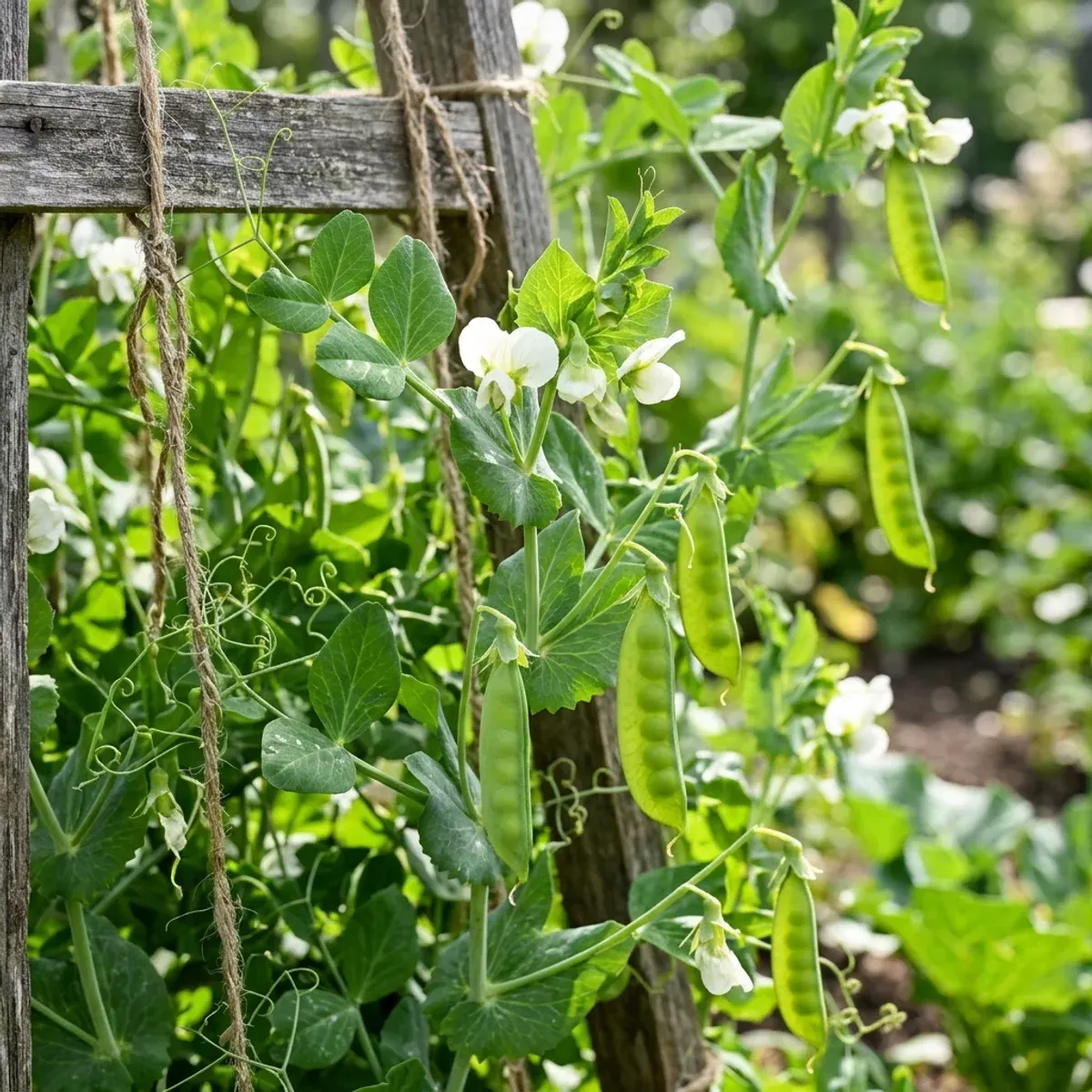
- Sugar Snap Peas: Thick, juicy, edible pods encasing sweet, plump peas. Eaten whole raw or stir-fried (Sugar Ann, Super Sugar Snap).
- Snow Peas: Flat, crisp, edible pods harvested very young before internal seeds enlarge (Mammoth Melting Sugar, Oregon Sugar Pod II).
- English / Shelling Peas: Fibrous, papery pods discarded to eat the sweet, tender peas shelled from inside (Green Arrow, Little Marvel).
When should you plant peas?
Peas germinate in cold soil as low as 40°F. Plant outdoors 4 to 6 weeks before your average last spring frost, typically around St. Patrick's Day in many temperate zones.
According to University of Minnesota Extension, pea plants can tolerate hard frosts down to 28°F without injury to foliage. For a fall crop, sow seeds 8 to 10 weeks before your first average fall freeze.
Planting depth and spacing
Sow seeds 1 inch deep (or 1.5 inches deep in dry summer soil) spaced 1 to 2 inches apart in double rows spaced 6 inches apart on either side of a central trellis.
Do not thin peas; their dense vertical canopy creates a self-shading living mulch that keeps delicate root zones cool in late spring heat.
Use a legume inoculant
Dusting dampened pea seeds with a commercial Rhizobium leguminosarum powder before planting ensures high rates of root nodulation and maximum nitrogen fixation, especially in newly built raised beds that lack native soil biology.
Trellising and support
Install supports at planting time to prevent root damage from driving stakes into mature root systems later.
Trellis netting, wire fencing, cedar lattices, or vertical jute twine running to overhead crossbars are all effective. Pea tendrils coil best around thin materials less than 1/4 inch in diameter.
Watering and soil needs
Peas prefer rich, well-draining loam with a pH between 6.0 and 7.0. They are sensitive to waterlogged, saturated soil, which easily rots sprouted seeds.
Provide 1 inch of water per week, increasing slightly during blossom set and pod filling. Keep irrigation water focused at the base of the plants using drip emitters or soaker hoses to prevent powdery mildew on dense climbing foliage.
Harvesting peas
- Snow peas: Pick when pods reach full length (3 inches) but are still completely flat and translucent.
- Snap peas: Pick when pods become round, plump, and snap crisply like fresh green beans.
- Shelling peas: Pick when pods are rounded and slightly waxy, before the pod wrinkles or loses its bright green sheen.
Pick vines daily at peak maturity. Regular harvesting stimulates the plant to continue producing fresh flowers and pods until summer heat arrives. Use two hands to harvest — one holding the vine and one plucking the pod — to avoid yanking shallow roots from the soil.
Planning a vertical trellis bed? Calculate the soil blend for your raised garden with our Raised Bed Soil Calculator.
Sources: UMN Extension — Growing Peas in Home Gardens, Clemson HGIC — English, Snow & Snap Peas, WSU Extension — Growing Peas.
Beneficial Companion Plants for Peas
FAQ
What is the difference between snap peas, snow peas, and shell peas?
Snap peas (sugar snap) have round, crunchy, edible pods with sweet peas inside. Snow peas have flat, tender edible pods harvested before peas swell. English/shelling peas have fibrous, inedible pods that must be shelled to harvest the sweet green peas inside.
Should you soak pea seeds before planting?
Yes. Soaking pea seeds in room-temperature water for 8 to 12 hours (overnight) softens the tough outer seed coat, speeding up germination by several days in cool spring soil. Do not soak longer than 24 hours, which can drown the embryo.
Do peas need a trellis to grow?
Vining varieties (which grow 4 to 6+ feet tall) require a sturdy trellis, netting, or fence to support their climbing tendrils. Dwarf or bush varieties (18–30 inches tall) can stand alone or benefit from short brush twigs ('pea brush') to keep pods off wet soil.
Why do pea plants turn yellow and stop producing in June?
Peas are strictly cool-season annuals. When daytime temperatures consistently climb above 80°F, plants stop flowering, pod skins turn fibrous, and root systems decline naturally. Clear spent vines to make room for warm-season successors like bush beans or summer squash.
Do peas add nitrogen to garden soil?
Yes. Like all legumes, peas form a symbiotic relationship with beneficial *Rhizobium* bacteria in the soil, converting atmospheric nitrogen into plant-available soil nitrogen. Inoculating seeds with rhizobial powder before planting boosts this natural nitrogen fixation.