How to Grow Mint
Mentha

By Efraín Vega · Published October 28, 2026
Sun
Full sun to partial shade (4–6+ hrs)
Water
1–1.5 in/week; prefers consistently moist, cool root zones
Spacing
18–24 in apart (or 1 plant per 12–14 inch container)
Soil pH
6.0–7.0
Days to maturity
60–75 days from transplant; ongoing harvest of sprigs
Hardiness zones
Extremely hardy perennial in zones 3–11; dies back to ground in winter and rebounds vigorously in spring
When to plant: Spring after last frost, or anytime throughout summer until 6 weeks before fall freeze • Calculate planting dates for your city →
Mint is one of the hardiest, most productive culinary herbs in the home garden. It thrives in full sun to partial shade, demands consistent moisture of 1 to 1.5 inches weekly, and rewards regular harvesting with continuous flushes of aromatic leaves.
However, mint's greatest asset is also its greatest danger: its unstoppable underground root runners. Confining plants to dedicated containers or root barriers is the golden rule of mint gardening.
Spearmint vs. Peppermint
The two dominant garden cultivars differ significantly in flavor chemistry:
- Spearmint (Mentha spicata): Mild, naturally sweet flavor characterized by carvone. Reaches 18 to 24 inches tall with pointed, bright green serrated leaves. The traditional choice for mint juleps, mojitos, tzatziki, and fresh summer salads.
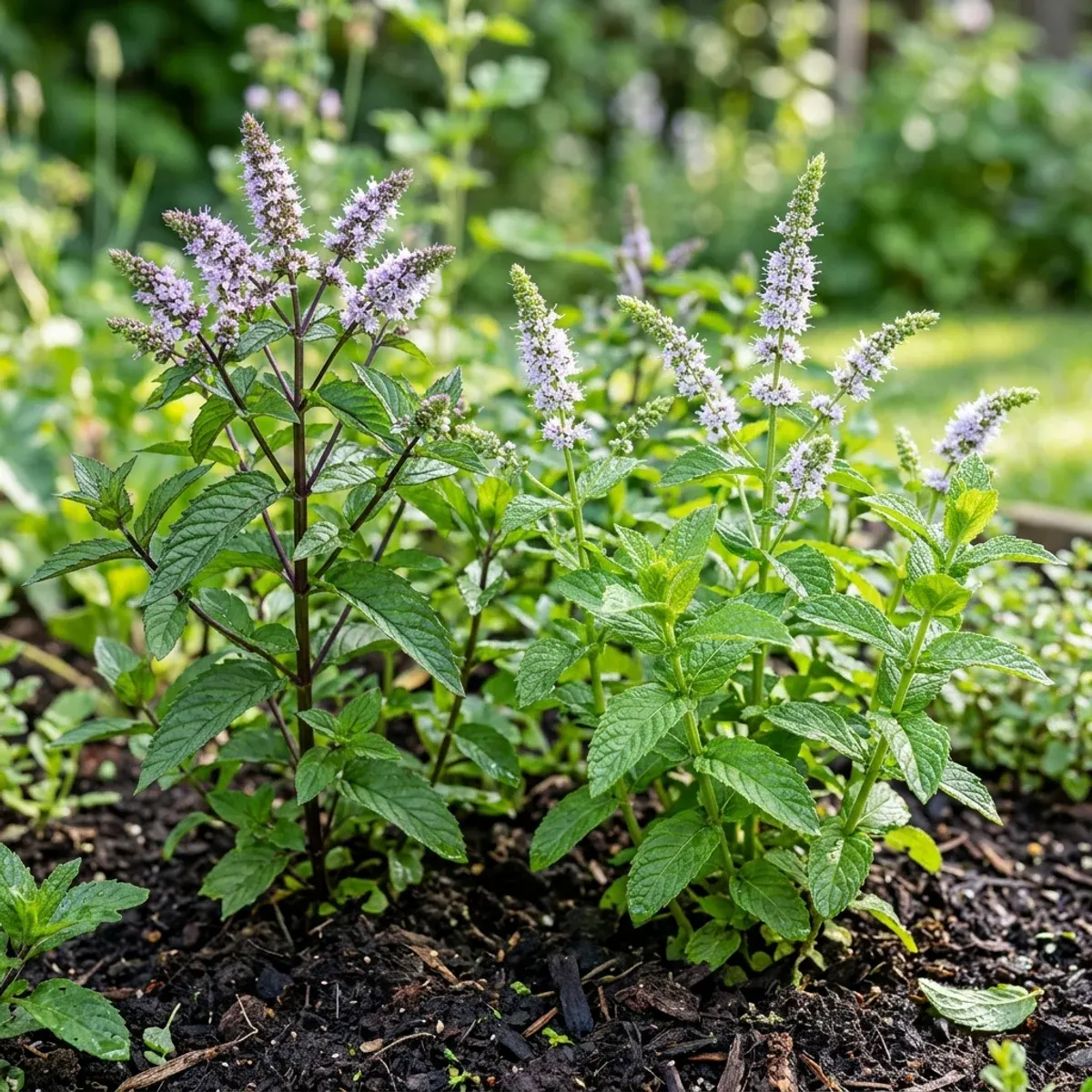
- Peppermint (Mentha x piperita): A pungent sterile hybrid between spearmint and water mint (Mentha aquatica), containing up to 50% menthol. Features darker purplish-green stems and intense cooling aromatics prized for herbal teas, confections, and extracts.
The golden rule: containment
Penn State Extension and Clemson HGIC strongly advise never planting mint directly into open raised beds or unrestricted soil borders.
Mint spreads via fast-moving underground stolons (runners) that will snake beneath bed dividers and choke out tomatoes, lettuces, and carrots within two seasons.
- Container growing: Plant one single mint transplant into a 12 to 16 inch wide container with bottom drainage holes. Place the pot on a patio, saucer, or stepping stone — roots will even find drainage holes and dive into garden soil if pots sit directly on bare dirt!
- Sunken chimney or pot technique: If you want mint inside a raised bed border, plant it in a 5-gallon plastic bucket with the bottom cut out, sinking the rim 2 inches above the soil line to keep surface runners from escaping.
Watch for escaped runners
Mint runners will readily leap over container rims. Inspect the plant monthly and snip off any arching surface stems that touch surrounding soil, as they will root on contact.
Light, soil, and moisture needs
Mint prefers rich, moist, well-draining loam packed with compost, with an ideal soil pH of 6.0 to 7.0. While it grows fastest in full morning sun, it is one of the few culinary herbs that performs exceptionally well in dappled afternoon shade, which prevents leaf scorch during peak summer heat.
Keep soil consistently moist. Mint cannot tolerate prolonged drought; dry soil triggers lower leaf drop, powdery mildew, and premature flowering.
Harvesting and pruning
Begin harvesting mint stems as soon as plants reach 6 to 8 inches tall. Always snip stems just above a leaf node; this stimulates two new lateral branches to sprout, doubling foliage density.
For peak essential oil flavor, harvest mint in the morning just after dew has evaporated, before the afternoon sun volatilizes aromatic terpenes. For winter storage, hang bunches upside down in a warm, dark, ventilated room or freeze whole leaves in ice cube trays.
Growing container herbs on the patio? Check the Raised Bed Soil Calculator to calculate potting mix blends for container planters.
Sources: Penn State Extension — Growing Herbs: Mint, Clemson HGIC — Mint, Illinois Extension — Mint Culture.
Beneficial Companion Plants for Mint
FAQ
Why should you never plant mint directly into an open garden bed?
Mint spreads aggressively via underground horizontal stems called rhizomes or runners. In an open garden bed, it will quickly choke out neighboring vegetables, spread across walkways, and become virtually impossible to eradicate once established. Always grow mint in standalone containers or submerged root barriers.
What is the difference between peppermint and spearmint?
Spearmint (*Mentha spicata*) has a mild, sweet flavor driven by the essential oil carvone, making it ideal for cocktails, teas, and savory dishes. Peppermint (*Mentha piperita*) is a natural hybrid containing high levels of menthol, giving it a much sharper, cooling, medicinal punch.
Can you grow mint from grocery store cuttings?
Yes. Fresh stems of grocery store mint root easily in water. Strip the bottom leaves, place the lower 2 inches of stem in a glass of water on a sunny windowsill, and roots will develop in 7 to 10 days. Once roots reach 1 inch, pot up into soil.
Should you let mint flower?
While mint flowers are pollinator magnets (especially for honeybees and predatory wasps), flowering causes the leaves to lose their sweet essential oil concentration and develop a bitter flavor. Snip flower buds off regularly to keep foliage lush and flavorful, or let one contained clump bloom for wildlife.
How do you overwinter container-grown mint?
Mint roots can survive freezing ground in zones 3–9, but potted plants are vulnerable to root freeze-thaw cycles. In cold climates (zones 3–6), bury the container in garden mulch, move pots into an unheated garage, or wrap the container with burlap.