How to Grow Oregano
Origanum vulgare

By Efraín Vega · Published October 28, 2026
Sun
Full sun (6–8+ hrs)
Water
Low; let soil dry between waterings; highly drought tolerant
Spacing
12–18 in apart (spreads outward to form an 18–24 inch clump)
Soil pH
6.0–8.0 (thrives in neutral to slightly alkaline soil)
Days to maturity
45–60 days from transplant; ongoing perennial harvest
Hardiness zones
Hardy perennial in zones 4–10; evergreen in zones 8–10
When to plant: Spring after last frost, once soil has warmed to 60°F • Calculate planting dates for your city →
Oregano is an essential, rugged perennial herb native to the dry hillsides of the Mediterranean. It thrives in intense full sun, lean gravelly soil, and low moisture.
Renowned for its warm, peppery, balsamic flavor, oregano is an indestructible garden anchor that repels insect pests like aphids and cabbage moths while attracting honeybees, predatory wasps, and butterflies with its late-summer blossoms.
Choosing the right culinary cultivar
Not all oregano plants deliver the pungent flavor expected on pizza and in pasta sauces:
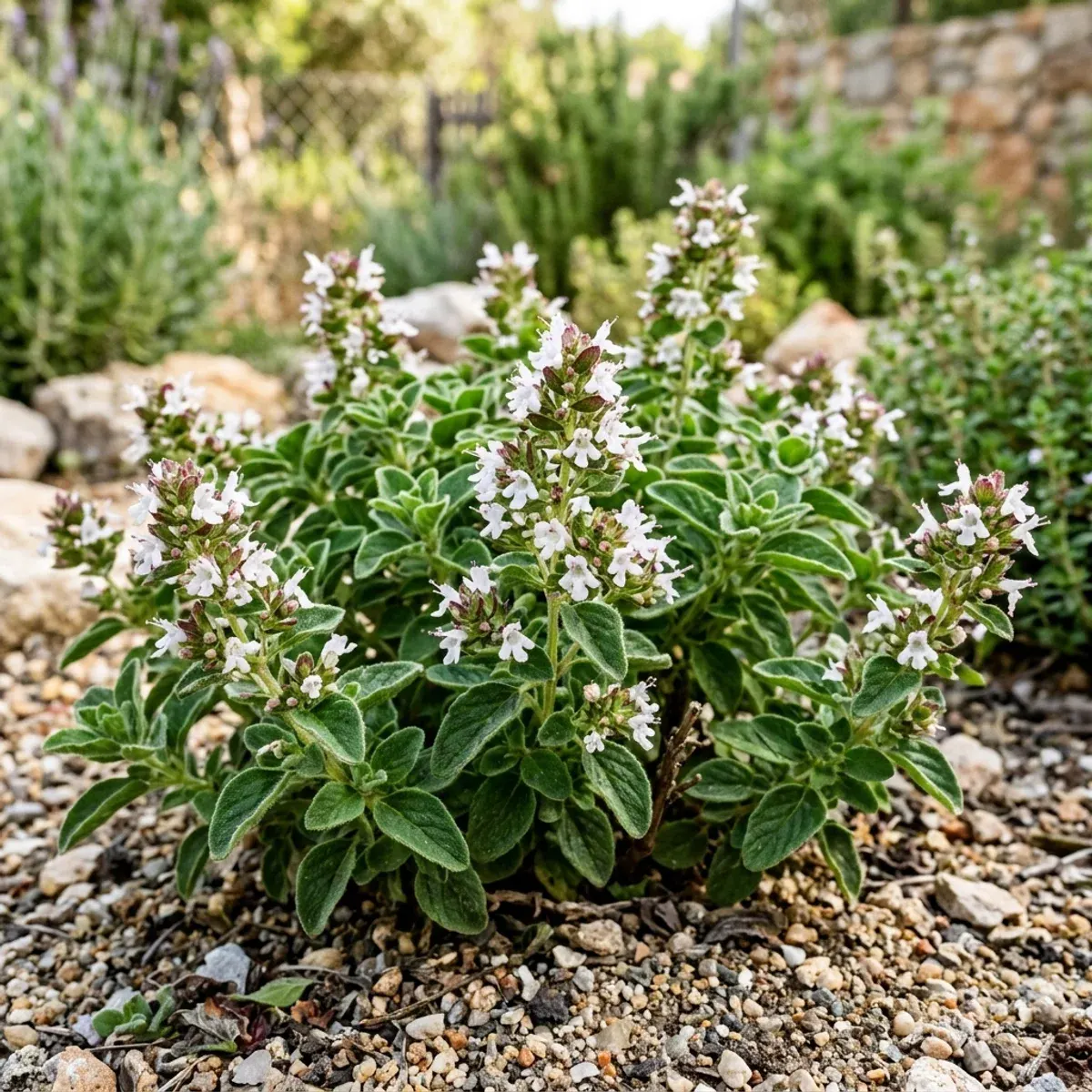
- Greek Oregano (Origanum vulgare subsp. hirtum): The culinary standard. Characterized by white flowers, hairy leaves, and an intense peppery kick from high carvacrol content.
- Italian Oregano (Origanum x majoricum): A natural hybrid between sweet marjoram and oregano, offering a sweeter, milder flavor profile.
- Mexican Oregano (Lippia graveolens): Botanically unrelated (member of the verbena family), with an even stronger, citrus-earthy profile traditional in chili, tacos, and mole.
Soil and sunlight requirements
Oregano requires at least 6 to 8 hours of direct, baking sun daily. In shaded conditions, stems grow floppy and leggy, and foliage loses its pungent aromatics.
Soil must be sharply draining with a pH between 6.0 and 8.0. Like thyme and rosemary, oregano detests heavy, waterlogged clay. Amending heavy native soil with coarse sand, crushed gravel, or pumice ensures healthy root aeration.
Keep the soil lean
Do not feed oregano with high-nitrogen synthetic fertilizers or heavy applications of manure. Rich soil accelerates rapid green growth while stripping the herb of its culinary punch.
Watering and maintenance
Water deeply upon initial planting. Once established, oregano is exceptionally drought-resistant. Allow the soil to dry out thoroughly between waterings.
In late winter or early spring, cut back old, woody stems to 2 to 3 inches above the ground to rejuvenate the crown and encourage a dense flush of tender young shoots.
Harvesting and preserving
Snip tender stems throughout spring and summer for fresh kitchen use. For preserving, cut stems by half just as flower buds form.
Hang stems in small bundles in a warm, dry, dark room with gentle airflow for 1 to 2 weeks. Once leaves are bone-dry, crumble them between your fingers, discard the woody central stems, and store in airtight glass jars away from heat and light. Dried oregano retains its flavor for up to a full year.
Planning an herb bed or companion border? Use our Raised Bed Soil Calculator to calculate the right ratio of well-draining soil for Mediterranean perennials.
Sources: Penn State Extension — Growing Herbs: Oregano, Clemson HGIC — Oregano, University of Illinois Extension — Oregano.
Beneficial Companion Plants for Oregano
Plant oregano near: Tomato, Bell Pepper, Eggplant, Cabbage, Basil.
FAQ
What is the difference between Greek oregano and Italian or Common oregano?
Greek oregano (*Origanum vulgare subsp. hirtum*) has white flowers, fuzzy leaves, and the highest concentration of pungent, peppery carvacrol essential oil, making it the true culinary choice. Common oregano (*Origanum vulgare*) has pinkish-purple flowers and a milder, often grassy flavor frequently grown for ornamental use.
Can you dry oregano, and is it better dried than fresh?
Yes. Oregano is one of the rare culinary herbs that is widely considered to have a more concentrated, potent flavor when dried than when fresh. The drying process concentrates its aromatic phenols (carvacrol and thymol).
Does oregano spread invasively like mint?
While oregano belongs to the mint family (*Lamiaceae*), it is far less aggressive. It expands slowly outward into a tidy mounded woody clump via shallow runners, but does not aggressively invade garden beds like true mint.
Why did my oregano lose its pungent flavor?
Over-fertilization and over-watering are the primary culprits. In rich, wet soil, oregano produces lush green foliage with a diluted, bland flavor. It requires intense sun, lean soil, and slight drought stress to concentrate its aromatic oils.
When is the best time to cut oregano for drying?
Harvest stems in the morning just as the flower buds begin to swell but before the blossoms fully open. This pre-bloom stage represents the absolute peak of essential oil concentration.