Rosemary
Salvia rosmarinus (syn. Rosmarinus officinalis)

By Rowan Plank · Published September 28, 2026
Sun
Full sun (6+ hrs)
Water
Low — let soil dry between waterings
Spacing
18–36 in apart
Soil pH
6.0–7.0
Days to maturity
Slow from seed; start from a cutting or nursery plant
Hardiness zones
Perennial evergreen shrub in zones 8–10 (some cultivars to zone 7); overwinter indoors in colder zones
When to plant: Plant outdoors after last frost, once soil has warmed
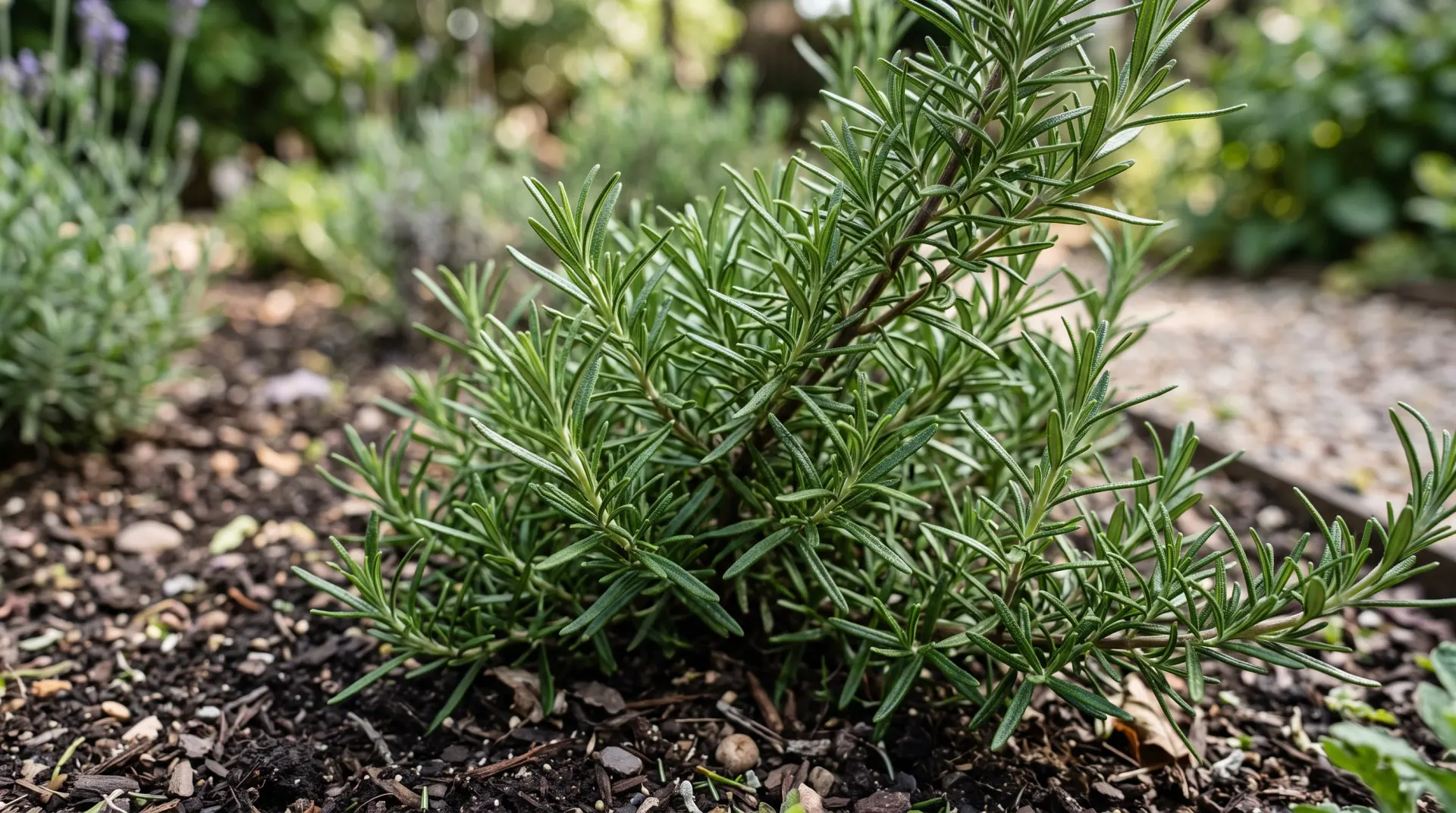
Rosemary needs full sun, fast-draining soil, and less water than your vegetables. It's a perennial shrub that survives winter outdoors in zones 8–10; in colder areas, grow it in a pot and bring it inside before the first hard freeze.
Most gardeners skip seed entirely — rosemary is slow and uneven from seed — and start with a nursery plant or a rooted cutting.
How do you plant rosemary?
Buy a nursery transplant or root your own cutting, and plant it outdoors after your last frost, once the soil has warmed. Give it full sun and soil that drains fast. Rosemary does poorly in wet or heavy clay, which makes a raised bed or a large pot a good fit. Space plants 18–36 in apart; upright types turn into small shrubs.
When in doubt, don't water
More rosemary is lost to overwatering than to drought. Let the top couple of inches of soil dry out between waterings.
Can rosemary survive winter outside?
Only in zones 8–10 for most varieties. 'Madeline Hill' ('Hill Hardy') is one of the hardier cultivars and can make it through zone 7, or zone 6 in a protected spot. In colder zones, grow rosemary in a container and move it indoors to a cool (50–60°F), very bright spot for winter.
How do you grow rosemary from cuttings?
Cuttings are the most reliable way to get new plants. In late spring or early summer, take 4–6 in tip cuttings from shoots that aren't flowering, strip the lower leaves, and set them in a rooting medium like perlite. Rooting hormone speeds things up.
| Type | Growth habit | Best for |
|---|---|---|
| Upright | Bushy shrub, 2–4 ft+ | Beds, hedges, cooking |
| Trailing (prostrate) | Low, spills over edges | Walls, pots, bed edges |
What problems does rosemary get?
- Root rot — the most common way to lose a rosemary plant; caused by wet soil, not cold or pests.
- Powdery mildew — shows up with poor airflow, especially indoors; space plants and water at the base.
- Winter loss — in zones colder than it's rated for, container growing solves this.
Rosemary pairs best with other low-water, full-sun herbs rather than thirsty vegetables.
Sources: Rosemary — Wisconsin Horticulture, Rosemary — Illinois Extension.
Companion plants
Cabbage, Beans, Carrots
FAQ
Why did my rosemary die over the winter?
Rosemary is only reliably winter-hardy in zones 8–10. A few cultivars, like 'Madeline Hill' (also sold as 'Hill Hardy'), can survive zone 7 or a sheltered spot in zone 6. Anywhere colder, grow it in a pot and bring it indoors for winter.
Why are my rosemary's roots turning black and mushy?
That's root rot from overwatering or slow-draining soil. Rosemary does poorly in wet clay — let the soil dry out between waterings, and use a pot with drainage holes if you grow it in a container.
How do I keep rosemary alive indoors over winter?
Give it the brightest window you have and a cool room, around 50–60°F. Water only when the soil dries out — low light plus too much water is what usually kills it indoors.