How to Grow Dill
Anethum graveolens

By Efraín Vega · Published October 28, 2026 · Last updated November 16, 2026
Sun
Full sun (6–8+ hrs)
Water
1 in/week; consistent moisture prevents premature bolting
Spacing
10–12 in apart after thinning (18–24 in row spacing)
Soil pH
5.5–6.8
Days to maturity
40–50 days (fresh foliage/fronds); 85–105 days (seeds)
Hardiness zones
Hardy annual in zones 2–11; self-seeds freely each spring
When to plant: Early spring (1–2 weeks before last frost) through early summer • Calculate planting dates for your city →
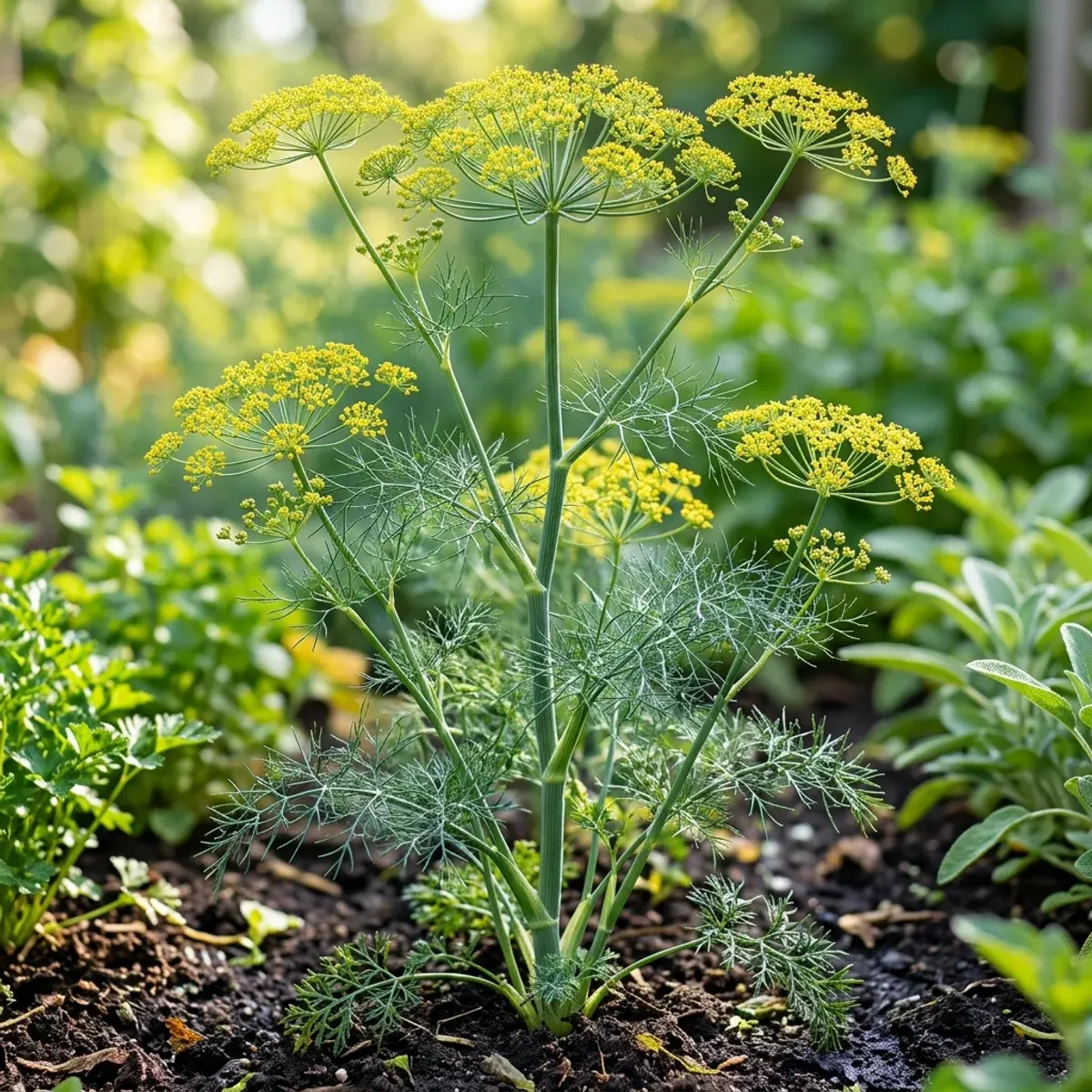
Dill is a graceful, versatile cool-season annual herb celebrated for both its feathery aromatic leaves (dill weed) and pungent, anise-like seeds used in canning and pickling. It requires full sun, loose well-drained soil, and consistent moisture of 1 inch weekly.
Because dill develops a deep, fragile taproot, direct-seeding into garden beds is essential. Its late-summer golden umbel flowers act as premier pollinator landing pads, attracting syrphid flies, parasitic wasps, and lacewings that hunt aphids and hornworms throughout the vegetable garden.
Choosing dill varieties
- Bouquet: The most popular standard variety for home gardeners. Reaches 30 to 36 inches tall, producing large seed heads ideal for pickling and canning jars.
- Fernleaf: A compact dwarf variety (18 inches tall) specifically bred for containers and small raised beds. Slow to bolt, producing an abundance of dense, finely cut green fronds.
- Mammoth (Long Island): A vigorous, tall cultivar reaching 4 to 5 feet high with massive umbrella flower heads and high seed yields.
Direct seeding and spacing
Sow dill seeds directly outdoors 1 to 2 weeks before your average last spring frost, once soil reaches at least 55°F to 60°F.
Scatter seeds thinly and cover with just 1/4 inch of fine soil, pressing down gently to ensure seed-to-soil contact. Dill seeds require light to trigger optimal germination. Thin emerging seedlings to 10 to 12 inches apart.
Succession planting for fresh foliage
Because individual dill plants produce tender leaves for only 3 to 4 weeks before shifting their energy toward flowering, sow a short 2-foot row of fresh seeds every 2 to 3 weeks from spring through mid-summer.
Sunlight, soil, and water requirements
Dill demands unobstructed full sun (at least 6 to 8 hours daily). Plants grown in partial shade become weak, floppy, and vulnerable to wind breakage.
The soil should be rich, moist, and well-draining with a pH of 5.5 to 6.8. Avoid overly dry soil, which signals the plant to immediately bolt and initiate seed production. Maintain steady moisture with a light layer of mulch.
Harvesting dill weed and seeds
- Dill weed (leaves): Begin snipping outer feathery leaves when the plant has 4 to 5 leaves, cutting close to the main stem. Use fresh, or freeze chopped fronds in airtight freezer bags (drying dill weed causes substantial loss of flavor).
- Pickling umbels: Cut green, newly formed flower heads when tiny green seeds have formed but are still juicy to drop directly into jars of dill pickles.
- Dry dill seed: Allow seed umbels to turn brown and dry on the stalk. Cut on a dry morning, invert inside paper bags, and store the winnowed dry seeds in airtight glass jars.
Planning a pickling and canning garden? Calculate your bed volume and soil amendments with our Raised Bed Soil Calculator.
Sources: UMN Extension — Growing Dill in Home Gardens, Clemson HGIC — Dill, Purdue Extension — Dill.
Beneficial Companion Plants for Dill
Plant dill near: Cabbage, Kale, Broccoli, Cucumber, Lettuce, Onion.
FAQ
Can you transplant dill or should you direct-sow it?
Always direct-sow dill seeds where you want them to grow. Dill develops a long, delicate central taproot early in its growth; disturbing this root during transplanting shocks the plant and triggers immediate, premature bolting (flowering) without producing foliage.
Why did my dill flower and go to seed so quickly?
Dill is sensitive to lengthening day-length and warm temperatures above 80°F. Dry soil also accelerates bolting. To maintain a constant supply of tender green fronds throughout summer, sow a fresh pinch of seeds every 2 to 3 weeks and keep soil evenly moist.
Is dill a host plant for caterpillars?
Yes. Dill is one of the primary host plants for the Black Swallowtail butterfly caterpillar (*Papilio polyxenes*), a distinctive green caterpillar with black bands and yellow spots. Plant extra dill so you can share foliage with these beneficial pollinators.
Why should you never plant dill near fennel or carrots?
Dill and [Florence fennel](/plants/fennel) (*Foeniculum vulgare*) are closely related members of the *Apiaceae* family and will cross-pollinate, resulting in seedlings with unpleasantly bitter, muddled flavors. Dill can also stunt carrots and attract carrot rust flies.
How do you harvest dill seed for pickling?
Allow the yellow umbrella flowers (umbels) to finish blooming and form flat, brown seed heads. When seeds turn tan and dry on the stem, snip the entire umbel with 4 inches of stem, place upside down in a brown paper bag, and shake gently to release the dry seeds.