How to Grow Kale
Brassica oleracea (Acephala group)

By Efraín Vega · Published October 8, 2026 · Last updated November 26, 2026
Sun
Full sun; tolerates partial shade (4–6 hrs of direct light)
Water
Even, consistent moisture
Spacing
12–24 in apart for full plants; 2–4 in for baby-leaf harvests
Soil pH
6.2–6.8; keeping it above 6.5 helps prevent clubroot
Days to maturity
40–80 days from seed, by variety
Hardiness zones
Cool-season annual in all US zones; survives 15–20°F
When to plant: 3–4 weeks before the last spring frost, and about 65–69 days before the first fall frost • Calculate planting dates for your city →
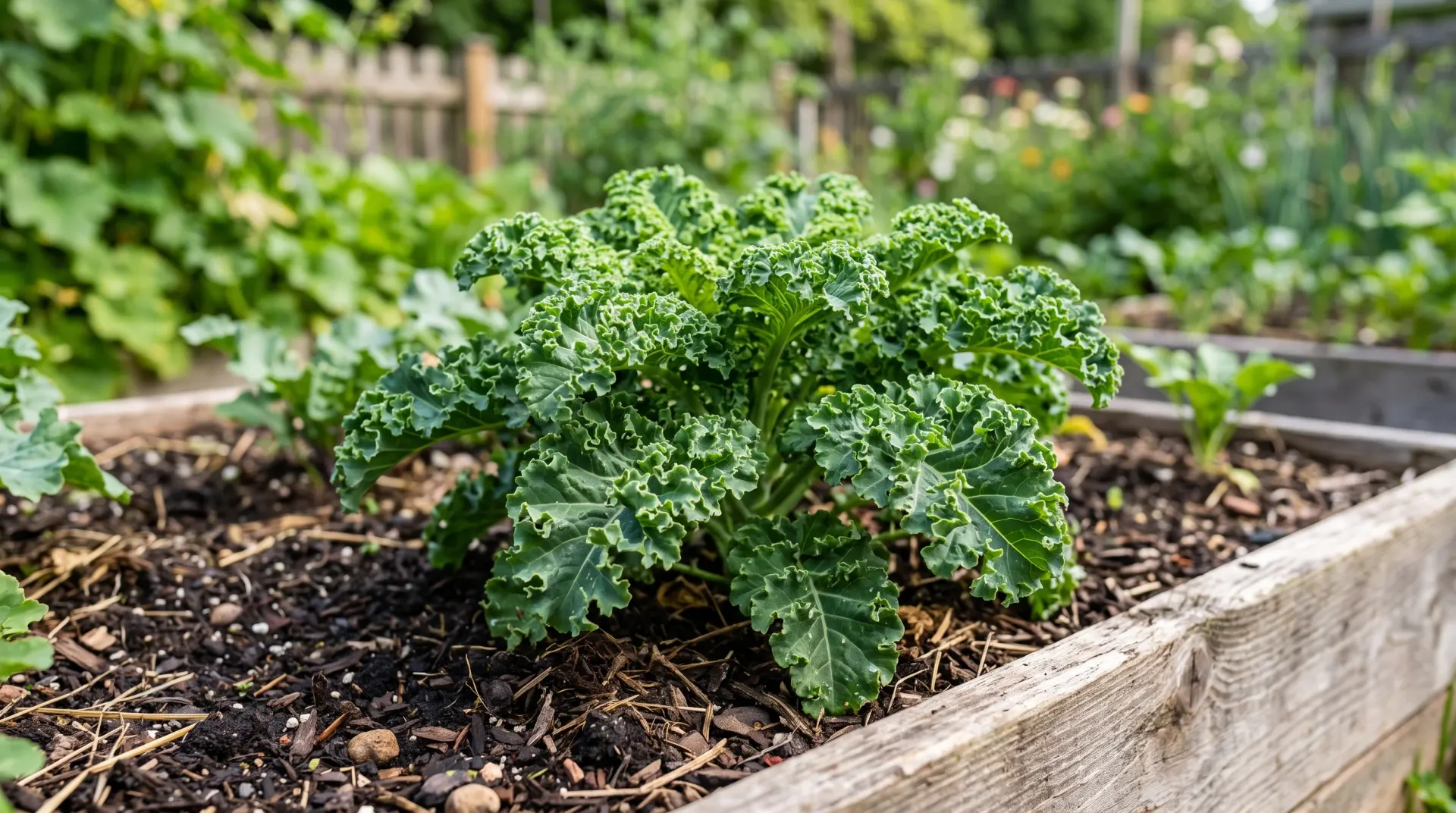
Kale is one of the hardiest greens you can grow: it shrugs off frost and handles temperatures down to about 15–20°F. Plant it in early spring or late summer, space plants 12–24 inches apart, and start harvesting in 40–80 days depending on the variety.
In most of the US, a late-summer planting keeps producing well into late fall.
Best Soil for Kale: pH, Texture & Organic Matter
As a leafy brassica, kale demands continuous nitrogen and steady moisture to develop tender, nutrient-rich leaves without turning bitter or tough:
| Soil Factor | Optimal Requirement | Practical Garden Application |
|---|---|---|
| Soil pH Range | 6.2 – 6.8 (Crucial > 6.5) | Keeping pH slightly above 6.5 significantly suppresses clubroot (Plasmodiophora brassicae), the most devastating brassica soil pathogen. Apply agricultural limestone if soil tests below 6.2. |
| Soil Structure | Moisture-retentive rich loam | Kale tolerates medium clay better than root crops, but heavy waterlogged ground stunts growth. Amend dense clay plots with compost and expanded shale using our guide on amending clay soils. |
| Organic Matter | 6% – 8% volume | Work 2 to 3 inches of composted manure, worm castings, or leaf mold into the top 6 to 8 inches of soil prior to transplanting. |
| Nitrogen Strategy | Moderate to High | Topdress with blood meal, alfalfa meal, or fish emulsion every 3 to 4 weeks during active autumn leaf production. |
When filling new raised beds for brassicas, use our Raised Bed Soil Calculator to calculate the ideal 1/3 compost, 1/3 peat moss, and 1/3 coarse vermiculite ratio.
When should you plant kale?
University of Maryland Extension gives two windows:
- Spring: sow as soon as the soil can be worked, about 3–4 weeks before your last frost.
- Fall: sow about 65–69 days before your first fall frost, so plants mature as the weather cools.
Find both dates for your city in our first and last frost dates table, from NOAA data.
Many gardeners prefer the fall crop: plants mature in cool weather, which kale handles well.
How far apart should you plant kale?
It depends on how you'll harvest:
| Harvest style | Spacing |
|---|---|
| Full-size plants, picked leaf by leaf | 12–24 in apart |
| Baby leaves, cut repeatedly | 2–4 in apart |
In a 4 ft wide raised bed, two staggered rows of full-size plants fit comfortably.
Does kale need full sun?
Full sun gives the fastest growth, but kale tolerates partial shade — about 4–6 hours of direct light — which makes it a good crop for a bed that gets afternoon shade.
Watch for caterpillars
Maryland Extension lists the imported cabbageworm, cabbage looper, harlequin bug and whiteflies as common kale pests. Check the undersides of leaves often; a lightweight row cover keeps moths from laying eggs.
How do you harvest kale?
Pick the lower, outer leaves once they're about the size of your hand, and leave the growing center intact. The plant keeps pushing out new leaves from the top for weeks — in fall, often until a hard freeze. For an even more freeze-tolerant winter brassica with paddle leaves that sweeten with hard frosts, grow collard greens alongside your kale.
Planning a greens bed? The Raised Bed Soil Calculator sizes the fill, and a garden fence keeps rabbits off the leaves.
For complete soil pH management, cut-and-come-again harvesting diagrams, and frost sweetening physics, follow our in-depth tutorial: How to Care for Kale: Soil, Frost Sweetening & Continuous Harvest Guide.
Sources: Growing Leafy Greens in a Home Garden — UMD Extension, Target Soil pH Values for Vegetable Crops — UMD Extension.
Beneficial Companion Plants for Kale
FAQ
What is the best soil for growing kale?
The best soil for kale is a fertile, well-drained loam rich in organic matter with a pH between 6.2 and 6.8. Maintaining a pH above 6.5 helps prevent clubroot disease (Plasmodiophora brassicae), a soil-borne fungus that attacks brassicas in acidic soils.
Does frost hurt kale?
No — kale is hardy. University of Maryland Extension notes it can handle heavy frosts in spring and fall and temperatures of 15–20°F. Many gardeners find leaves taste sweeter after a frost.
How do I harvest kale so it keeps growing?
Pick the lower, outer leaves and leave the center bud alone. The plant keeps producing new leaves from the top for weeks.
What's eating holes in my kale?
Usually caterpillars like the imported cabbageworm or cabbage looper. Check the undersides of leaves and hand-pick them, or cover young plants with a lightweight row cover.
How often should you water kale?
Keep the soil evenly and consistently moist.
How long does kale take to grow?
40–80 days from seed, depending on the variety. Baby leaves are ready sooner.