How to Grow Cauliflower
Brassica oleracea var. botrytis

By Efraín Vega · Published November 12, 2026
Sun
Full sun (6+ hrs daily)
Water
1–1.5 in/week; consistent deep moisture to avoid premature buttoning
Spacing
18–24 in apart; rows 24–30 in apart
Soil pH
6.5–7.0 (rich loam with high organic compost content)
Days to maturity
55–80 days from transplant, depending on cultivar
Hardiness zones
Annual in all US zones (zones 2–11); optimal head formation at 60–68°F
When to plant: Early spring (2–4 weeks before last frost) or mid-to-late summer for fall crops • Calculate planting dates for your city →
Cauliflower is one of the premier cool-weather brassicas for home gardeners. While it has a reputation for being finicky, providing two essentials — uninterrupted moisture and rich, compost-heavy soil — guarantees large, dense, gourmet heads that rival anything at an organic market.
Because cauliflower thrives in moderate temperatures between 60°F and 68°F, planning your planting schedule around local frost dates is the secret to a blemish-free crop.
When should you plant cauliflower?
Cauliflower matures best when head formation coincides with cool weather:
- Spring planting: Start seeds indoors 6 to 8 weeks before your last spring frost. Move hardened-off transplants into raised beds 2 to 4 weeks before the last frost date.
- Fall planting (often the easiest): Transplant seedlings into the garden in midsummer (July to August), roughly 75 to 85 days before your first expected fall frost. Fall cauliflower heads develop in cooling autumn weather, avoiding spring heat spikes that cause bitter curds.
Find exact frost windows for your area with our NOAA frost dates tool.
Spacing and Raised Bed Soil Requirements
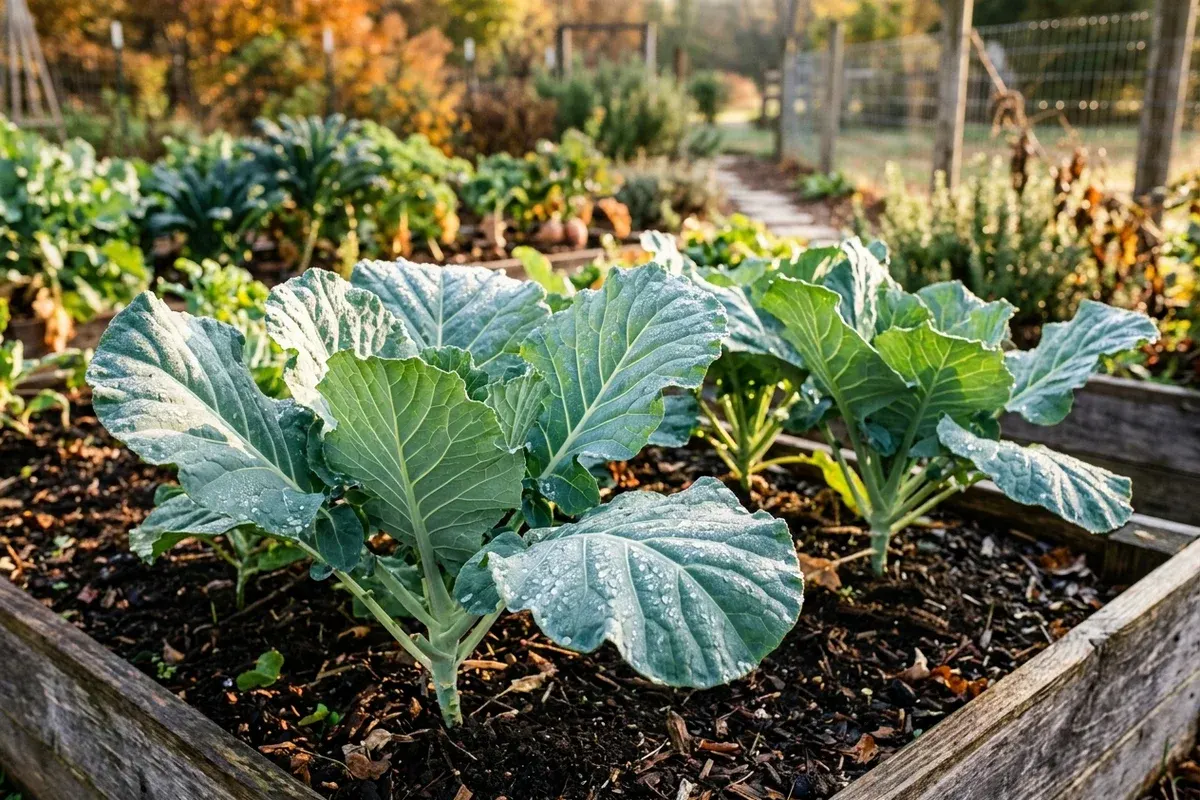
Cauliflower develops a broad, shallow root system and broad leaves that can span 2 feet across:
| Bed Type | In-Row Spacing | Between-Row Spacing | Soil Depth Required |
|---|---|---|---|
| In-ground row | 18–24 in | 24–30 in | 10–12 in |
| Raised bed grid | 18×18 in | 18×18 in | 12+ in |
In a standard 4×8 ft raised bed, space plants on an 18-inch staggered grid (about 6 to 8 cauliflower plants per 4×8 bed). This gives leaves room to capture sunlight while maintaining crucial airflow that prevents fungal leaf spot.
Calculate the exact soil mix and compost volume for your beds using our Raised Bed Soil Calculator.
Blanching for Snow-White Curds
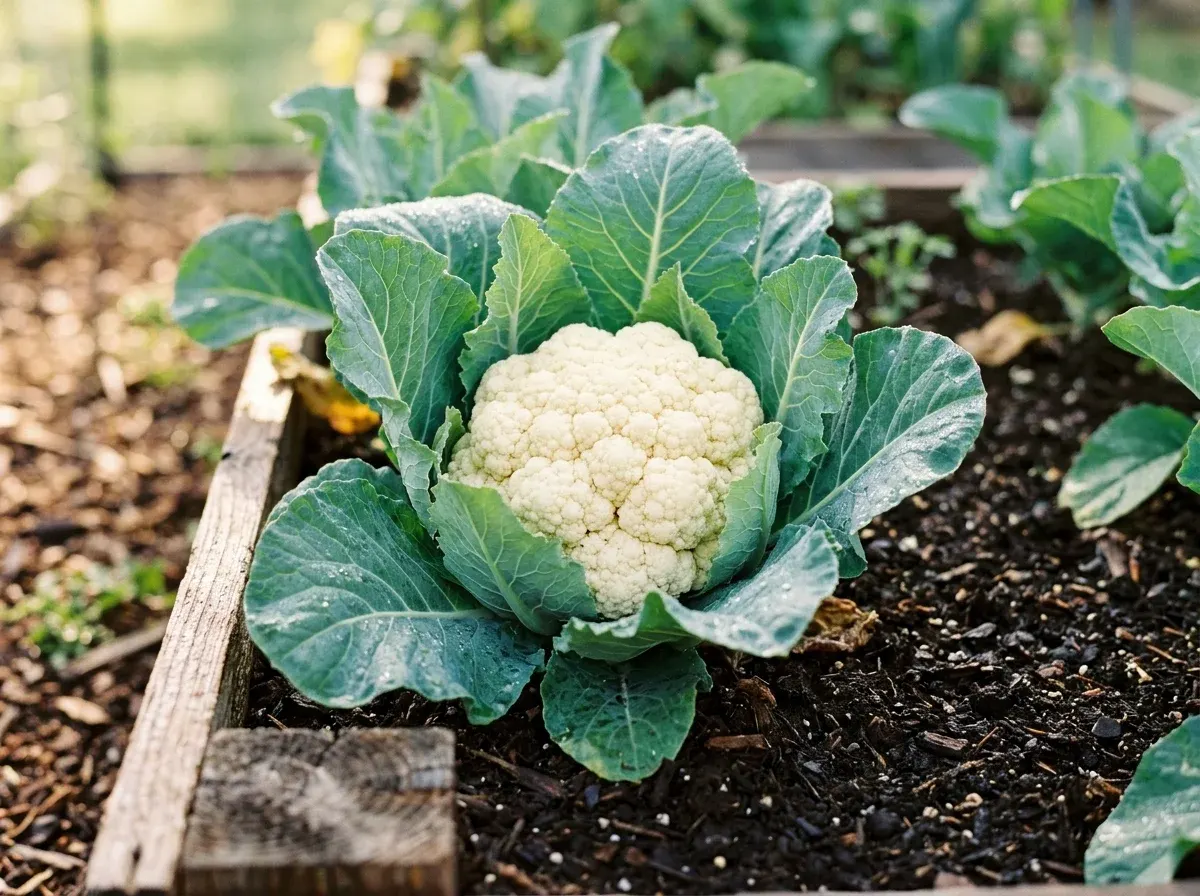
Sunlight causes cauliflower heads to produce chlorophyll and bitter carotenoids, turning the white curd yellowish-brown:
- Inspect your cauliflower weekly as plants mature.
- When the central curd reaches about 2 to 3 inches in diameter (roughly tennis-ball size), gather 3 or 4 large outer wrapper leaves up over the crown.
- Fasten the leaf tips together with a loose rubber band, twine, or a wooden clothespin.
- Leave enough room inside the canopy for the head to swell to full size. Check inside every few days; heads are typically ready to cut 7 to 12 days after tying.
(Note: Modern "self-blanching" varieties like Snow Crown naturally curl their inner leaves over the head, eliminating the need for manual tying).
Best Companion Plants for Cauliflower
Pair cauliflower with aromatic companions to deter cabbage loopers, flea beetles, and aphids:
- Onions & Garlic: Volatile sulfur fumes confuse the white cabbage butterfly.
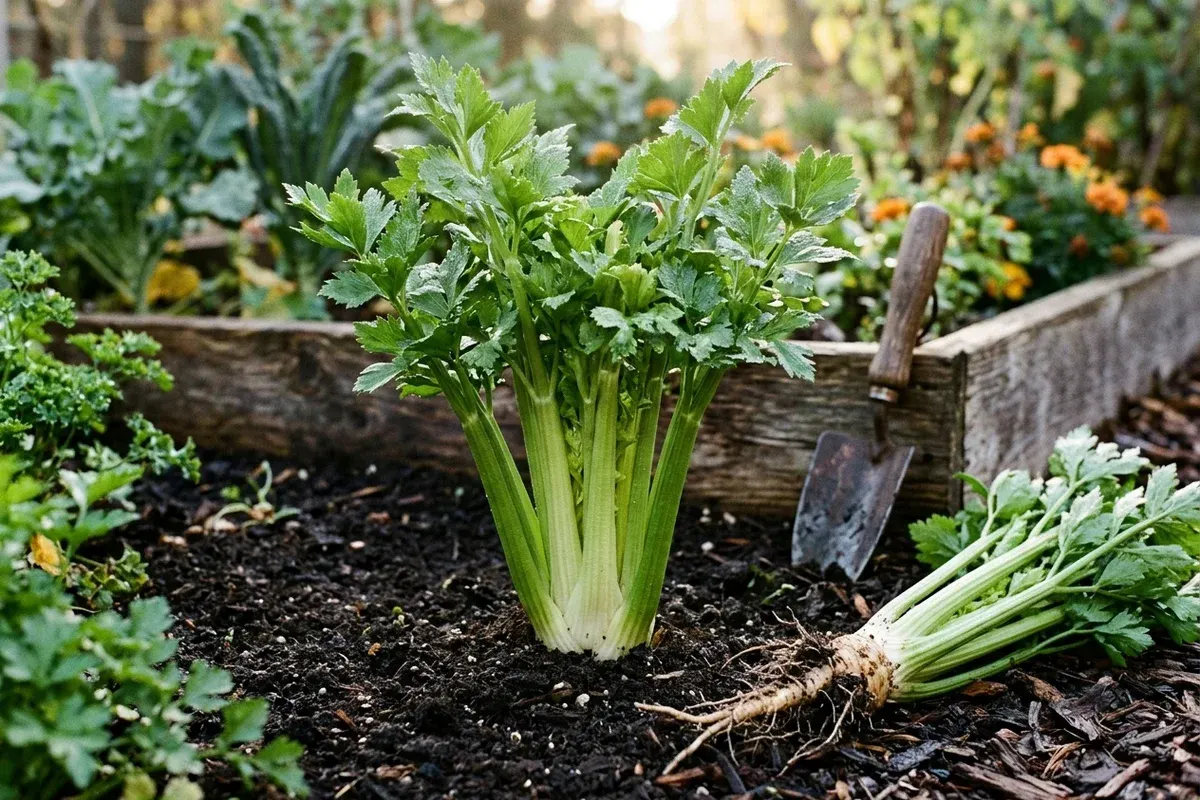
- Dill & Celery: Enhance flavor and attract beneficial predatory wasps that eliminate caterpillars.
- Rosemary & Mint: Pungent essential oils mask the scent of brassica foliage.
Verify compatibility with your other crops using our Companion Planting Compatibility Tool.
Beneficial Companion Plants for Cauliflower
Plant cauliflower near: Onion, Dill, Rosemary, Celery, Mint.
FAQ
What is cauliflower buttoning and how do I prevent it?
Buttoning occurs when a young cauliflower plant experiences temperature shock (severe cold snaps below 40°F or heat above 80°F) or drought stress, causing it to produce tiny, button-sized curds prematurely. Prevent it by maintaining steady moisture, protecting young spring transplants with row covers, and planting in fertile soil.
What is blanching and does cauliflower need it?
Blanching is the practice of shielding the developing white head from sunlight so it stays creamy white and mild rather than turning yellow-brown and bitter. When the curd reaches 2 to 3 inches in diameter, pull the large outer wrapper leaves up over the head and secure them with a rubber band or clothespin. (Self-blanching varieties do this naturally).
When is cauliflower ready to harvest?
Harvest when the head reaches 6 to 8 inches in diameter, feels firm and compact, and the curds are still tightly clustered. If the curd sections begin to separate and look loose or ricey, harvest immediately before quality degrades.
How much sun does cauliflower need?
Full sun (at least 6 hours of direct light daily). In warmer southern zones, light afternoon shade helps prevent heat stress during early curd formation.
Can cauliflower survive light frost?
Yes. Established cauliflower plants can tolerate light frosts down to 28°F. Cool autumn weather actually improves flavor and tenderness, making late-summer plantings particularly successful.