How to Grow Onions
Allium cepa

By Efraín Vega · Published October 28, 2026
Sun
Full sun (6–8+ hrs)
Water
1 in/week; reduce sharply 2–3 weeks before harvest
Spacing
4–6 in apart in rows (12–18 in row spacing, or 4–5 in grid in raised beds)
Soil pH
6.0–6.8
Days to maturity
90–120 days from sets; 110–130 days from seed
Hardiness zones
Hardy biennial grown as an annual in zones 3–9; cold hardy to 20°F
When to plant: Early spring (4–6 weeks before last frost) or late autumn in mild southern zones • Calculate planting dates for your city →
Onions require full sun, loose, stone-free soil, and consistent early-season moisture. Space sets 4 to 6 inches apart in raised beds, provide 1 inch of water weekly, and harvest after 90 to 120 days when the foliage naturally falls over and necks soften.
Because onions are shallow-rooted and poor competitors with weeds, raised beds filled with fluffy, nutrient-rich soil provide an ideal growing environment for uniform, large-bulbed harvests.
Day length and variety selection
Choosing the correct onion type for your geographic latitude is the single most important factor for success:
- Long-Day Onions (North of 37° latitude): Trigger bulb formation when days reach 14 to 16 hours of daylight. Popular varieties include Copra, Stuttgarter, and Walla Walla.
- Short-Day Onions (South of 35° latitude): Bulb when days reach 10 to 12 hours. Typically planted in autumn or late winter in mild climates. Examples include Texas Super Sweet 1015Y and Yellow Granex.
- Day-Neutral / Intermediate (Between 32° and 42° latitude): Bulb reliably across 12 to 14 hour day lengths. Varieties include Candy and Red Candy Apple.
According to Oregon State University Extension, planting a long-day variety in the deep south results in luxuriant green tops that never form a bulb, while planting a short-day variety in the far north causes premature, golf-ball-sized bulbing before sufficient foliage develops.
When should you plant onions?
Onions are cold-hardy and can withstand light frosts down to 20°F. Plant onion sets or bare-root transplants outdoors 4 to 6 weeks before your average last spring frost, as soon as the soil can be worked.
In USDA zones 8 and warmer, short-day onions are traditionally planted in October or November to overwinter and bulb in early spring.
How far apart should you plant onions?
University of Georgia Extension recommends spacing onion plants 4 to 6 inches apart within the row, with rows spaced 12 to 18 inches apart.
In intensive raised beds, an offset grid with 4 to 5 inches between each bulb (about 9 onions per square foot) yields medium-to-large slicing bulbs. If smaller boiling or pearl onions are preferred, spacing can be tightened to 2 to 3 inches.
Keep bulbs shallow
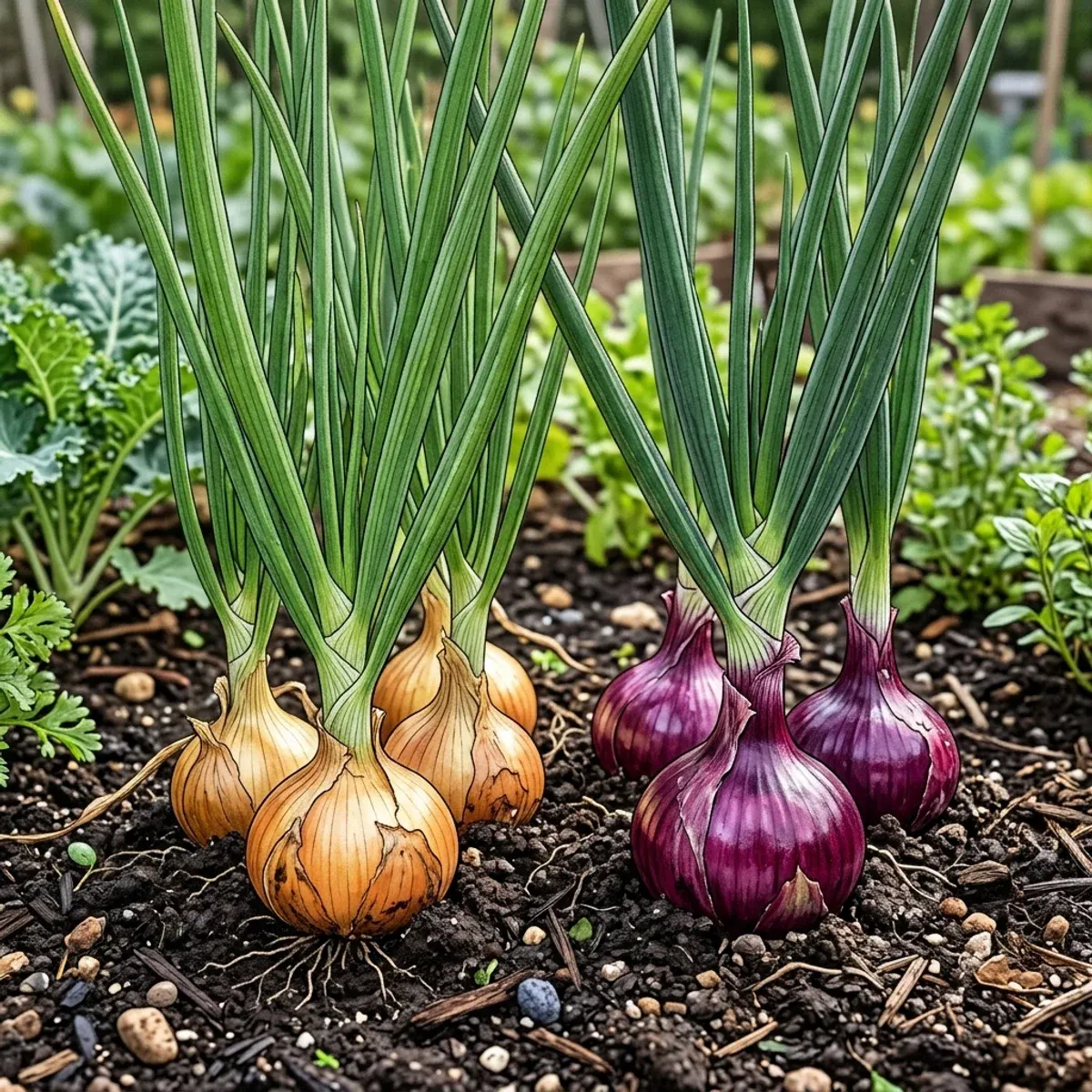
As onions grow, their developing bulbs naturally push up and expand above the soil line. Do not mound dirt over exposed bulbs. Burying them restricts bulb expansion and invites fungal decay around the neck.
Fertilizer and watering needs
Onions are heavy feeders with shallow root systems concentrated in the top 6 to 8 inches of soil. Work plenty of well-rotted compost into the bed prior to planting, and side-dress with a balanced nitrogen-phosphorus fertilizer every 3 to 4 weeks until bulbing begins. Once bulbing starts, cease high-nitrogen feedings to prevent thick, soft necks that spoil in storage.
Maintain 1 inch of water per week during active vegetative growth. When foliage turns yellow and begins to collapse at maturity, stop watering completely to allow the outer skin layers to cure and dry.
Harvesting and curing onions
Harvest onions on a dry, sunny day when half to three-quarters of the plant tops have collapsed. Gently lift the bulbs with a garden fork, taking care not to puncture the fleshy outer scales.
Spread the freshly harvested onions in a single layer in a warm, dry, shaded, well-ventilated spot (such as a covered porch, shed, or garage) for 2 to 3 weeks. Curing is complete when the outer paper rustles crisply, roots become brittle and wiry, and the neck is completely dry down to the top of the bulb with no green tissue remaining. Trim the tops to 1 inch and store in mesh bags or crates at 35–45°F and 60–70% relative humidity.
Planning your raised bed layout? The Raised Bed Soil Calculator helps calculate the ideal compost-to-topsoil ratio for loose, well-draining root development.
Sources: OSU Extension — Growing Onions in the Garden, UGA Extension — Onion Production Guide, Cornell Cooperative Extension — Growing Onions.
Beneficial Companion Plants for Onion
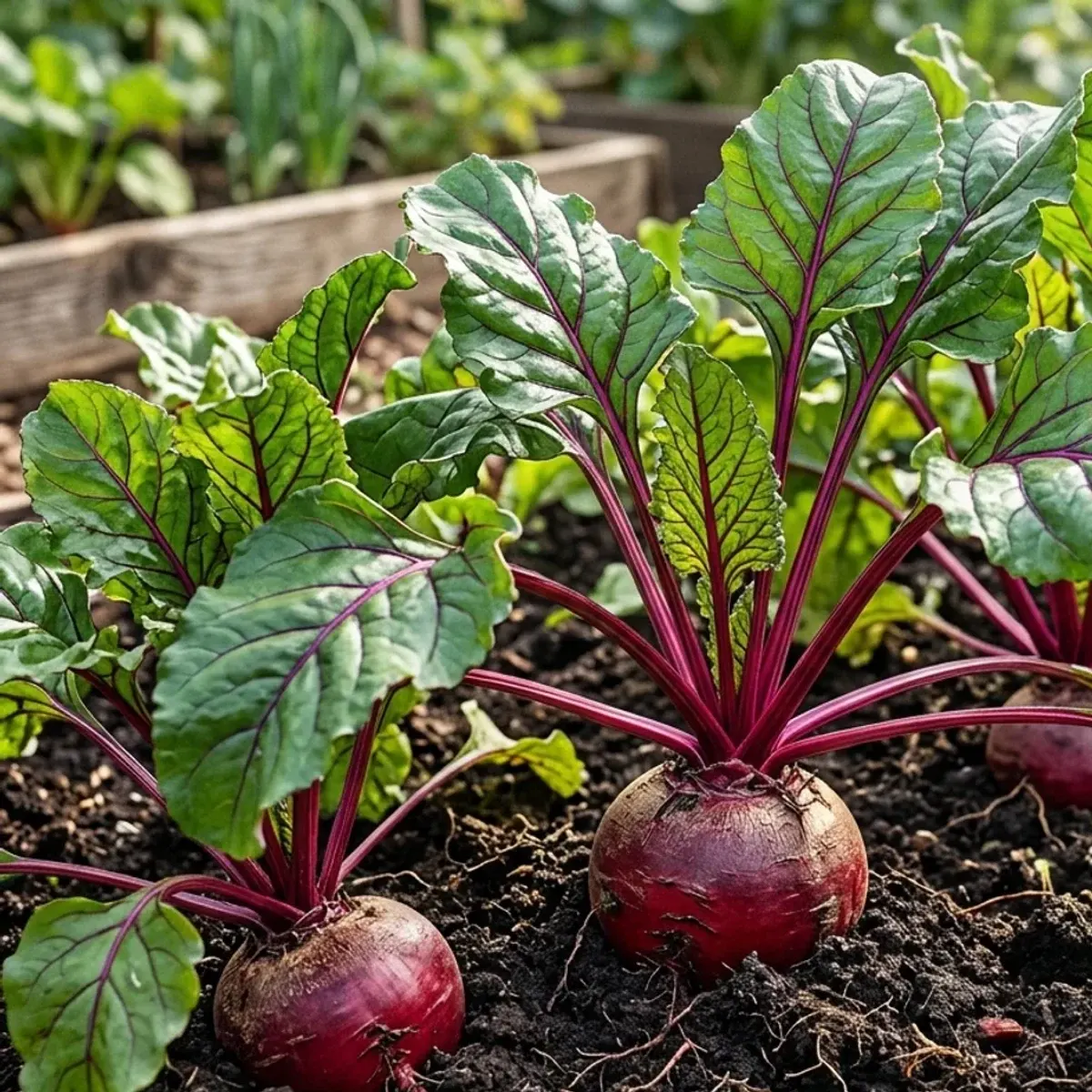
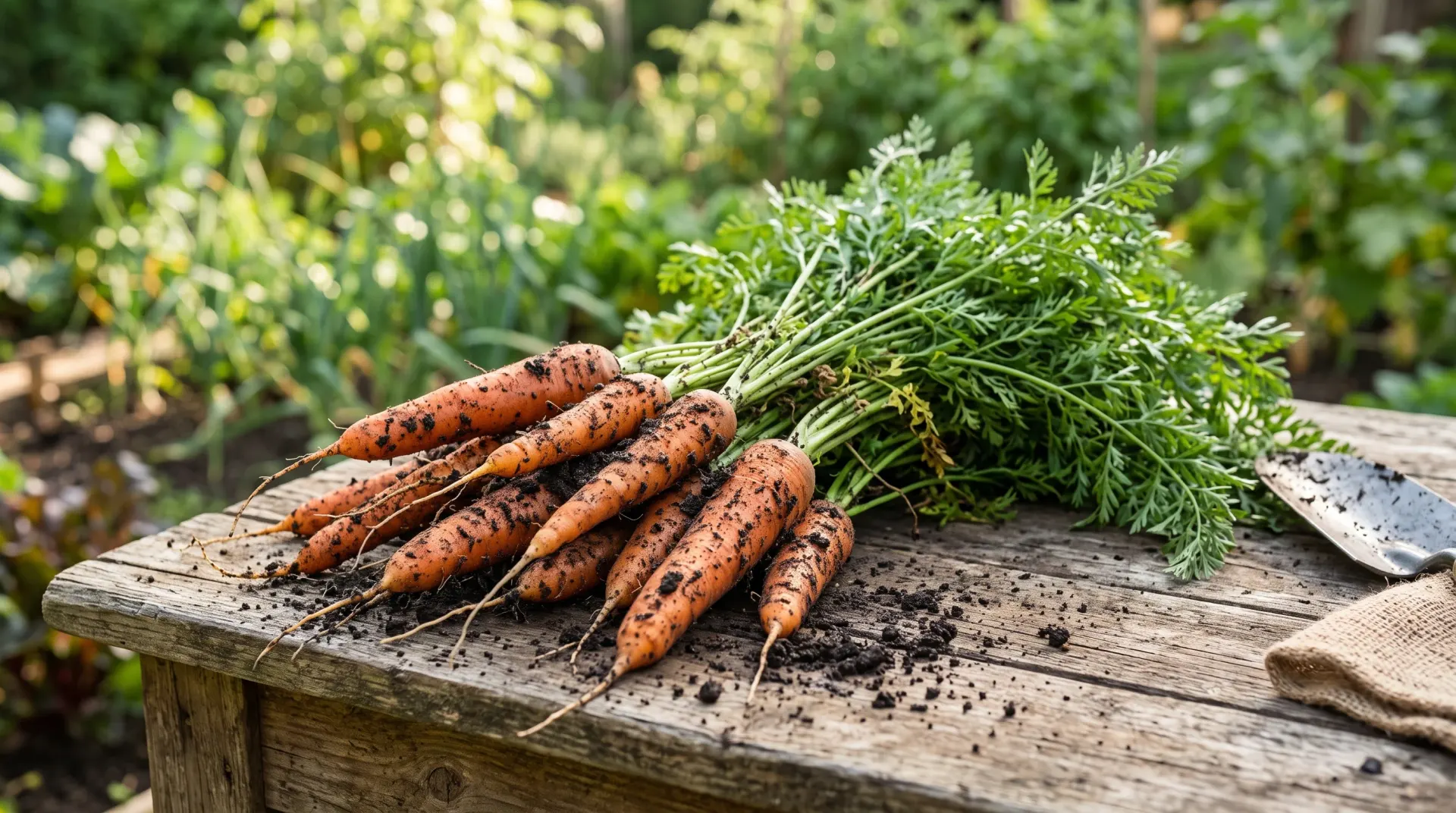
Plant onion near: Carrot, Beet, Lettuce, Tomato, Strawberry.
FAQ
What is the difference between short-day and long-day onions?
Onion bulbing is triggered by day length. Short-day varieties require 10–12 hours of daylight and are ideal for southern latitudes (below 35°N). Long-day varieties need 14–16 hours of daylight and perform best in northern latitudes (above 37°N). Day-neutral (intermediate) varieties bulb at 12–14 hours anywhere in between.
Should you bend down onion tops to speed up bulbing?
No. Do not manually bend onion tops while the plant is actively growing. Let tops collapse naturally when the neck weakens at peak maturity. Bending them early stops sugar transfer and opens the neck to fungal rot.
Can you eat the green tops of regular onions?
Yes. Young green onion tops can be snipped and used like scallions or chives. However, avoid trimming more than one or two leaves per bulb, as every leaf directly correlates to an outer ring layer on the mature onion.
How deep should you plant onion sets?
Plant onion sets shallowly, no deeper than 1 inch below the soil surface, with the pointed tip poking slightly above the ground. If planted too deep, bulbs stay narrow and neck-heavy.
How long do cured onions store?
Pungent yellow storage varieties can keep for 6 to 9 months in a cool, dark, dry area with good airflow. Sweet onions (like Vidalia or Walla Walla) have higher water and sugar content and typically store for only 4 to 8 weeks.