How to Grow Strawberries
Fragaria × ananassa

By Efraín Vega · Published September 28, 2026 · Last updated October 2, 2026
Sun
Full sun (6–8 hrs)
Water
1–1.5 in/week, well-drained soil
Spacing
12 in (day-neutral/everbearing) to 18–24 in (June-bearing)
Soil pH
5.5–6.5 (slightly acidic)
Days to maturity
June-bearing: the spring after planting; day-neutral: the first summer
Hardiness zones
3–10, depending on variety
When to plant: Early spring, as soon as the soil can be worked • Calculate planting dates for your city →
Strawberries need full sun, 1–1.5 in of water a week, and slightly acidic soil with a pH of 5.5–6.5. Plant crowns at soil level in early spring: June-bearing types fruit the following spring, while day-neutral types fruit the first summer.
A raised bed suits them well — the better drainage helps prevent the crown and fruit rot that plague strawberries in heavy soil.
Which type of strawberry should you plant?
Pick the type by how you want to harvest.
| Type | When it fruits | Spacing |
|---|---|---|
| June-bearing | One big crop in late spring / early summer, starting the year after planting | 18–24 in apart, rows 3–4 ft apart |
| Everbearing | Two or three smaller crops through the season | ~12 in apart |
| Day-neutral | Steadily from late spring through fall | ~12 in apart, rows ~12 in apart |
How deep should you plant strawberries?
Set the midpoint of the crown level with the soil surface, so the top root sits just below the soil, even after watering. Plant in early spring and spread the roots out in the hole. Crowns planted too shallow dry out and can die; too deep, they rot.
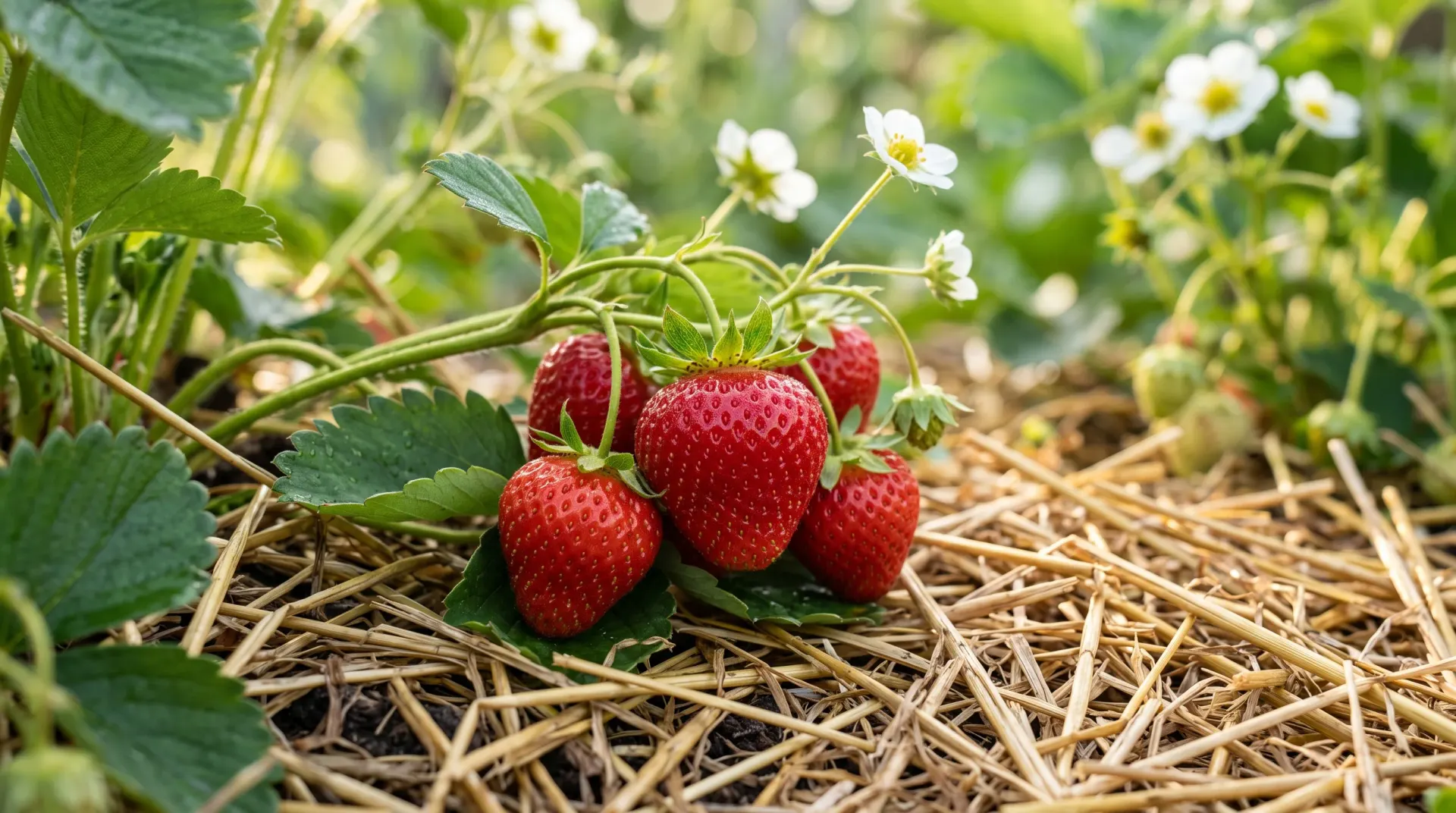
Mulch under the fruit
A layer of straw keeps developing berries off wet soil, which cuts down on rot and slug damage.
Why do strawberries stop producing well?
Strawberry beds decline after a few seasons as plants age and crowd in. Renovate June-bearing beds after harvest by thinning out old plants and letting healthy runners root, or replant with fresh plants every few years.
What problems do strawberries get?
- Birds and slugs — netting keeps birds off; straw mulch and hand-picking help with slugs.
- Gray mold (botrytis) — spreads fast in humid, crowded plantings; improve airflow and pick ripe fruit promptly.
- Fruit rot on the ground — mulch under the plants to keep berries dry.
Use the Raised Bed Soil Calculator to plan a dedicated strawberry bed.
Sources: Growing Strawberries in Your Home Garden — Oregon State Extension, Growing Strawberries — UMN Extension.
Beneficial Companion Plants for Strawberry
FAQ
Should I remove the runners strawberry plants send out?
It depends on the type and what you want. Removing runners puts energy into bigger fruit on the main plants; letting some root fills the bed with new plants for next season. Day-neutral types make few runners anyway.
Why is fruit rotting on the ground before I can pick it?
Berries sitting on wet soil rot fast. A layer of straw mulch under the plants keeps fruit clean and dry — it's the most common fix.
How deep should I plant strawberry crowns?
Set the middle of the crown level with the soil surface. Too deep and the crown rots; too shallow and the top roots are exposed and the plant dries out.
How much sun do strawberries need?
Full sun, 6–8 hours of direct light a day.
How far apart should you plant strawberries?
About 12 in apart for day-neutral and everbearing types, and 18–24 in apart for June-bearing types, which spread by runners.
How often should you water strawberries?
About 1–1.5 in of water a week, in well-drained soil.