How to Grow Blackberries
Rubus fruticosus

By Efraín Vega · Published November 12, 2026
Sun
Full sun (6–8+ hrs direct sunlight)
Water
1–2 in/week during fruit swelling; consistent moisture via drip irrigation
Spacing
3–4 ft apart (erect varieties) or 5–6 ft apart (trailing varieties); rows 8–10 ft apart
Soil pH
5.5–6.5 (slightly acidic, well-draining loamy soil)
Days to maturity
Berries ripen in mid-to-late summer on second-year canes (floricanes); everbearing types fruit in autumn
Hardiness zones
Zones 5–9 (erect thorny/thornless varieties); zones 6–9 for trailing types
When to plant: Early spring as dormant bare-root crowns or nursery transplants • Calculate planting dates for your city →
Blackberries are among the most productive, rewarding perennial fruit crops you can plant in a home garden. A single mature blackberry plant can produce 10 to 20 pounds of juicy fruit every summer for 15 to 20 years.
Unlike supermarket blackberries, which are picked firm and under-ripe to withstand shipping, garden-ripened berries develop maximum sweetness and aroma right on the cane.
Types of Blackberries: Which should you plant?
Before building your support structures, choose between three primary growth habits:
| Growth Type | Cane Habit | Trellis Requirement | Cold Hardiness |
|---|---|---|---|
| Erect (Thorny or Thornless) | Stiff, upright 4–5 ft canes | Optional 1-wire row support | Very hardy (down to Zone 5) |
| Semi-Erect | Sturdy, arching 6–8 ft canes | Required 2-wire vertical trellis | Moderate (Zones 6–9) |
| Trailing | Flexible, sprawling 10–15 ft canes | Required 3-wire heavy trellis | Sensitive (Zones 7–9) |
Modern thornless cultivars like Natchez, Ouachita, and Navaho produce massive sweet fruit without any thorny scratches during harvest.
Trellising & Spacing in Raised Beds
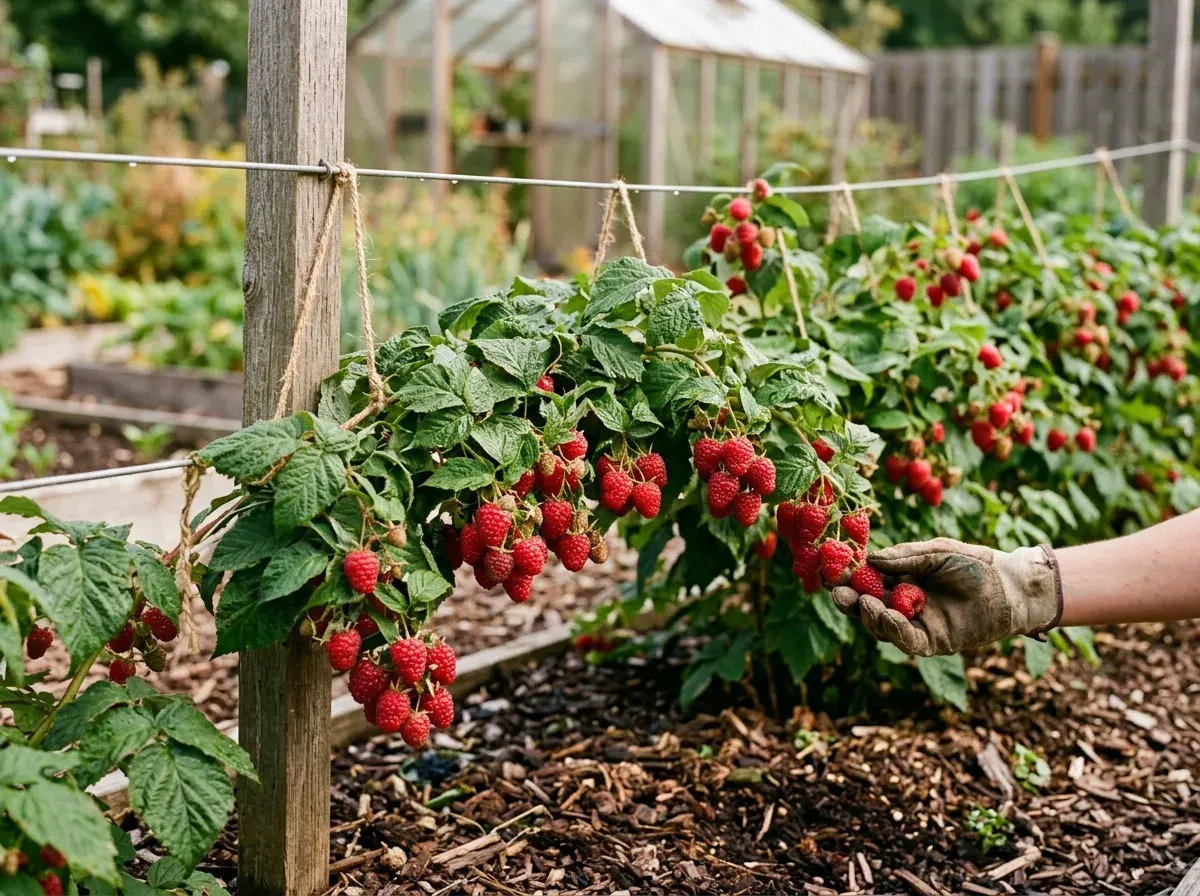
Because blackberry canes are vigorous, strong vertical trellising prevents canes from bowing under heavy fruit weight:
- Two-Wire Trellis: Drive heavy steel T-posts or 4×4 cedar posts at either end of your row.
- Wire Heights: String high-tensile 12-gauge galvanized wire at 30 inches and 54 inches above ground level.
- Training Canes: Fan new primocanes outward along the lower wire, and tie fruiting floricanes to the upper wire using soft horticultural tape.
To estimate lumber, posts, and wire requirements, use our Arbor & Trellis Calculator.
Soil, pH, and Moisture Requirements
- Soil pH: Blackberries require slightly acidic, loose soil between pH 5.5 and 6.5. If your native soil is heavy clay, blend 1 part composted pine bark, 1 part organic peat or coco coir, and 1 part rich compost into your raised bed. Calculate soil volumes with our Raised Bed Soil Calculator.
- Watering: Blackberries need 1 to 2 inches of water per week, increasing during the fruit swelling phase. Keep water off foliage by laying drip irrigation lines directly beneath wood chip mulch.
Harvesting & Storing
Harvest berries every 2 to 3 days during the peak morning hours when fruit is cool:
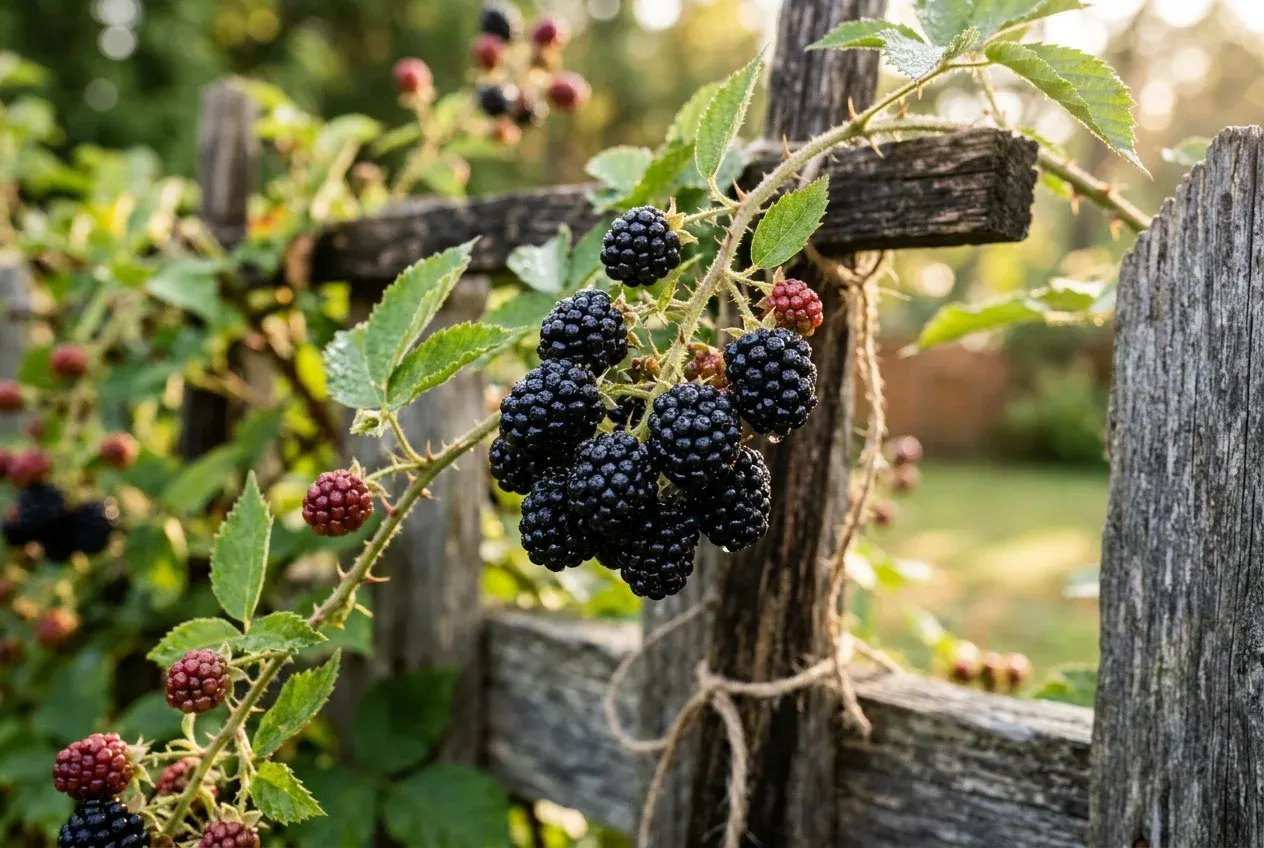
- Pick berries that have turned dull matte black. (Glossy shiny black berries still have tart acid cores).
- Unlike raspberries, blackberries retain their soft central core (receptacle) when harvested.
- Do not wash berries until immediately before eating or baking, as excess surface moisture encourages rapid mold.
Best Companion Plants for Blackberries
- Garlic & Chives: Strong allium sulfur compounds deter Japanese beetles and cane borers.
- Marigolds: Attract pollinators during the spring bloom while root exudates suppress parasitic nematodes.
- Mint: Excellent living groundcover that confuses pest moths (keep contained in pots near bed edges).
Explore companion pairings with our interactive Companion Planting Compatibility Tool.
Beneficial Companion Plants for Blackberry
FAQ
What is the difference between erect, semi-erect, and trailing blackberries?
Erect varieties have stiff, self-supporting canes that require minimal staking (though a single wire helps keep rows neat). Trailing varieties produce long, flexible canes that sprawl along the ground and must be tied to a two- or three-wire trellis.
When and how should I prune blackberry canes?
Blackberry roots are perennial, but individual canes are biennial. In late summer immediately after picking, cut all canes that produced fruit down to the soil line. Leave new, vibrant green canes (primocanes) to overwinter and bear next year's crop.
How can you tell when a blackberry is completely ripe?
A truly sweet blackberry turns from shiny black to a slightly dull, matte black and detaches from the calyx with the gentlest pull. If you have to tug, the berry is still tart.
How much sun do blackberries need?
Full sun (at least 6 to 8 hours daily) is crucial. Berries grown in full sun develop significantly higher sugar content and firmer texture than shaded canes.
Can blackberries be grown in raised beds?
Yes. Raised beds provide superior drainage and make it easy to maintain an optimal 5.5–6.5 soil pH. A dedicated 3×8 ft or 4×8 ft bed keeps vigorous canes neatly contained.