How to Grow Watermelons
Citrullus lanatus

By Efraín Vega · Published October 28, 2026
Sun
Full sun (8–10+ hrs of intense direct sunlight)
Water
1–2 in/week; reduce watering sharply 10–14 days before harvest to intensify sugars
Spacing
4–6 ft apart on mounds (hills); 6–8 ft between vine rows
Soil pH
6.0–6.8
Days to maturity
70–90 days from direct seeding
Hardiness zones
Tender annual in zones 3–11; highly sensitive to frost and cold snaps below 50°F
When to plant: 2–3 weeks after last frost once soil temperature reaches at least 70°F • Calculate planting dates for your city →
Watermelons (Citrullus lanatus) are iconic warm-season fruits that epitomize summer gardening. They require unobstructed full sun, high temperatures, loose, sandy, well-draining soil, and generous garden space.
Native to the arid regions of southern Africa, watermelons thrive in warm soils and dry air. Raising soil temperatures with mounded planting hills or raised beds ensures the rapid early root expansion required to fuel vigorous 10 to 15-foot fruiting vines.
Choosing the right variety for your garden
- Icebox / Personal Varieties (70–80 days): Compact melons weighing 5 to 10 pounds (Sugar Baby, Tiger Baby). Excellent for smaller gardens, shorter northern summers, or raised bed edges.
- Picnic / Standard Varieties (85–95 days): Classic oblong striped melons weighing 15 to 30 pounds (Crimson Sweet, Charleston Gray). Requires long, hot summers.
- Seedless / Triploid (80–90 days): Crisp texture with tiny, edible translucent seed coats (Crimson Trio, Big Tasty). Requires planting alongside a seeded pollinizer variety.
When should you plant watermelons?
Watermelon seeds will not germinate in cold ground; soil must be at least 70°F (ideally 75°F to 85°F). Plant outdoors 2 to 3 weeks after your average last spring frost, once daytime temperatures reliably reach 75°F to 85°F.
In northern zones with short growing seasons, start seeds indoors in 3-inch peat or biodegradable pots 3 weeks before planting out. Handle seedlings with extreme care during transplanting, as watermelon taproots are brittle and resent root disturbance.
Mounding, soil prep, and spacing
Watermelons demand loose, fertile, sandy loam packed with aged compost, with an ideal soil pH of 6.0 to 6.8.
Build raised planting mounds or hills 4 to 6 feet apart:
- Shape mounds 6 to 8 inches high and 18 to 24 inches wide. Mounds warm up significantly faster in the morning sun and guarantee rapid excess drainage during heavy spring rains.
- Plant 4 to 6 seeds per hill, 1 inch deep.
- Thin to the strongest 2 to 3 plants per hill once seedlings develop their second set of true leaves.
The secret to sweetest watermelons
Ten to fourteen days before you expect to harvest, reduce irrigation significantly, supplying only enough water to prevent daytime vine wilting. Restricting water stresses the vine slightly, concentrating natural sugars (brix) and preventing watery, bland fruit.
Water management and ground protection
Watermelons require 1 to 2 inches of water per week during active vine growth and early fruit sizing. Always irrigate at ground level using drip lines or soaker hoses; splashing water on the foliage promotes gummy stem blight and anthracnose.
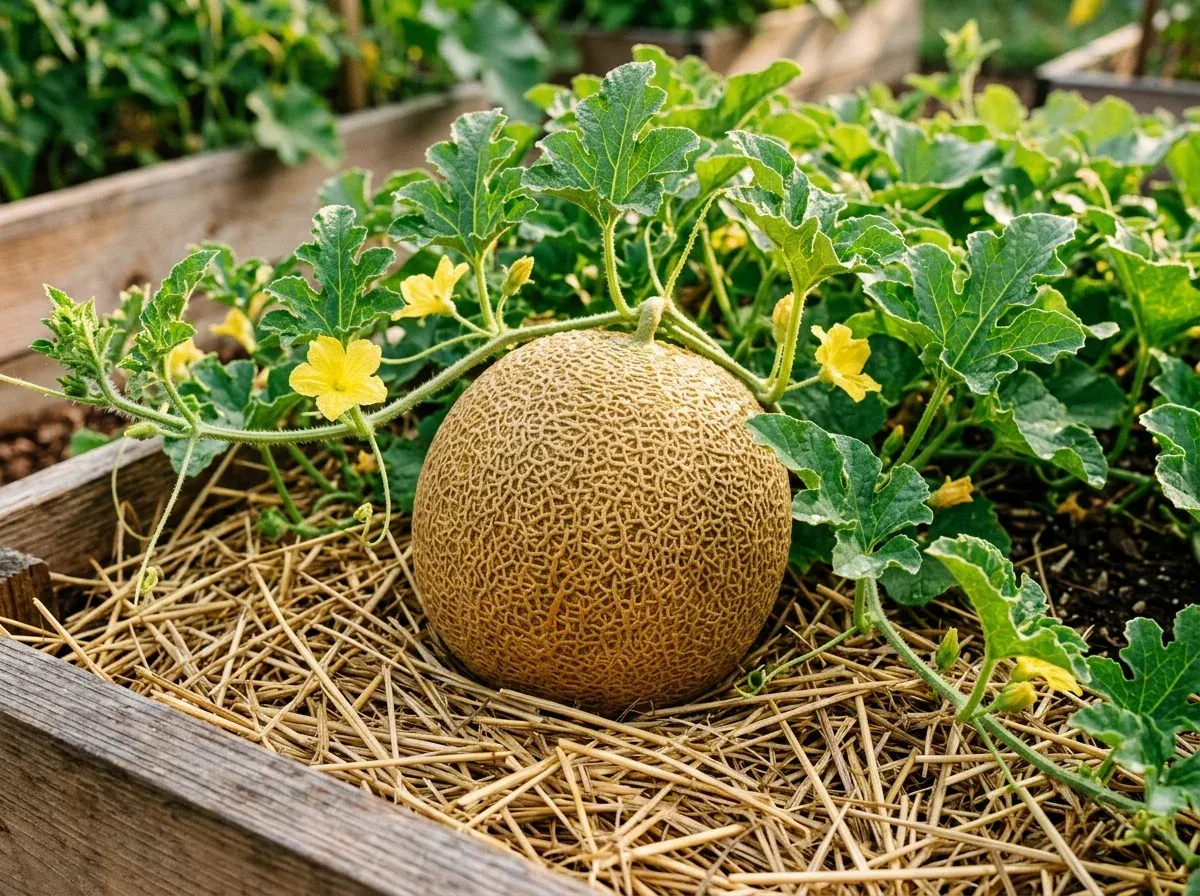
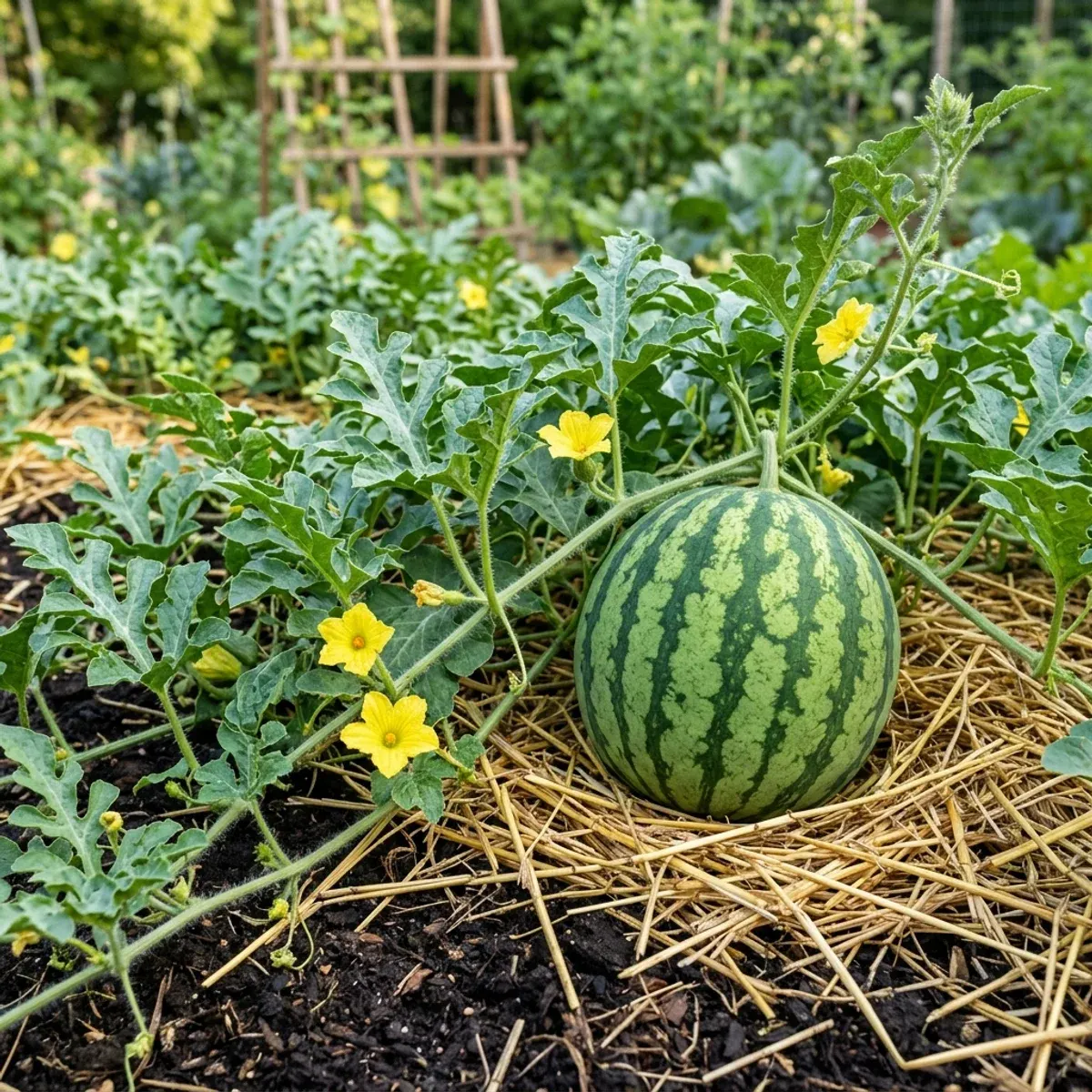
As fruits expand to grapefruit size, place a bed of clean dry straw or wooden shingles underneath each melon to keep the developing rind off damp soil, which protects against wireworms, slugs, and bottom rot.
Three rules for harvesting ripe watermelon
Never harvest by guessing or knocking alone. Confirm ripeness using this three-part checklist:
- The spoon and tendril test: Locate the curling tendril attached to the vine directly opposite the melon's stem. It must be 100% dry, brown, and brittle—not green or rubbery.
- The belly spot: Gently roll the melon slightly. The ground spot where it rested must be a rich, creamy, buttery yellow. If it is white or pale green, it is still immature.
- The rind sheen: The glossy green skin takes on a dull, matte finish, and the outer rind resists thumbnail pressure without bruising.
Cut the stem with hand pruners, leaving 1 to 2 inches of stem attached to the fruit. Store uncut ripe watermelons at 50–60°F for up to 2 to 3 weeks.
Planning a melon patch? Size your raised bed soil and compost blends with our Raised Bed Soil Calculator.
Sources: Texas A&M AgriLife Extension — Watermelon, Clemson HGIC — Watermelon, University of Georgia Extension — Commercial Watermelon Production.
Beneficial Companion Plants for Watermelon
Plant watermelon near: Radish, Marigold, Nasturtium, Oregano, Bush Beans.
FAQ
How do you tell when a watermelon is ripe on the vine?
Check three reliable indicators together: (1) The curly tendril closest to where the melon stem attaches to the vine has turned completely brown, dried, and shriveled. (2) The field spot (where the melon rests on the ground) has changed from pale white/green to a creamy, buttery yellow. (3) The rind turns dull rather than glossy and gives a hollow, dull 'thump' when rapped with knuckles.
Do watermelons ripen after being picked?
No. Unlike tomatoes or cantaloupes, watermelons do not contain starch reserves that convert to sugars after harvest. Once severed from the vine, sugar accumulation stops immediately. Never harvest under-ripe watermelons expecting them to sweeten on the kitchen counter.
Can you grow watermelons in a raised bed or on a trellis?
Yes, by choosing 'icebox' or bush varieties (such as *Sugar Baby* or *Bush Sugar Baby*) which produce compact 5 to 8 lb melons on 4 to 6-foot vines. If training up a vertical trellis, support each developing melon with a cloth hammock or pantyhose sling tied to the trellis frame.
Why did my watermelon crack or split open in the garden?
Splitting is caused by irregular watering—specifically, a sudden heavy rainstorm or heavy soaking after a prolonged dry spell while melons are nearing maturity. The rapid surge of water forces the internal pulp to swell faster than the outer rind can expand.
What is the difference between seeded and seedless watermelons?
Seedless watermelons are triploid hybrids (having three sets of chromosomes) created by crossing a standard diploid plant with a tetraploid plant. Because their pollen is sterile, they must be interplanted alongside a standard seeded diploid variety to trigger fruit set.