How to Grow Raspberries
Rubus idaeus

By Efraín Vega · Published October 29, 2026
Sun
Full sun (6–8 hrs daily); afternoon shade beneficial in extreme southern zones
Water
1–1.5 in/week; drip irrigation preferred to keep foliage and berries dry
Spacing
2–3 ft apart within the row; 6–8 ft between parallel rows
Soil pH
6.0–6.8 (rich, loamy, exceptionally well-drained soil)
Days to maturity
Summer-bearers fruit in early summer on second-year canes; everbearers fruit in late summer/autumn on first-year canes
Hardiness zones
3–9, depending on cultivar
When to plant: Early spring as dormant bare-root canes or potted nursery stock • Calculate planting dates for your city →
Raspberries are among the highest-yielding backyard fruit crops per square foot, providing dozens of pints of berries from a modest 10-foot garden row. Because fresh raspberries are fragile and expensive at grocery stores, growing them at home provides unmatched flavor and economic value.
Trellising & Structure
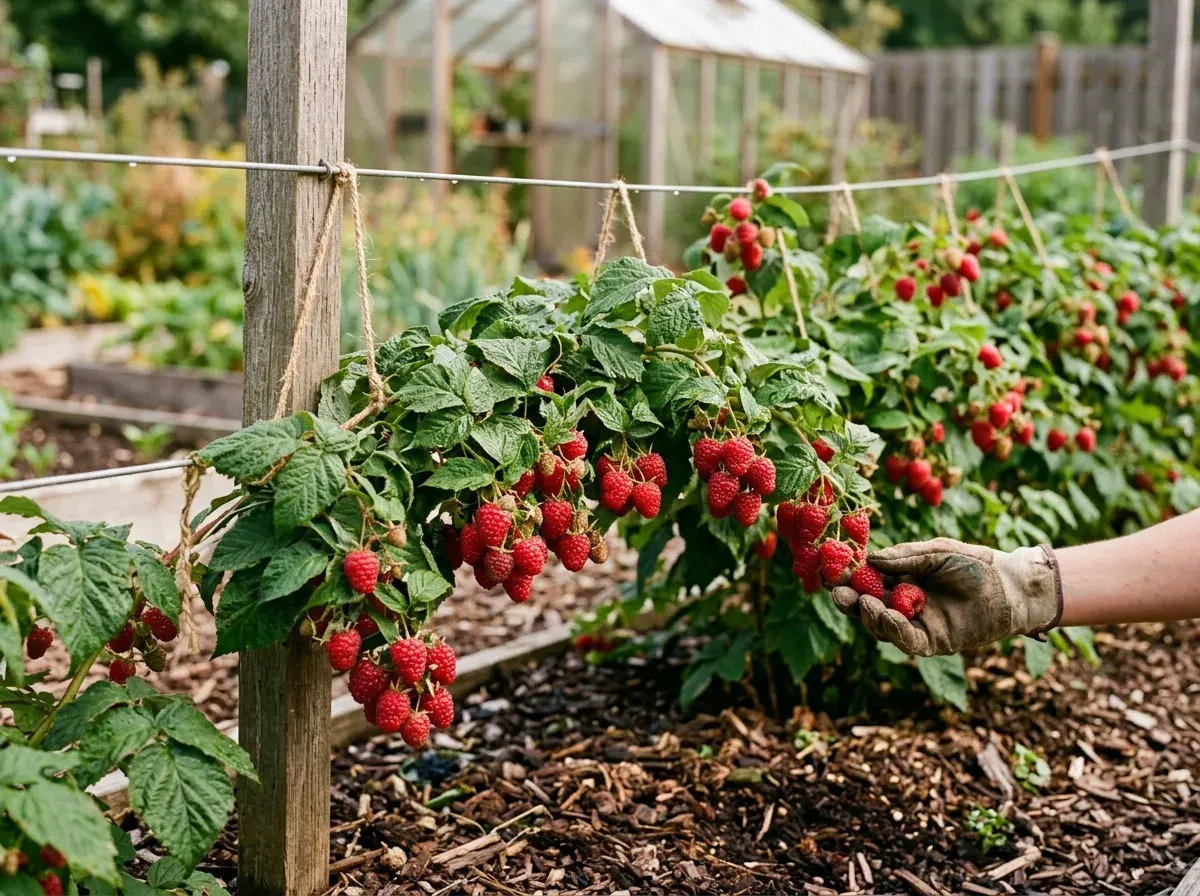
Without physical support, raspberry canes flop into paths and touch damp soil, inviting grey mold (Botrytis cinerea).
- T-Trellis Design: Set 4×4 pressure-treated posts at each end of the row with a 24-inch crossarm at 3 feet and another at 4.5 feet high.
- Support Wires: Run high-tensile galvanized wire along both sides of the crossarms so canes are contained within a central corridor.
- Airflow: Good ventilation prevents foliar fungal diseases and speeds drying after morning dew or summer rains.
Soil & Watering Best Practices
Raspberry roots are prone to phytophthora root rot in waterlogged or heavy clay soil. Build raised beds at least 10 to 12 inches deep with loose, loam-based soil rich in aged compost.
Install drip irrigation or soaker hoses at the base of the canes; overhead sprinklers wet ripening fruit clusters and trigger rapid berry decay.
Beneficial Companion Plants for Raspberry
FAQ
What is the difference between summer-bearing and everbearing raspberries?
Summer-bearing (floricane) raspberries bear one heavy crop in early summer exclusively on second-year canes. Everbearing (primocane/fall-bearing) raspberries bear a crop on the top third of first-year canes in late summer/fall, and can fruit again lower on the same cane the following summer.
How do I prune raspberries for maximum yield?
For summer-bearers, cut all fruited brown canes down to ground level immediately after harvest, leaving 4 to 6 strong new green canes per foot of row. For fall-bearers, the simplest method is mowing or pruning all canes to the ground in late winter for a single massive autumn harvest.
Why do raspberries need a trellis system?
Fruiting canes grow 5 to 7 feet long and bend to the ground under the weight of wet foliage and heavy berry clusters. A simple two-wire T-trellis keeps canes upright, prevents fruit rot on the soil, and makes picking effortless.
How do I stop raspberries from invading other garden beds?
Raspberries spread rapidly via underground rhizomes. Contain them by lining bed borders with 12- to 18-inch deep plastic root barriers or planting them in dedicated, enclosed raised beds.