Garlic
Allium sativum

By Rowan Plank · Published October 1, 2026
Sun
Full sun: at least 6 hrs of direct light, ideally 8–10
Water
Even moisture while growing; water less as harvest approaches
Spacing
3–6 in apart in the row; double or triple rows save space
Soil pH
About 6.0–6.5, the same target as onions
Days to maturity
Planted in fall, harvested the following early to mid summer
Hardiness zones
Grown across the US; fall-planted cloves overwinter in the ground
When to plant: Mid to late fall (mid–late October in the mid-Atlantic), before the ground freezes
Plant garlic in mid to late fall: individual cloves, pointy end up, 1–2 inches deep and 3–6 inches apart. The cloves root before winter, grow again in spring, and are ready to harvest the following summer when about half the leaves have turned brown.
It's one of the easiest crops to fit into a raised bed, because it grows through the months when the bed would otherwise sit empty.
When should you plant garlic?
In fall, a few weeks before the ground freezes. University of Maryland Extension recommends mid to late October in the mid-Atlantic, which gives each clove time to grow roots and a few leaves before cold weather. Plant a little earlier in colder regions and later in the South.
Break bulbs into cloves right before planting and use the biggest ones — large cloves grow large bulbs.
Hardneck or softneck garlic?
| Type | Cloves | Storage | Scapes |
|---|---|---|---|
| Hardneck | Fewer, larger | Shorter | Yes — flower stalk in early summer |
| Softneck | More, smaller | Longest; the grocery-store type | No |
Softneck garlic stores longest. Hardneck garlic has bigger cloves and produces scapes, which Maryland Extension recommends pinching off to push energy into the bulb.
How do you care for garlic over winter?
After planting, spread shredded leaves or straw along the rows. The mulch keeps weed seeds from germinating and evens out soil temperature. Keep the soil evenly moist in spring while the bulbs size up, then water less often as harvest approaches, which helps prevent disease.
Mark the rows
Garlic disappears under mulch all winter. Label the rows so you don't plant over them in early spring.
How do you harvest and cure garlic?
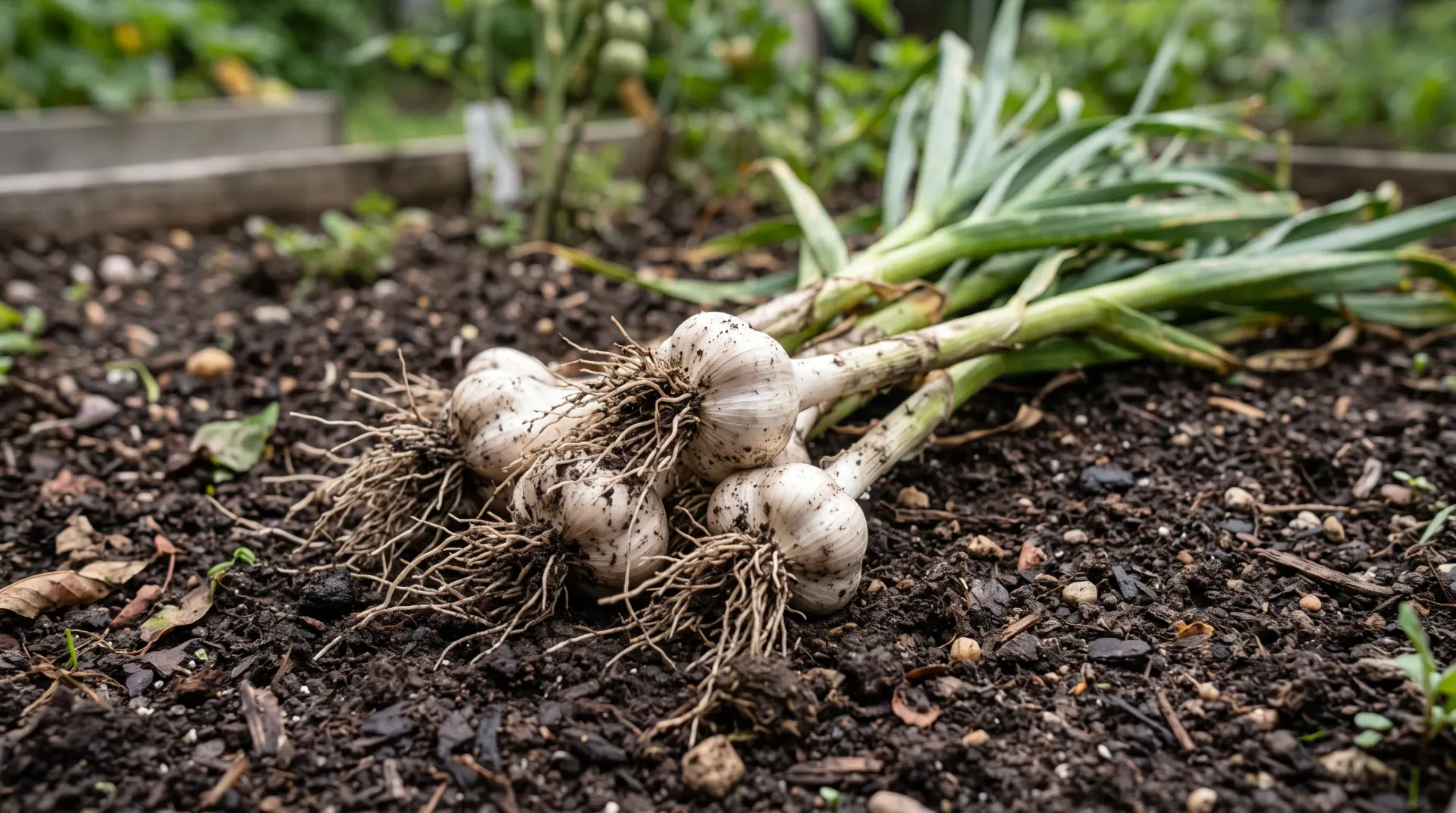
Lift plants with a garden fork — don't pull by the stalk — when about half the foliage has turned brown. Brush off loose soil and let the bulbs dry with the tops attached, in a well-ventilated spot out of direct sun. After 7–14 days, cut off the tops and store the bulbs somewhere cool and dry.
Planning a garlic bed? The Raised Bed Soil Calculator sizes the fill, and the Mulch Calculator tells you how much straw or leaf mulch to cover it.
Sources: Growing Garlic in a Home Garden — UMD Extension, Target Soil pH Values for Vegetable Crops — UMD Extension.
Companion plants
Tomato, Lettuce, Carrots
FAQ
Can I plant garlic from the grocery store?
It can grow, but you don't know the variety or where it was grown, and it may not suit your climate. Seed garlic from a garden supplier is sold for planting and gives more predictable bulbs.
What are garlic scapes, and should I cut them?
Scapes are the curly flower stalks hardneck garlic sends up in early summer. University of Maryland Extension recommends pinching them off to increase bulb size — and they're edible, used like scallions.
How do I know when garlic is ready to harvest?
Lift the bulbs with a garden fork when about half of the leaves have turned brown. Waiting too long lets the cloves separate and the bulbs store poorly.
Related calculators
More vegetables
Carrot
Grow carrots in full sun and loose, stone-free soil 8–12 in deep. Sow seed ¼ in deep, thin to 2–3 in apart, and harvest in 60–80 days.
Lettuce
Lettuce grows best in cool spring and fall weather. Sow ¼–½ in deep, thin to 4–12 in apart by type, and harvest leaf lettuce in 50–60 days.
Tomato
Tomatoes need full sun, 1–2 in of water a week, and soil above 60°F at planting. Space them 18–36 in apart and harvest 60–85 days after transplanting.