Marigold
Tagetes spp. (French: T. patula, African: T. erecta)

By Rowan Plank · Published September 28, 2026
Sun
Full sun (6+ hrs)
Water
~1 in/week; drought-tolerant once established
Spacing
8–10 in (French/Signet) to 12–18 in (African)
Soil pH
6.0–7.0
Days to maturity
French types bloom fastest; start African types indoors 6–8 weeks before last frost
Hardiness zones
Warm-season annual in all US zones; killed by first hard frost
When to plant: Direct-sow or transplant after last frost, once soil has warmed
Marigolds need full sun, warm soil, and about 1 in of water a week. Plant them after your last frost, spacing compact French types 8–10 in apart and tall African types 12–18 in apart.
They're one of the most common flowers in a vegetable garden — easy, fast to bloom, and happy in average soil.
When should you plant marigolds?
After your last frost, once the soil has warmed. French and Signet types grow quickly from seed sown directly in the bed. African marigolds are slower: start them indoors 6–8 weeks before your last frost and set them out after it.
Go easy on fertilizer. Marigolds bloom better in average soil — extra nitrogen pushes leaves instead of flowers.
Not the same as calendula
Marigold (Tagetes) and calendula (“pot marigold”) share a common name but belong to different genera. See the calendula guide if that's the one you're after.
Which marigold type should you grow?
| Type | Size | Spacing | Best for |
|---|---|---|---|
| French (T. patula) | Compact, bushy | 8–10 in | Bed edges, between vegetables |
| Signet (T. tenuifolia) | Small, lacy, tiny single flowers | 8–10 in | Edging; petals are edible |
| African (T. erecta) | Tall, large pompom flowers | 12–18 in | Back of a bed, cut flowers |
Do marigolds help control nematodes?
Only as a cover crop. Research from the University of Florida shows marigolds can reduce root-knot nematodes when you plant a dense stand, grow it for several months, then till or dig the plants into the soil. Interplanting a few marigolds among vegetables doesn't lower nematode numbers. Grow them for color and pollinators first.
What problems do marigolds get?
- Spider mites — common in hot, dry weather; look for fine webbing and stippled leaves, and knock them back with a strong spray of water.
- Powdery mildew and gray mold — from crowding and overhead watering; give plants room and water at the base.
- Leggy plants with few flowers — usually too much shade or too much nitrogen.
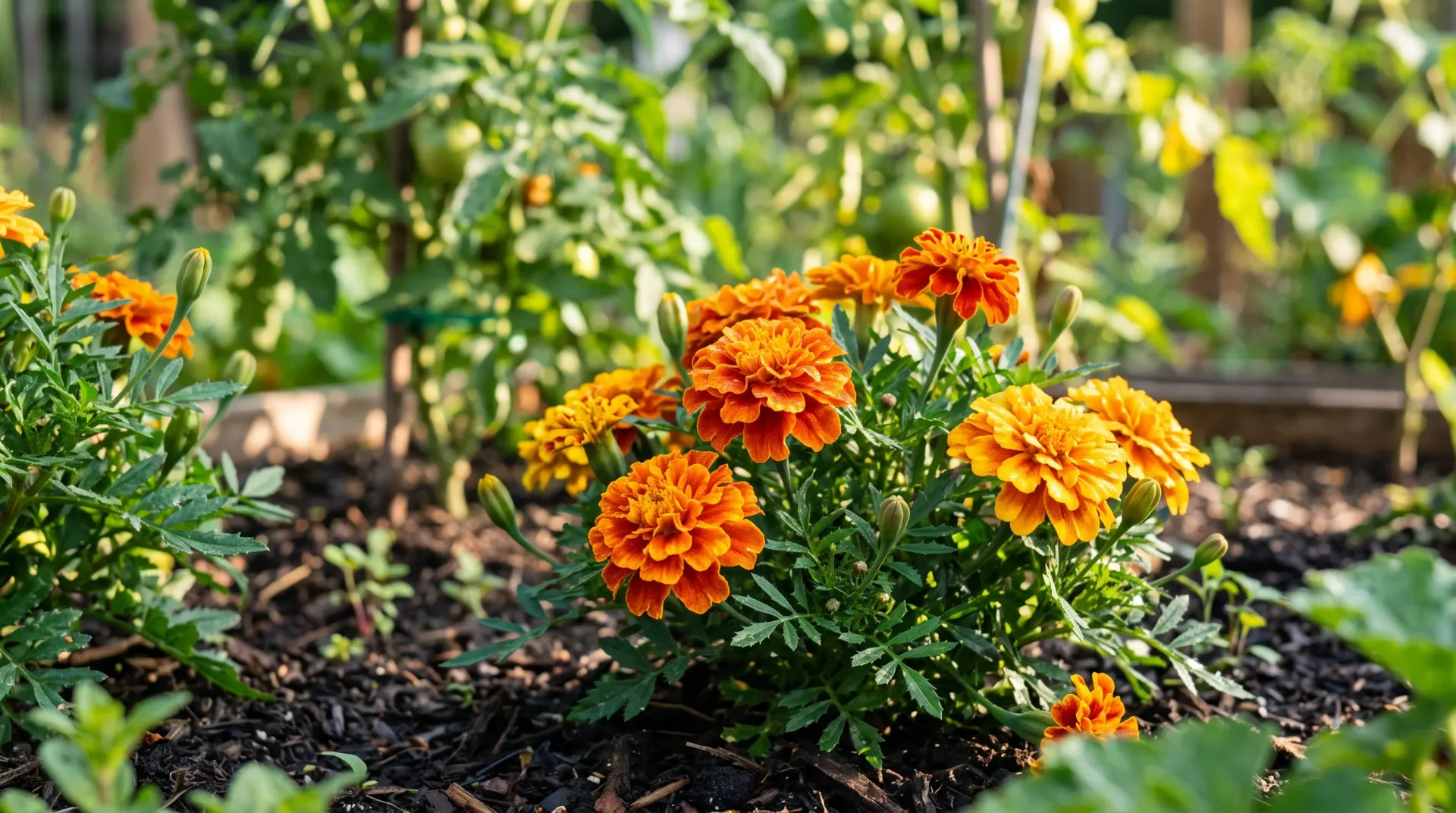
Often planted alongside tomatoes as a companion flower.
Sources: Marigolds for Nematode Management — UF/IFAS, Marigolds — UMN Extension.
Companion plants
Tomato, Pepper, Squash
FAQ
Do marigolds really repel garden pests?
Mostly no. Marigold roots produce a compound (alpha-terthienyl) that can reduce root-knot nematodes — but only when you grow a thick stand of marigolds as a cover crop for several months and then dig them into the soil. A few marigolds planted between vegetables don't change nematode levels, and the idea that their scent repels insects isn't well supported.
Is marigold the same plant as calendula?
No. Calendula is sometimes called "pot marigold," but garden marigolds are a different genus (Tagetes). They're both in the daisy family and both easy annuals, but they're different plants.