Calendula
Calendula officinalis

By Rowan Plank · Published September 28, 2026
Sun
Full sun to partial shade
Water
~1 in/week; drought-tolerant once established
Spacing
8–12 in apart
Soil pH
6.0–7.0
Days to maturity
~45–60 days from seed to bloom
Hardiness zones
Grown as a cool-season annual in zones 2–11
When to plant: Direct-sow 2–3 weeks before last frost; sow again in late summer for fall blooms
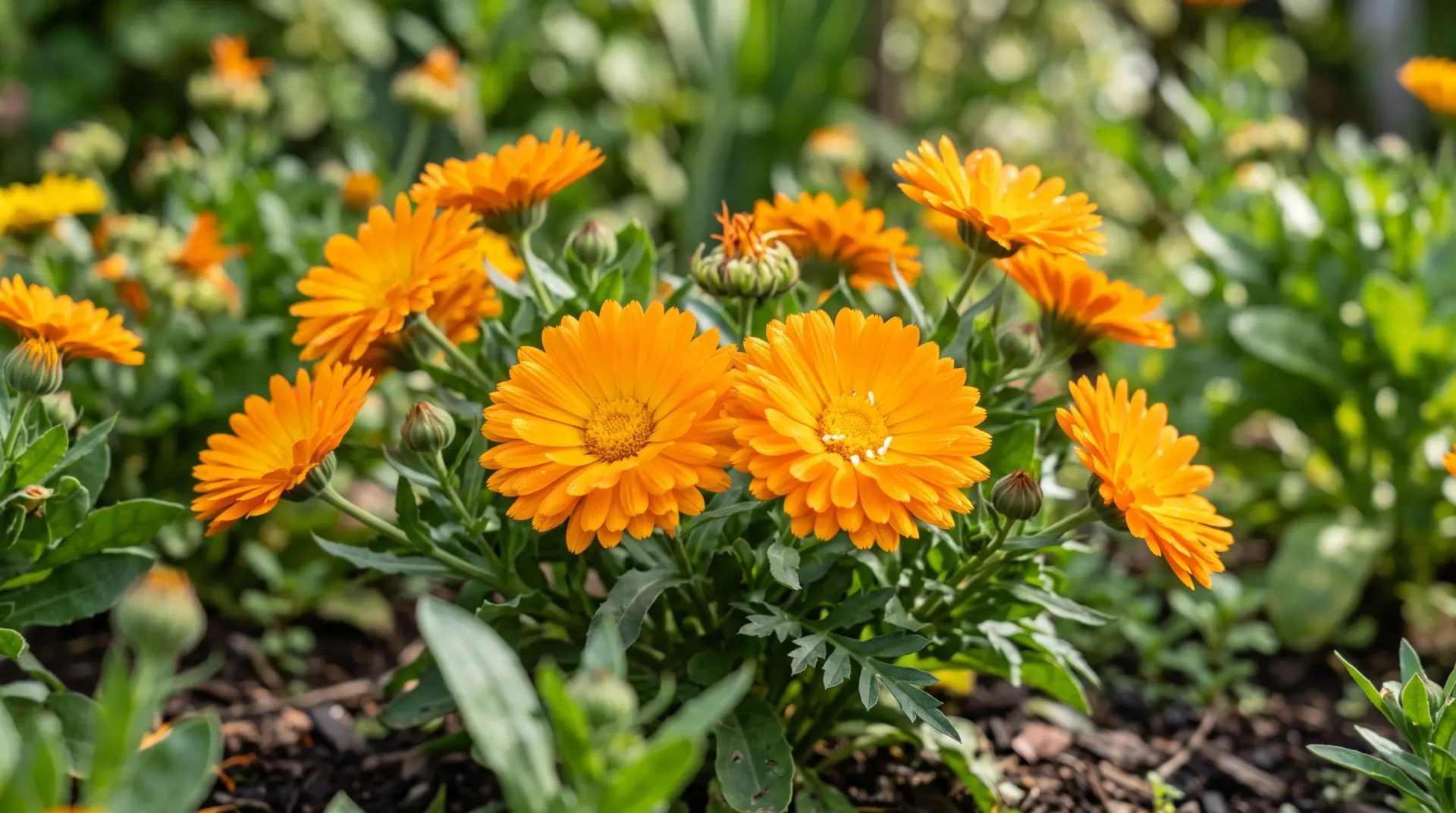
Calendula is a cool-season flower that grows in full sun to part shade with about 1 in of water a week. Sow it 2–3 weeks before your last frost, space plants 8–12 in apart, and expect blooms in about 45–60 days.
It's an easy, fast-blooming flower that's often tucked into vegetable beds for color and to draw in pollinators.
Not the same as marigold
Calendula (“pot marigold”) and garden marigold (Tagetes) are both in the daisy family but belong to different genera. See the marigold guide if that's the one you mean.
When should you plant calendula?
Direct-sow in early spring, a couple of weeks before your last frost. Calendula handles light frost, but a hard freeze in the 20s°F kills it. It prefers cool weather and often struggles in hot, humid summers — so a second sowing in late summer gives you a fall round of blooms.
How do you keep calendula blooming?
Deadhead — snip off faded flowers before they go to seed. That's the single best way to stretch the bloom season. If you'd rather not deadhead, sow a few seeds every few weeks instead, or let some plants go to seed: calendula self-sows readily and will come back on its own.
Deadhead to keep it blooming
Removing spent flowers keeps the plant making new buds instead of seed.
What problems does calendula get?
- Powdery mildew — common once weather turns hot and humid; give plants room for airflow.
- Aphids — calendula attracts them, which is why it's sometimes planted as a trap crop to pull aphids away from vegetables.
- Fading in summer heat — expect it to slow down or stop blooming in high heat; it picks back up when the weather cools.
Often planted alongside tomatoes as a companion flower.
Sources: Calendula — Wisconsin Horticulture, Calendula officinalis — NC State Extension.
Companion plants
Tomato, Peppers
FAQ
Why did my calendula stop blooming?
Two usual reasons: summer heat, which slows calendula down, and spent flowers left on the plant, which tell it to stop and set seed. Deadhead faded blooms regularly and it'll keep flowering.
Are calendula petals edible?
Yes — the petals are used fresh in salads or dried as a golden coloring, sometimes called "poor man's saffron." Only eat flowers you know haven't been treated with pesticides.
Is calendula the same as marigold?
No. Calendula is sometimes called "pot marigold," but garden marigolds are a different genus (Tagetes). Both are in the daisy family and both are easy annuals, but they're different plants.