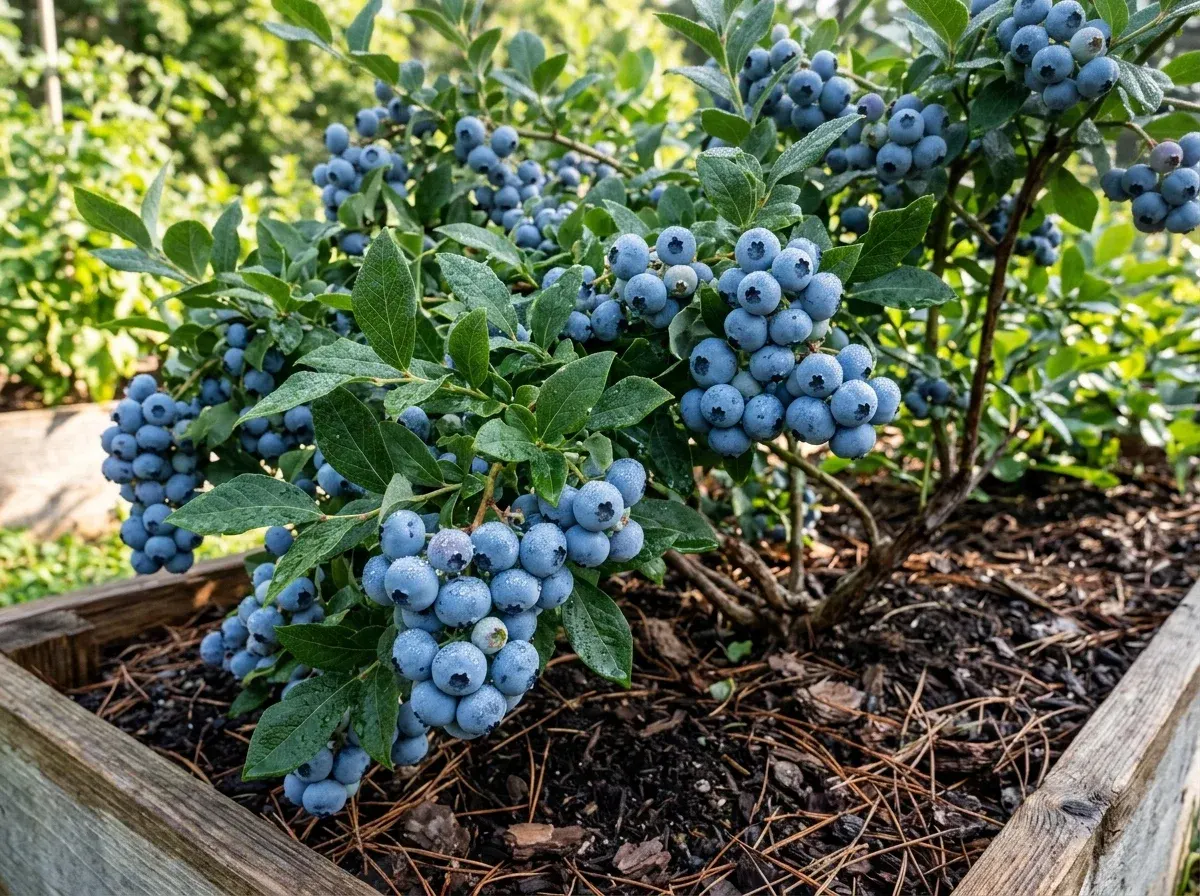
How to Grow Blueberry
Vaccinium corymbosum

By Efraín Vega · Published November 13, 2026
Sun
Full sun (6–8 hrs)
Water
1–2 inches weekly — shallow root systems dry out quickly
Spacing
4–5 ft apart for standalone shrubs; 3 ft for edible hedges
Soil pH
4.5–5.2 (strictly acid-loving)
Days to maturity
2–3 years to first heavy harvest; shrubs produce for 20–30+ years
Hardiness zones
Northern Highbush (Zones 3–7); Southern Highbush & Rabbiteye (Zones 7–10)
When to plant: Early spring or late autumn while dormant • Calculate planting dates for your city →
Blueberries (Vaccinium) are among the most rewarding edible perennials you can plant. A well-tended blueberry shrub will reliably produce 5 to 10 pounds of sweet, antioxidant-rich berries every summer for 25 to 50 years.
However, blueberries have one strict, non-negotiable requirement that trip up beginner gardeners: soil acidity. Unlike typical garden vegetables that thrive in neutral pH 6.0–6.8 soil, blueberries require an acidic pH of 4.5 to 5.2.
Blueberry Types by USDA Climate Zone
Before ordering nursery stock, select the right blueberry group for your local chill hours (hours between 32°F and 45°F during winter):
| Blueberry Class | Best USDA Zones | Chill Hours Needed | Top Varieties |
|---|---|---|---|
| Northern Highbush | Zones 3–7 | 800–1,000+ hours | 'Patriot', 'Bluecrop', 'Duke', 'Chandler' |
| Southern Highbush | Zones 7–10 | 150–400 hours | 'Misty', 'O'Neal', 'Sunshine Blue', 'Biloxi' |
| Rabbiteye | Zones 7–9 | 350–600 hours | 'Climax', 'Premier', 'Tifblue', 'Powderblue' |
| Half-High (Dwarf) | Zones 3–5 | 1,000+ hours | 'Northblue', 'Top Hat', 'Polaris' |
Soil Acidification: Why Raised Beds Are the Secret
Trying to lower native garden clay from pH 7.2 down to pH 4.8 can require hundreds of pounds of sulfur and years of waiting.
For instant success, construct a dedicated raised bed or plant in large 20-gallon smart pots filled with a specialized acid mix:
- 50% Canadian Sphagnum Peat Moss: Naturally acidic (pH 3.8–4.4) and holds tremendous moisture.
- 30% Acid Pine Bark Mulch or Fir Bark: Adds organic structure that resists compaction.
- 20% Coarse Sand or Perlite: Ensures rapid drainage so fine roots never suffocate.
Use Our Calculators for Bed Prep
Calculate the exact cubic volume needed using our Raised Bed Soil Calculator, and topdress with 3 inches of pine bark mulch using the Mulch Calculator to maintain soil moisture and acidity.
Planting and Cross-Pollination
- Space for Airflow: Space upright highbush varieties 4 to 5 feet apart in rows spaced 8 to 10 feet apart.
- Plant High: Set the root ball slightly above the surrounding soil level (1/2 inch) because the light organic soil mix will settle.
- Pair at Least Two Cultivars: Plant pairs of different varieties that share overlapping bloom windows (e.g., 'Duke' [early] with 'Patriot' [early-mid]). Cross-pollination between two genetically distinct cultivars consistently produces larger berries with higher sugar content.
       [Early Bloom: 'Duke'] <====== (Bees transfer pollen) ======> [Mid Bloom: 'Patriot']
              |                                                               |
     Yields 6-8 lbs/bush                                             Yields 8-10 lbs/bush
     Up to 40% larger berries                                        Extended 6-week harvest
Watering and Fertilization
Because blueberries have shallow, delicate root systems without deep taproots, consistent moisture management is critical:
- Water Quality Matters: If your tap water has high alkalinity or hard dissolved limestone (calcium carbonate), regular city watering will gradually drive your soil pH up into the chlorosis danger zone. Collect rainwater whenever possible or acidify tap water with a splash of vinegar.
- Fertilizer Source: Never apply fertilizers containing nitrate nitrogen (like calcium nitrate), which can burn blueberry roots. Use ammonium sulfate (for established beds requiring slight pH reduction) or organic acid-loving plant fertilizers formulated for azaleas, rhododendrons, and camellias.
Annual Pruning Schedule
Annual pruning ensures continuous fruit production and prevents small, crumbly berries:
- Years 1 & 2: Strip off all flower blossoms in spring as soon as they appear. Do not let the plant fruit. This channels 100% of the plant's energy into root mass and woody branch architecture.
- Year 3 Onward: Prune in late winter while dormant:
- Remove all dead, damaged, diseased, or winter-killed twiggy tips.
- Cut away low, horizontal branches touching the ground mulch.
- Thin the center of the bush to allow sunlight into the interior crown.
- Once bushes reach 5+ years old, cut out the thickest 1 to 2 gray, mossy canes right at ground level each year to trigger vigorous new red canes.
Sources: Blueberries in the Home Garden — NC State Extension, Growing Blueberries — University of Minnesota Extension.
Beneficial Companion Plants for Blueberry
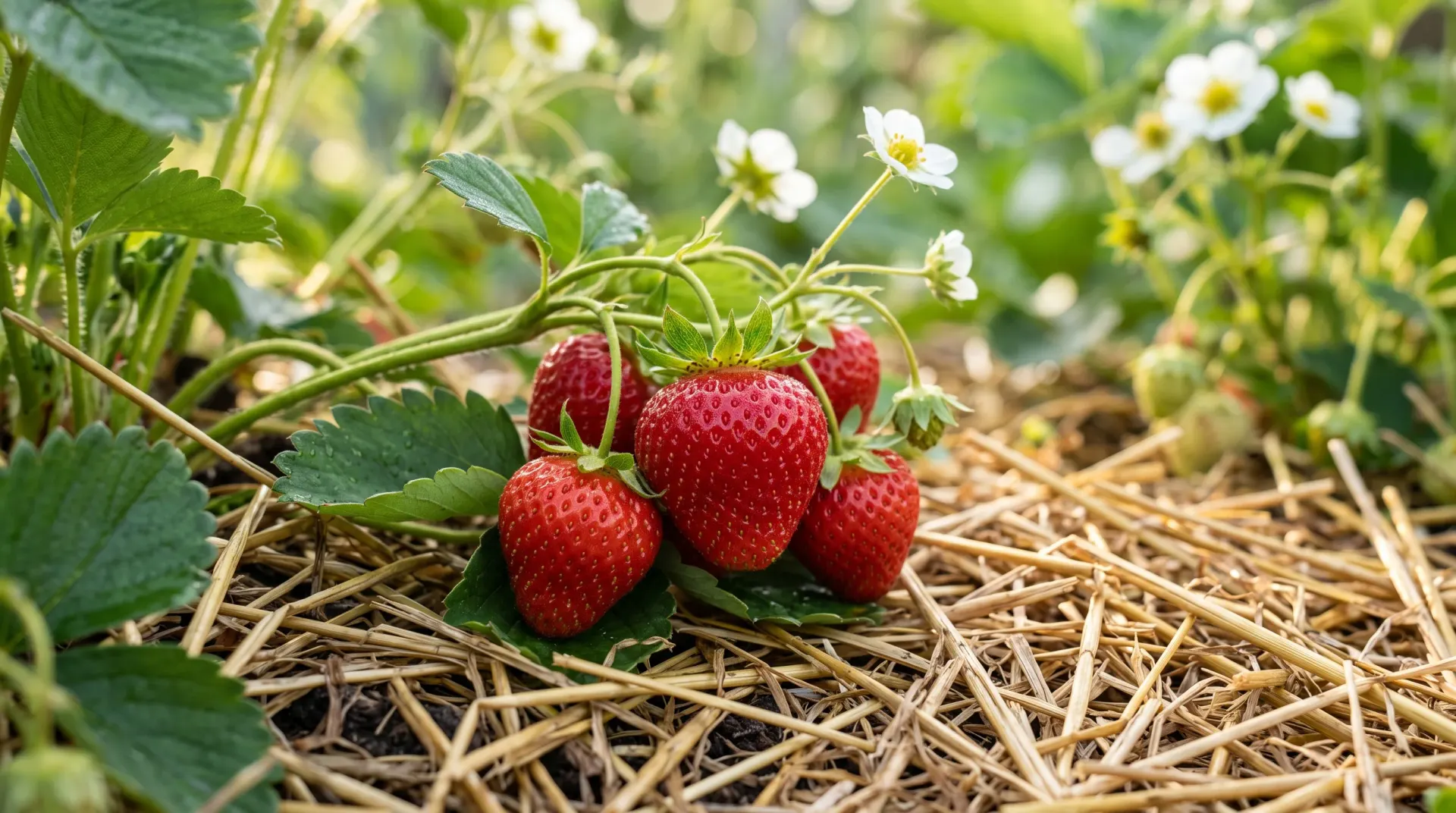
Plant blueberry near: Strawberry, Thyme, Marigold.
FAQ
Do you need two blueberry bushes to get fruit?
While many highbush cultivars are technically self-fertile, planting at least two different varieties that bloom at the same time increases fruit set, produces 30% to 50% larger berries, and yields significantly higher pounds per bush through cross-pollination.
Why are my blueberry bush leaves turning yellow with green veins?
This is classic iron chlorosis, almost always caused by soil pH being too high (above 5.5). When soil is too alkaline, blueberry roots cannot absorb iron. Amend the root zone with granular elemental sulfur, chelated iron, or acidifying peat moss to drop the pH back between 4.5 and 5.2.
What is the best soil mix for growing blueberries in raised beds?
In native garden soil, lowering pH can take months. In a dedicated raised bed or half-barrel container, mix 50% Canadian sphagnum peat moss, 30% shredded pine bark or aged fir mulch, and 20% coarse sand or perlite. This creates an instantly acidic (pH 4.8–5.0), moisture-retentive, yet fast-draining medium.
How much water do blueberry plants need?
Blueberries lack taproots and microscopic root hairs; their entire root structure consists of fine, thread-like fibrous roots concentrated in the top 8 to 12 inches of soil. Provide 1 to 2 inches of water per week during the growing season. Mulching with 3 to 4 inches of pine needles or wood chips is essential to keep roots cool and evenly moist.
When and how do you prune blueberry bushes?
Prune annually in late winter while shrubs are dormant. In the first 2 years, simply strip out flower buds to force root development. In mature bushes (year 4+), remove the oldest 2 to 3 thick gray canes right at ground level to encourage vigorous, fruit-bearing red-barked canes.