How to Grow Thyme
Thymus vulgaris

By Efraín Vega · Published October 28, 2026
Sun
Full sun (6–8+ hrs)
Water
Low; allow soil to dry between waterings; highly susceptible to root rot
Spacing
12–18 in apart
Soil pH
6.5–8.0 (prefers neutral to slightly alkaline, gritty soil)
Days to maturity
70–90 days from transplant; perennial ongoing harvest
Hardiness zones
Zones 5–9 (hardy evergreen perennial; mulched in cold winters)
When to plant: Spring after last frost, once soil warms to 55°F • Calculate planting dates for your city →
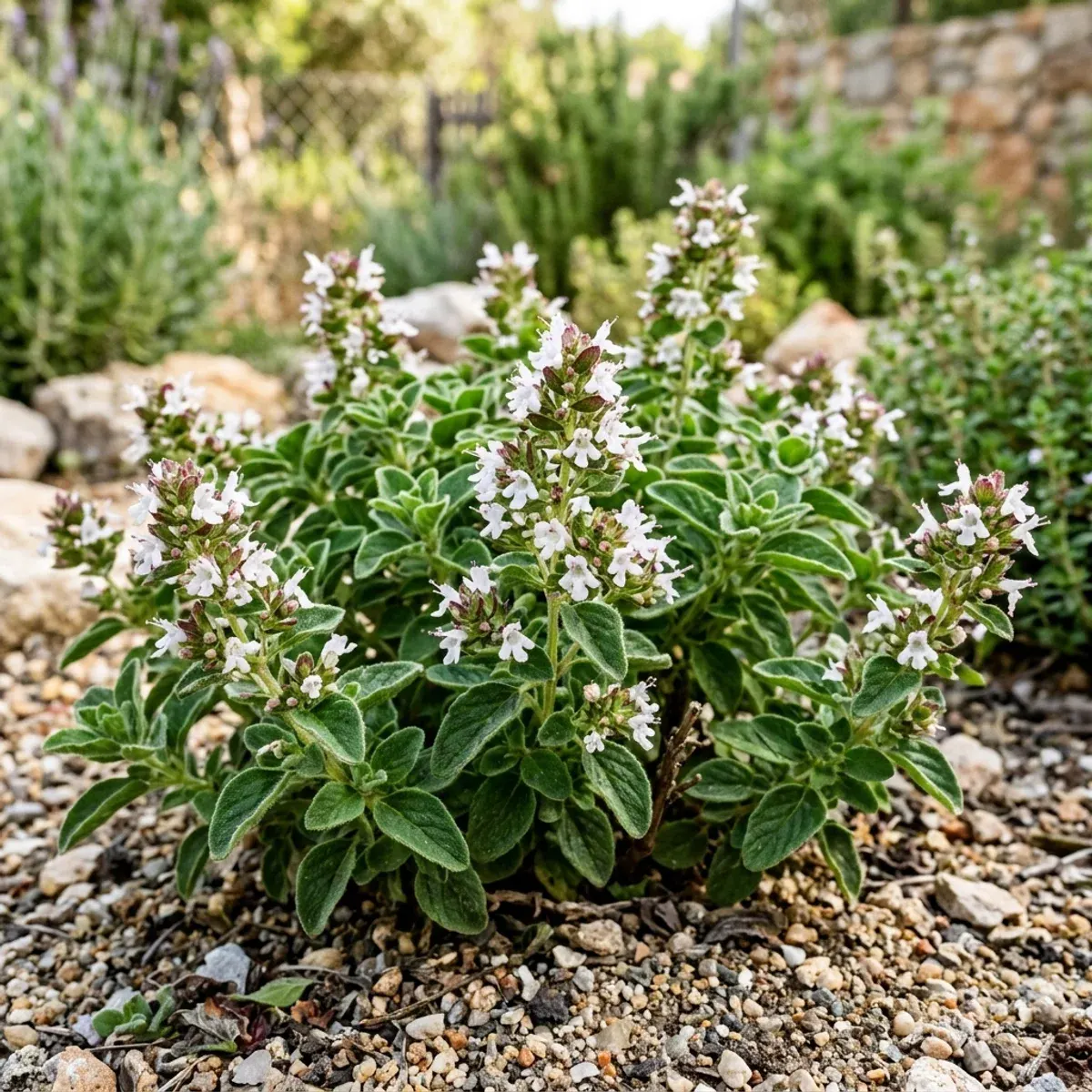
Thyme is an indispensable, evergreen Mediterranean culinary herb celebrated for its rich, earthy aroma and culinary versatility. It thrives in full sun, fast-draining gritty soil, and low-to-moderate moisture.
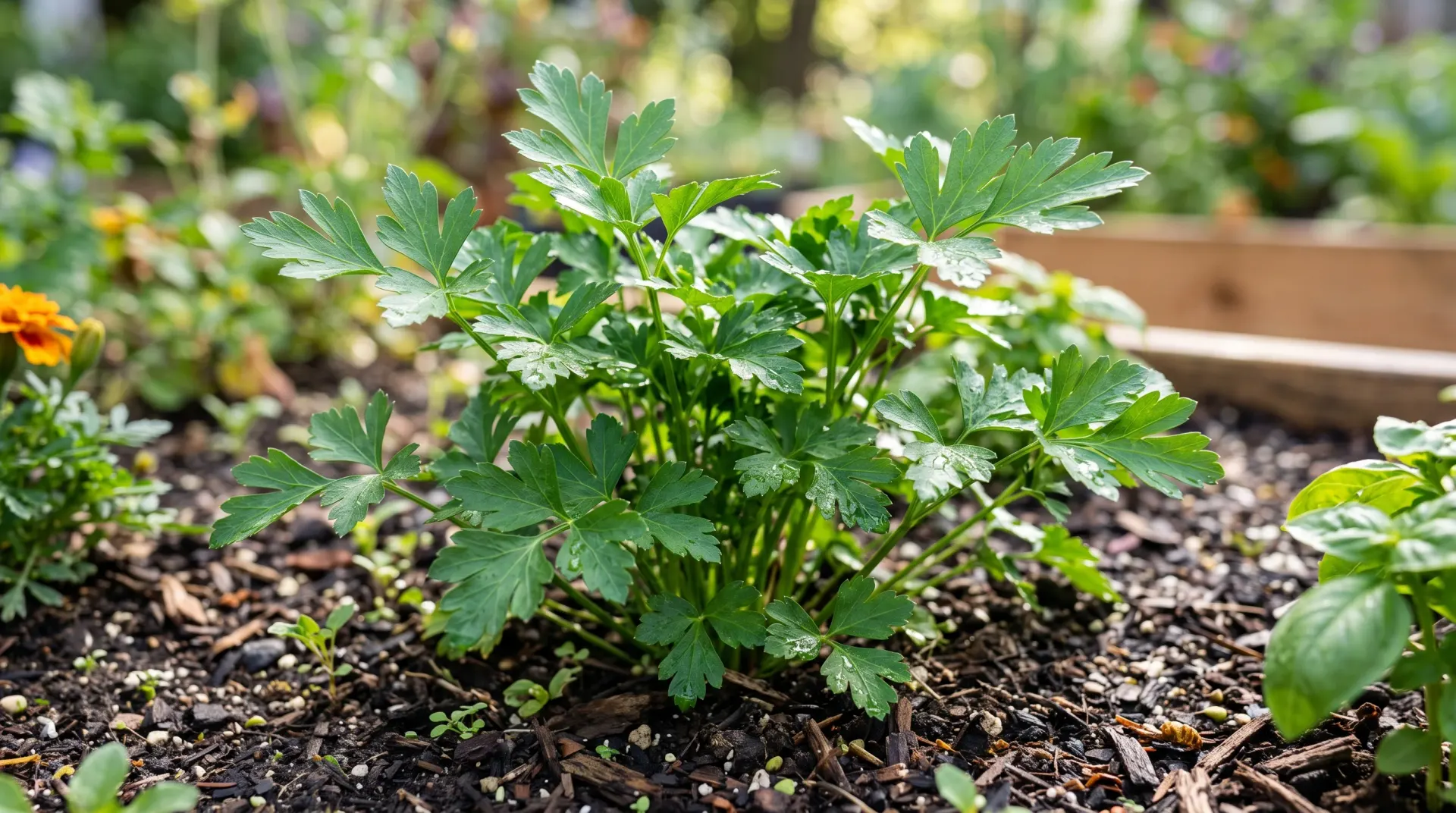
Unlike moisture-loving herbs like basil and parsley, thyme requires lean soil and dry root conditions. It is virtually carefree once established, resistant to deer and rabbits, and acts as a living groundcover and pest repellent along bed borders.
Varieties for the garden
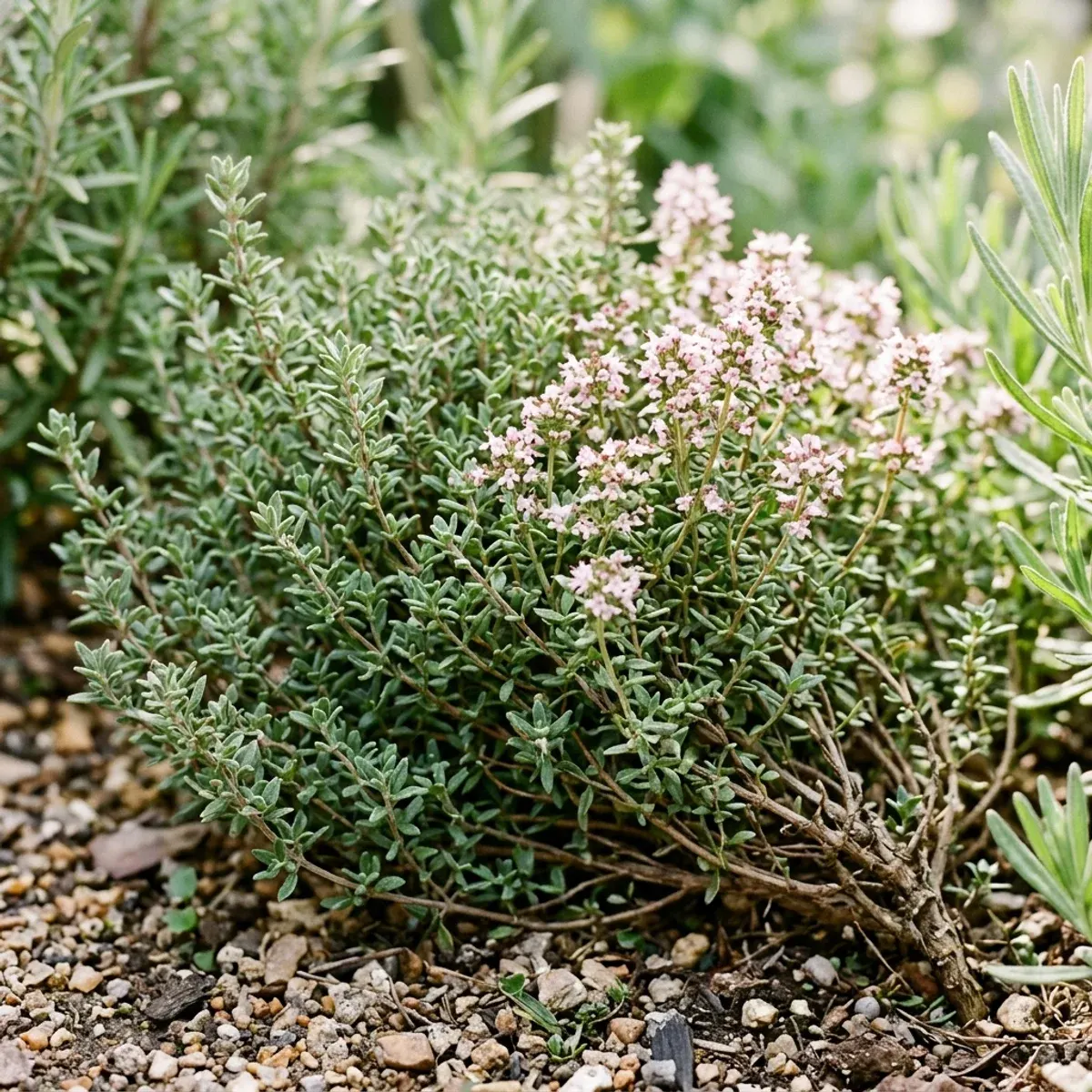
- English Thyme (Thymus vulgaris): The classic culinary workhorse. Extremely cold hardy (zone 5), forming a tidy mounded shrub 10 to 12 inches tall.
- French Thyme: Slightly sweeter, refined flavor preferred by French chefs; slightly less cold-hardy (zone 6).
- Lemon Thyme (Thymus x citriodorus): Distinct citrus aroma containing geraniol, exceptional with fish, chicken, and teas.
- Creeping Thyme (Thymus serpyllum): Low-growing (2 to 4 inches tall) ornamental and pollinator groundcover that withstands light foot traffic between stepping stones.
Soil, drainage, and planting
Thyme's primary enemy is root rot caused by heavy, waterlogged clay. It requires sharp, free-draining soil with a neutral to slightly alkaline pH of 6.5 to 8.0.
In raised beds or containers, mix coarse horticultural sand, fine perlite, or pumice into standard garden loam to accelerate drainage. Space transplants 12 to 18 inches apart to allow generous airflow around the low canopy, which prevents fungal foliar diseases during humid summer spells.
Never let thyme sit in standing water
If lower leaves turn yellow, blacken, and drop off, the plant is receiving too much water. Allow the top 2 inches of soil to dry out completely before watering again.
Sunlight and water needs
Plant thyme in an unobstructed spot that receives at least 6 to 8 hours of direct daily sunlight.
Water deeply upon initial planting to establish roots. Once established, thyme is remarkably drought tolerant. A deep soaking every 10 to 14 days during dry summer stretches is typically all it requires.
Pruning for longevity
Thyme is a perennial sub-shrub that forms woody stems over time.
- Early spring: Cut the entire plant back by one-third to one-half, just as new green buds appear. Always leave green growth on the stem; cutting into bare, dead-looking old wood will often kill that branch.
- Mid-summer: Lightly shear back spent blossoms after flowering to encourage a fresh flush of culinary leaves for autumn.
Harvesting thyme
Snip fresh sprigs throughout the growing season whenever needed in the kitchen. For bulk harvesting and drying, snip stems in the morning just as the tiny pink-white blossoms begin to open, which is when thymol oil concentrations are at their seasonal peak.
Designing an herb spiral or Mediterranean raised planter? Size your gravelly soil mix with our Raised Bed Soil Calculator.
Sources: Penn State Extension — Thyme, Clemson HGIC — Thyme, University of Illinois Extension — Herb Gardening: Thyme.
Beneficial Companion Plants for Thyme
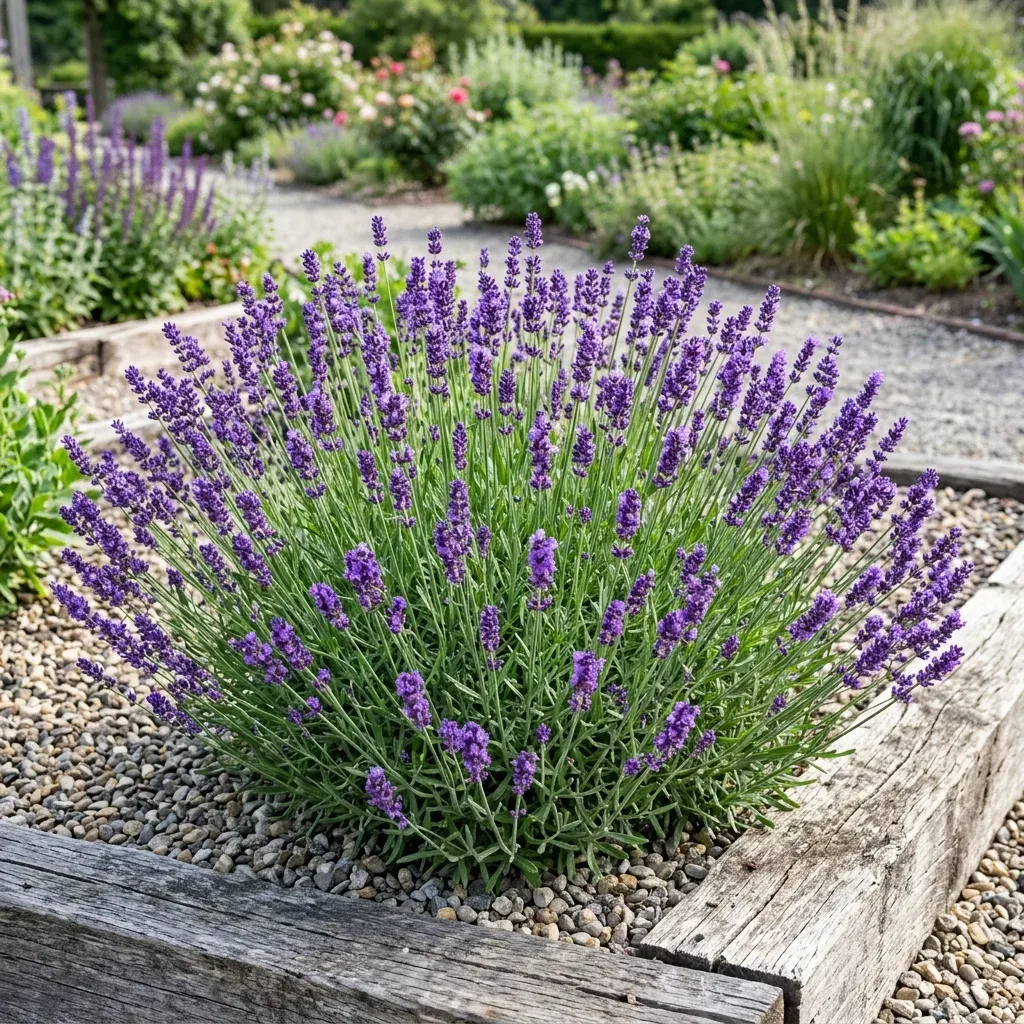
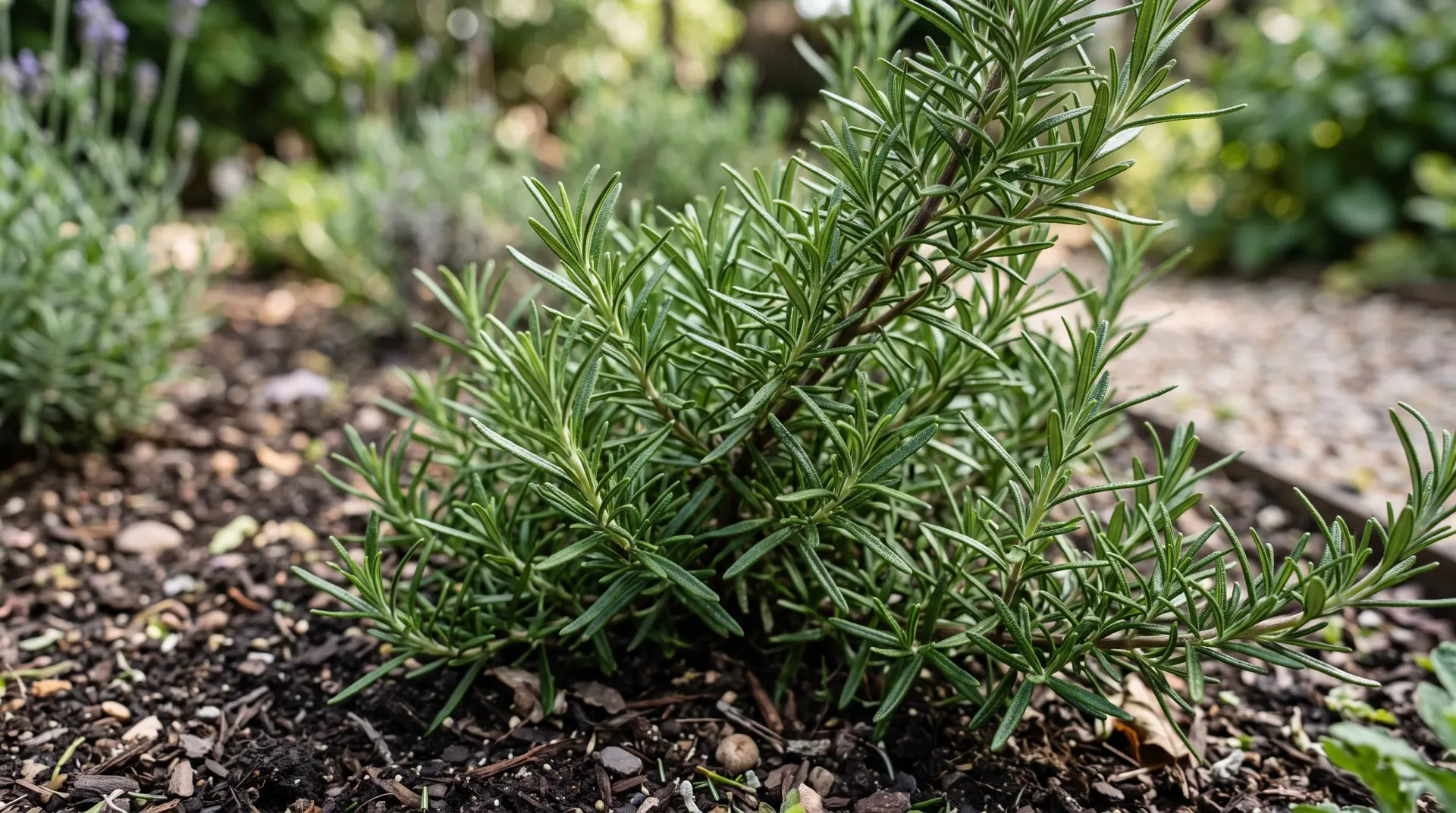
Plant thyme near: Rosemary, Lavender, Cabbage, Tomato, Strawberry.
FAQ
Can you grow thyme from seed?
Thyme can be started from seed indoors, but germination is notoriously slow and erratic, often taking 14 to 28 days. Starting from nursery transplants, softwood stem cuttings, or root divisions is much faster and produces true-to-type culinary cultivars like English or French thyme.
Why are my thyme branches turning brown and woody in the center?
As thyme matures over 3 to 4 years, inner stems naturally lignify into bare wood that stops leafing out. Annual pruning in early spring—cutting back top growth by one-third (never cutting down into old, leafless woody crown)—keeps bushes dense and promotes tender young shoots.
What is the difference between English thyme and French thyme?
English thyme (*Thymus vulgaris*) is the hardiest, most common culinary variety with robust, earthy flavor and cold tolerance to zone 5. French thyme (summer thyme) has a narrower leaf, sweeter subtle aroma, and higher essential oil content, but is slightly more tender in winter freezes.
Does thyme like rich, heavily fertilized soil?
No. Thyme is native to rocky, arid Mediterranean scrublands. Rich soil or high-nitrogen fertilizers make thyme leggy, soft, and dilute its aromatic oils (thymol). Grow thyme in lean, gravelly soil without heavy feeding.
How do you dry fresh thyme for storage?
Gather bundles of 10 to 15 stems, secure with a rubber band, and hang upside down in a warm, dark, airy location for 7 to 14 days. Once crisp, slide your fingers down the stem from top to base to strip the tiny dried leaves into an airtight spice jar.