How to Care for Kale: Soil, Frost Sweetening & Continuous Harvest Guide

By Efraín Vega · Published November 24, 2026
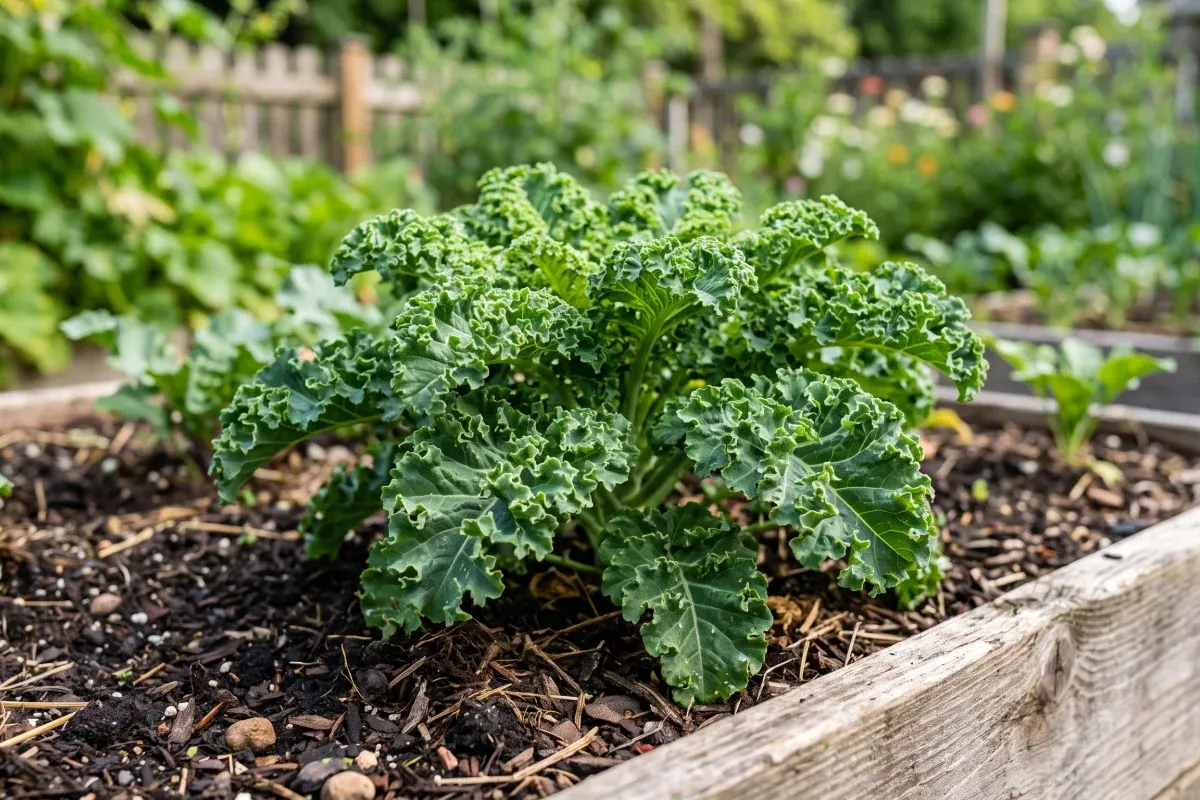
Kale (Brassica oleracea var. acephala) is arguably the most resilient, productive leafy green you can grow. Unlike delicate spinach or heat-sensitive butterhead lettuce that bolt to seed at the first warm afternoon, a single vigorous kale plant can yield crisp, nutrient-dense leaves continuously for 9 to 10 months—from early spring right through winter snowfalls.
However, home gardeners often encounter two common problems: tough, bitter leaves during summer heatwaves, or plants ravaged by green cabbage worms.
The secret to sweet, tender kale with perpetual weekly harvests lies in soil pH management (neutralizing clubroot), cut-and-come-again stem pruning, and taking advantage of autumn frost physics.
The Best Soil for Kale: Neutral pH & Clubroot Defense
As a heavy leafy brassica, kale demands abundant organic nitrogen and steady moisture. However, the most critical soil parameter is pH:
                        KALE SOIL BENCHMARKS
   =====================================================================
   [ Target Soil pH ]         6.5 to 6.8 (Avoid acidic soils < 6.2)
   [ Soil Texture ]           Rich loam with 10%–15% organic compost
   [ Drainage Class ]         Well-drained; handles clay better than root crops
   [ Sunlight Needs ]         Full sun (6+ hrs) or partial afternoon shade
   =====================================================================
The Danger of Acidic Soil (Clubroot Disease)
If your garden soil is acidic (pH below 6.2), brassicas are vulnerable to clubroot (Plasmodiophora brassicae), a destructive soil pathogen that causes roots to swell into distorted, gnarled clubs that cannot absorb water.
- Test your soil pH before planting.
- If pH is below 6.5, broadcast agricultural limestone or dolomitic lime 4 to 6 weeks before planting to elevate the root zone into the safe 6.5–6.8 window.
Soil Recipe for Raised Beds
For a 4×4 or 4×8 raised bed, blend:
- 40% Screened Topsoil or Sandy Loam
- 40% Mature Compost or Decomposed Manure: Use our Compost Bin Calculator to size your home compost.
- 20% Horticultural Perlite or Coarse River Sand: Ensures rapid gravitational drainage during heavy spring rains. Calculate exact volume with our Raised Bed Soil Calculator.
Cultivar Selection: Curly vs. Dinosaur vs. Russian
Selecting the right cultivar determines your kitchen versatility and cold tolerance:
| Variety Class | Top Cultivars | Leaf Texture & Appearance | Best Kitchen Uses | Cold Tolerance |
|---|---|---|---|---|
| Lacinato / Tuscan (Dino) | 'Nero di Toscana', 'Black Magic' | Flat, puckered, strap-like blue-green leaves | Raw salads, kale chips, Italian soups | Hardy to 15°F (-9°C) |
| Curly Scotch | 'Winterbor', 'Dwarf Green Curled' | Frilly, tightly ruffled, deep green foliage | Steaming, braising, garnishes | Extreme (Survives 10°F) |
| Red Russian | 'Red Russian', 'Siberian' | Flat, deeply lobed oak-like leaves with purple veins | Ultra-tender baby greens, smoothies | Very hardy (Down to 15°F) |
Spacing & Planting Calendars
Because kale grows large and bushy (up to 30 inches tall and 24 inches wide), proper spacing prevents powdery mildew and fungal leaf spot:
- Mature Plants: Space transplants 12 to 18 inches apart in rows spaced 18 to 24 inches apart. In intensive raised beds, allocate 1 plant per square foot (check our Square Foot Gardening Spacing Chart).
- Spring Crop: Start seeds indoors 5 to 6 weeks before your last spring frost. Move hardened-off transplants into the garden 3 to 4 weeks before the last frost date. Kale seedlings easily tolerate light frosts down to 28°F.
- Fall Crop (The Sweetest Harvest): Direct seed or transplant in midsummer (July–August), roughly 65 to 75 days before your first fall frost. As plants mature into the crisp autumn air, cooler nights completely eliminate summer bitterness.
The "Cut-and-Come-Again" Harvesting Method
Never harvest an entire kale plant by chopping it off at the base. By harvesting properly, you turn each plant into a perpetual green factory:
                    CUT-AND-COME-AGAIN HARVESTING
  ======================================================================
                     [ TOP CROWN BUD: DO NOT TOUCH ]
                     - Tiny emerging center leaves
                     - Apical growing tip
                               \ | /
                     [ MID-TIER LEAVES: GROWING ]
                     - Sizing up for next week
                               \ | /
                     ============================
                     [ BOTTOM OUTER LEAVES: HARVEST ]
                     - Large, mature, palm-sized
                     - Snap cleanly downward at base
                     ============================
                                 |  (Central Woody Stem)
                                === (Soil Surface)
- Wait for 8 to 10 Leaves: Begin harvesting when the young plant has at least 8 to 10 mature leaves.
- Harvest from the Bottom Up: Reach to the bottom of the plant. Grip the lowest, largest leaf stem and snap it cleanly downward against the central stalk (or slice with clean shears 1/2 inch from the stem).
- Leave the Center Crown Intact: Always leave at least 5 to 6 vigorous leaves at the top center of the plant. The apical meristem in the center will continuously push out new leaves. Over time, the plant will form a stout central trunk like a palm tree.
The Science of Frost Sweetening
Why is kale harvested in November and December vastly superior to July kale?
               THE COLD-TEMPERATURE CONVERSION CYCLE
   =====================================================================
   [ Summer Heat (80°F+) ]   --> High bitter glucosinolates, tough fiber
   [ Frost Snap (28°F–32°F) ] --> Cellular stress response activates
   [ Antifreeze Sugars ]     --> Starches rapidly convert to glucose
   [ Result ]                --> Tender, buttery, sweet leaves with zero bite
   =====================================================================
Plant cells contain water. If pure water freezes, sharp ice crystals pierce cell walls, causing vegetables like cucumbers to turn to mush. Kale adapts by flooding its cells with dissolved sugars, which acts like biological antifreeze, depressing the freezing point.
For the sweetest kale chips and salads, wait until your garden experiences at least two hard frosts before picking heavy harvests.
Pest Defense: Defeating Cabbage Loopers & Aphids
- Imported Cabbageworm (Pieris rapae): The small white butterflies fluttering over your garden lay tiny yellow eggs that hatch into voracious green caterpillars.
- Organic Solution: Cover beds with lightweight insect floating row cover at planting time. If caterpillars appear, spray organic Bt (Bacillus thuringiensis), a natural soil bacterium that kills leaf-chewing caterpillars without harming bees or beneficial insects.
- Gray Cabbage Aphids: Clustered under ruffled leaves in late summer.
- Solution: Blast them off with a sharp jet from a garden hose, or apply organic insecticidal soap or neem oil spray.
Overwintering Kale in Cold Northern Climates
- Zones 7 and Warmer: Kale overwinters with zero protection. Simply mulch the base with 3 inches of clean straw.
- Zones 3 to 6: In November, erect a simple low tunnel using PVC conduit arches covered with 6-mil greenhouse plastic, or place plants inside a DIY Cold Frame. The unheated cold frame protects foliage from desiccating winter winds and heavy snowdrifts, allowing you to harvest crisp fresh greens through midwinter.
Related Guides & Calculators
- Kale Plant Encyclopedia Profile: Detailed spacing tables, days to maturity, and companion plants.
- How to Care for Asparagus: Perennial crown planting and trenching plans.
- How to Care for Leeks: Step-by-step dibber planting and blanching.
- Square Foot Gardening Plant Spacing Chart: Maximize raised bed yields.
- Raised Bed Soil Calculator: Design fertile, well-draining garden soil mixes.
FAQ
What is the best soil for growing kale?
Kale performs best in fertile, moisture-retentive loam enriched with 2 to 3 inches of compost and a pH between 6.2 and 6.8. Maintaining soil pH strictly above 6.5 is essential to prevent clubroot (Plasmodiophora brassicae), a soil-borne fungus that stunts and kills brassicas in acidic soils.
How do you harvest kale so it keeps producing?
Use the 'cut-and-come-again' method: harvest only the lowest, outermost leaves by snapping them downward close to the central stalk. Never cut into the central growing tip (the crown bud). As long as the apical center remains intact, the plant continues producing fresh, tender leaves upward like a miniature palm tree for months.
Why does kale taste sweeter after a frost?
When temperatures drop near freezing (32°F / 0°C), kale triggers a survival mechanism by producing natural antifreeze. The plant converts bitter starches and complex carbohydrates into simple sugars (glucose and fructose) within its leaf cells. Freezing lowers the sap's freezing point, making post-frost kale remarkably sweet, tender, and nutty.
How often should kale be watered?
Provide 1 to 1.5 inches of water per week consistently. Irregular watering or letting the root zone dry out stresses the plant, resulting in leathery, bitter leaves and attracting aphids.
Can kale survive winter outdoors?
Yes. Cold-hardy cultivars such as 'Winterbor', 'Lacinato' (Dino kale), and 'Red Russian' withstand temperatures down to 15°F to 20°F unprotected. Under a simple low tunnel, cold frame, or heavy snow cover, kale plants will survive down to 0°F (-18°C) and provide fresh winter salad greens.