How to Care for Leeks: Blanching, Dibber Planting & Soil Guide

By Efraín Vega · Published November 24, 2026
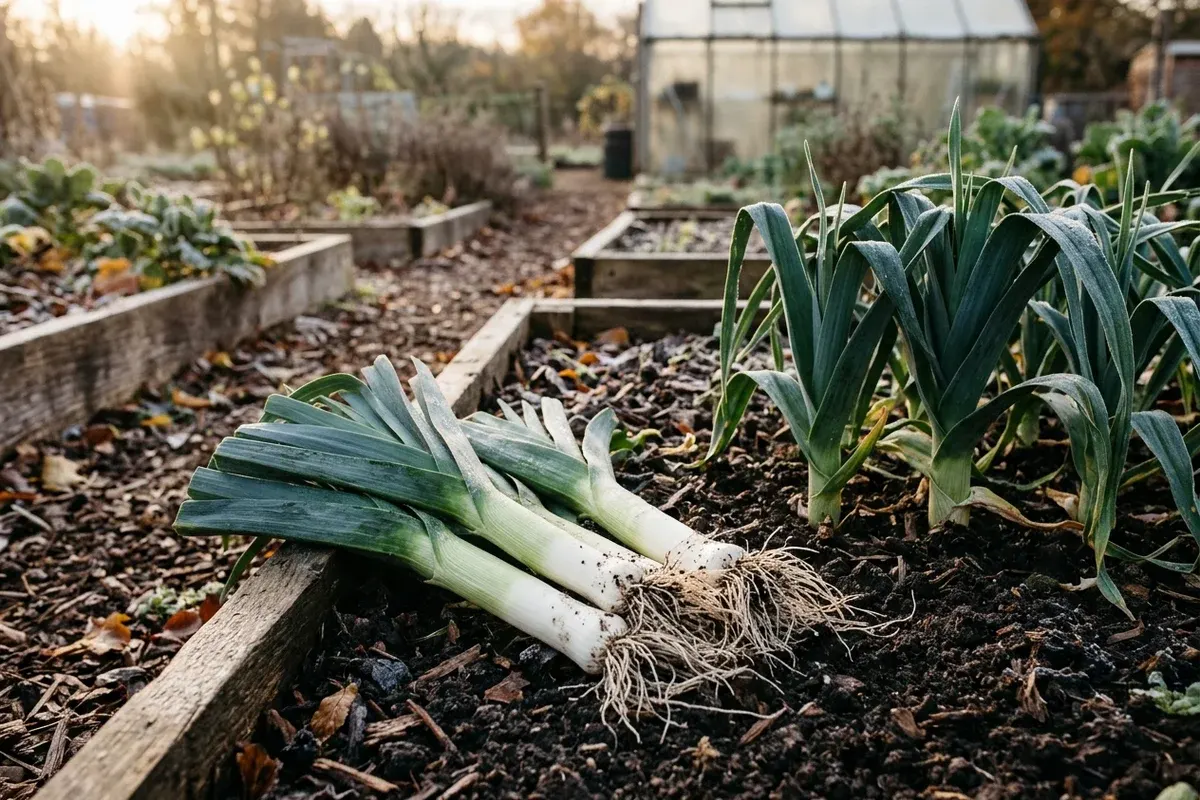
Leeks (Allium ampeloprasum) are the crown jewel of the autumn and winter vegetable garden. While onions and garlic form underground bulbs, leeks develop into thick, juicy cylindrical pseudostems made of tightly wrapped, tender leaf sheaths with a sweet, buttery, sophisticated allium flavor.
However, home gardeners often end up with leeks that are short, tough, green, and choked with unpalatable soil grit between the leaves.
The secret to commercial-caliber leeks—with 8 to 10 inches of snow-white, silky tender shaft—comes down to the dibber planting method, progressive blanching, and rich, compost-heavy soil management.
Soil Fertility & Bed Preparation
Leeks have a lengthy growing cycle (100 to 140 days) and are heavy feeders, especially of nitrogen and potassium:
                        LEEK SOIL BENCHMARKS
   =====================================================================
   [ Target Soil pH ]         6.0 to 6.8 (Slightly acidic to neutral)
   [ Soil Depth ]             12 to 16 inches of loose, uncompacted loam
   [ Compost Enrichment ]     20% to 30% by volume (compost & aged manure)
   [ Moisture Retention ]     Consistently moist, never soggy or bone dry
   =====================================================================
- Eliminate Rocks and Compaction: Leeks must push deep and straight down. Any hardpan clay layer or buried stones within the top 12 inches will cause crooked, stubby stems.
- Heavy Compost Amending: Shovel a 2- to 3-inch blanket of screened mature compost into your bed and work it into the top 8 inches. Use our Compost Bin Calculator and Raised Bed Soil Calculator to size your bed volumes.
- Balanced Organic Fertilization: Broadcast an organic 5-4-4 fertilizer or aged chicken manure pellets. Leeks absorb nutrients continuously through late summer and autumn as their shafts expand.
Summer Leeks vs. Winter Leeks: Cultivar Selection
Never treat all leek varieties the same. Matching your planting schedule to the correct class is crucial:
| Leek Category | Top Cultivars | Days to Maturity | Cold Hardiness | Harvest Season |
|---|---|---|---|---|
| Summer / Early Fall | 'King Richard', 'Lincoln', 'Zermatt' | 75–90 days | Tender (Damaged below 28°F) | August – October |
| Late Fall / Winter | 'Giant Musselburgh', 'American Flag' | 100–120 days | Hardy (Survives down to 20°F) | October – December |
| Overwintering Hardcore | 'Bandit', 'Blue Solaise', 'Siegfried' | 120–150 days | Extreme (Survives 10°F under snow) | November – March |
The Dibber Planting Technique: Long White Stems Without Grit
The traditional garden mistake is digging a trench and burying leeks in dirty topsoil, which traps grit inside the leaf folds. The dibber method solves this completely:
                    THE DIBBER PLANTING METHOD
  ======================================================================
   Finished Grade  \                       /  Finished Grade
  ~~~~~~~~~~~~~~~~~~ \                   / ~~~~~~~~~~~~~~~~~~~~~~~~~~~~~
                      |                 |
                      |  6" Deep Hole   |  <- Poked with 1" wooden dibber
                      |  (Do NOT fill   |
                      |   with dirt!)   |
                      |                 |
                      |   [ LEAF FAN ]  |  <- Tips poke out of hole
                      |        |        |
                      |   (STEM SHAFT)  |  <- Blanches white in darkness
                      |        |        |
                      |    [ ROOTS ]    |  <- Set on hole bottom
                      +-----------------+
                      [ Gentle Watering ] <- Washes down 1/2" soil to anchor
Step 1: Indoor Seedling Preparation (10 Weeks Before Last Frost)
- Start seeds indoors in 4-inch deep seed flats in early February.
- When grass-like seedlings reach 6 to 8 inches tall, trim the green tops back to 3 inches with kitchen shears. This encourages the seedling to thicken its stem into pencil-thickness instead of flopping over.
Step 2: Root & Top Trimming on Transplant Day
- Harden seedlings off outdoors for 7 days in mid-spring (3 to 4 weeks before the last spring frost).
- Remove seedlings from the flat. Snip the root tips back to 1 inch long; this keeps the fibrous roots from folding upward ("J-rooting") when lowered into the hole.
Step 3: Making the Dibber Holes
- Use a 1-inch diameter wooden dowel, tool handle, or dibber tool.
- Poke vertical holes 6 inches deep into the prepared garden soil.
- Space holes 6 inches apart in rows 12 to 18 inches apart (or in an intensive 6x6-inch hexagonal grid in raised beds = 4 leeks per square foot).
Step 4: Dropping Seedlings In (The Golden Rule)
- Drop one leek seedling into each 6-inch deep hole. The roots sit at the bottom, and only the tips of the green leaf fan will poke out above the rim.
- DO NOT BACKFILL THE HOLE WITH SOIL!
- Using a watering can fitted with a gentle rose sprinkler head, water each hole thoroughly. The rushing water will wash down just enough fine silt to anchor the roots at the bottom of the pit.
- As the seedling grows, sunlight cannot reach the lower 6 inches of stem, naturally producing a snow-white blanched shaft with zero trapped dirt.
Secondary Blanching: Trenching & Paper Collars
If you desire exceptional 10- to 12-inch blanched shafts for gourmet kitchen braises:
- Cardboard Tube Collars: Slip a 6-inch recycled cardboard paper towel or toilet paper tube over the young leek stem in midsummer once it reaches pencil thickness. The collar blocks sunlight while keeping dirt out of the leaf fan.
- Straw Hilling: Mound clean, golden wheat straw around the base of the stems every 3 weeks in late summer. Straw provides total shade without the gritty texture of garden dirt. Check straw requirements with our Mulch Calculator.
Watering & Drip Irrigation Strategy
Because leek roots are shallow and non-spreading:
- Maintain consistent soil moisture of 1 to 1.5 inches per week.
- Install drip irrigation lines directly along the plant rows. Overhead sprinkler watering washes soil particles straight down into the leaf fan crotches, ruining the leek's texture. Use our Drip Irrigation Calculator to balance emitter flow.
- Topdress with 2 inches of compost in mid-summer (July) and give a monthly drench of liquid fish emulsion and kelp meal to fuel leaf sheath expansion.
Overwintering & Freeze Harvesting
One of the great joys of growing leeks is harvesting fresh, crisp vegetables in the dead of winter when the rest of the garden is buried under snow:
                    WINTER STRAW BLANKET (ZONES 3–7)
  ======================================================================
   [ 8" to 12" Clean Dry Wheat Straw Blanket (Insulates Soil from Frost) ]
  ----------------------------------------------------------------------
   [ Standing Winter Leeks ('Bandit' / 'Giant Musselburgh')             ]
  ~~~~~~~~~~~~~~~~~~~~~~~~ [ Unfrozen Root Bed ] ~~~~~~~~~~~~~~~~~~~~~~~
- The Straw Quilt: In November before the ground freezes solid, lay down 8 to 12 inches of fluffy straw or shredded dry leaves directly over the leek rows.
- Harvesting in January: Pull back the straw blanket, slide a garden fork beneath the leek, and lever it upward cleanly. The soil beneath the straw remains unfrozen and pliable even when ambient air temperatures drop into the single digits.
- Sugar Concentration: Freezing temperatures convert starches in winter leeks into simple sugars, making winter-harvested leeks dramatically sweeter than summer crops.
Related Growing Guides & Garden Tools
- Leek Plant Profile & Botanical Specs: Soil pH tables, companion plants, and spacing matrix.
- How to Care for Asparagus: Perennial crown planting and trenching plans.
- How to Plant Garlic in Raised Beds: Autumn clove planting and winter mulch guide.
- Best Soil Depth for Raised Bed Vegetables: Soil requirements for root and stem crops.
- How to Amend Raised Bed Soil: Organic recipes for compost and mineral reconditioning.
FAQ
What is the best soil for growing leeks?
Leeks thrive in deep, loose, stone-free sandy loam or silt loam with a neutral pH of 6.0 to 6.8. Heavy clay soil causes stunted shafts and makes harvesting in winter nearly impossible, while shallow rocky soil bends the stems. Incorporate 2 to 3 inches of mature compost before transplanting to deliver steady organic nitrogen.
Why do you drop leek seedlings into holes without backfilling?
The classic European 'dibber method' involves making 6-inch deep, 1-inch wide holes with a wooden peg or broomstick, dropping pencil-sized leek seedlings in, and watering gently without filling the hole with dirt. Water naturally washes down just enough soil to anchor the root hairs, while the dark vertical cylinder blanches the shaft white from the bottom up without trapping crunchy soil grit between the leaf layers.
How do you get leeks with long white stems?
The tender white stem (pseudostem) only forms in the absence of sunlight. In addition to the dibber planting method, you can increase the white shaft length by trenching seedlings 6 inches deep and gradually hilling compost or straw around the base as they grow, or slipping 6-inch cardboard collars (like paper towel rolls) over the stems.
How often should leeks be watered?
Leeks possess shallow, non-spreading fibrous roots that concentrate in the top 8 inches of soil. Provide 1 to 1.5 inches of water per week consistently. Allowing leek beds to dry out completely triggers tough, fibrous, stringy stems and premature bolting.
Can leeks stay in the ground all winter?
Yes. Cold-hardy winter cultivars (such as 'Giant Musselburgh', 'Bandit', and 'Blue Solaise') can survive temperatures down to 10°F (-12°C). In freezing northern climates, mulch the bed with 8 to 12 inches of clean straw in late autumn; this prevents the soil from freezing solid so you can dig fresh leeks right through January and February.