How to Plant Garlic in Raised Beds: Fall Timing & Spacing

By Efraín Vega · Published November 13, 2026
Garlic (Allium sativum) is one of the most rewarding cold-hardy crops you can grow in backyard raised beds. Planted in late autumn, cloves establish roots before the ground freezes, overwinter under deep mulch, and erupt into vigorous spring growth to produce massive bulbs by midsummer.
Because raised beds warm up faster in spring and provide superior drainage compared to in-ground garden clay, they are the ideal environment for growing prize-winning garlic.
Hardneck vs. softneck garlic: which should you plant?
Before buying seed garlic, choose the variety best adapted to your winter USDA hardiness zone:
- Hardneck Garlic (Allium sativum var. ophioscorodon): Produces a stiff central flowering stalk (the edible scape) and 4 to 8 large cloves around the stem. Best for Northern climates (Zones 3–7) because cloves require 4 to 6 weeks of chilling below 40°F (vernalization) to divide into bulbs. Varieties: Music, German Extra Hardy, Chesnok Red.
- Softneck Garlic (Allium sativum var. sativum): Produces pliable green stems that can be braided, holding 12 to 20 smaller cloves per head. Best for Southern and temperate climates (Zones 7–10) with milder winters, and stores for up to 9–12 months. Varieties: Inchelium Red, California Early.
Check your local freeze timeline with our First and Last Frost Dates Study to time your autumn planting window.
Raised bed soil preparation and fertility
Garlic is a heavy feeder that requires loose, friable soil high in organic matter with a pH between 6.0 and 7.0.
- Fluff Soil to 10–12 Inches: Garlic roots explore up to a foot deep. Ensure your bed has at least 10 inches of loose, well-draining soil. Check your bed capacity with our Raised Bed Soil Calculator.
- Amend with Finished Compost: Mix in a 2-inch top layer of aged compost or well-rotted manure to feed soil microbes and retain moisture.
- Add High-Phosphorus Organic Fertilizer: Work in bone meal or an organic starter fertilizer (such as 3-4-4 or 4-6-3) into the planting trench to stimulate vigorous root branching before freezing weather.
- Avoid Heavy Nitrogen at Planting: Excess nitrogen in autumn forces lush green leaf growth that freezes and rots in winter. Save nitrogen-rich feedings (like fish emulsion or blood meal) for early spring when shoots emerge.
Planting depth and spacing rules
| Garden Bed Size | 6-Inch Grid Spacing (Cloves) | 8-Inch Grid Spacing (Giant Bulbs) |
|---|---|---|
| 4 × 4 ft Bed | 64 cloves (approx 8–10 heads) | 36 cloves (approx 4–6 heads) |
| 3 × 6 ft Bed | 72 cloves (approx 9–11 heads) | 40 cloves (approx 5–7 heads) |
| 4 × 8 ft Bed | 128 cloves (approx 16–20 heads) | 72 cloves (approx 9–12 heads) |
- Break Apart Heads on Planting Day: Keep heads whole until 24 to 48 hours before planting. Separating cloves too early dries out the root basal plate.
- Select the Largest Outer Cloves: Plant only the plumpest, healthiest cloves; small internal cloves yield undersized bulbs at harvest.
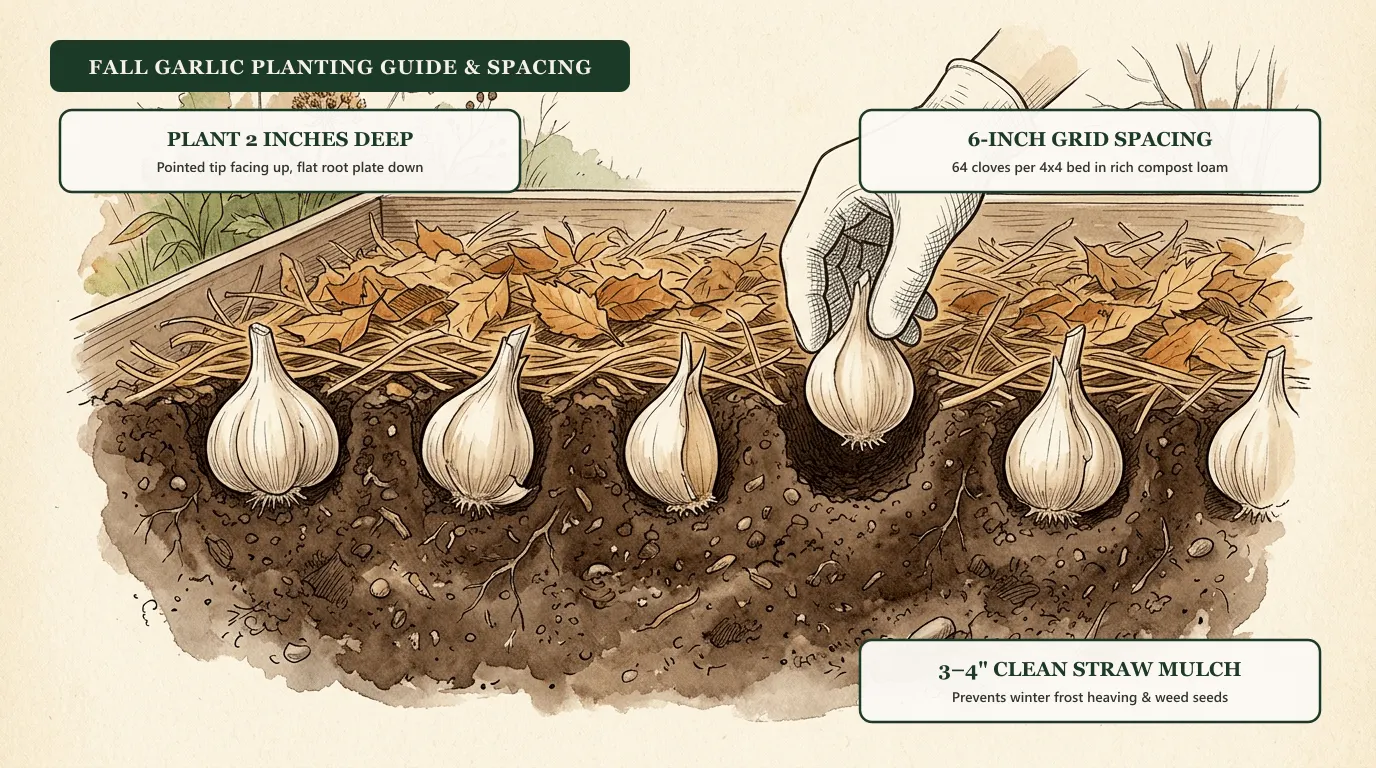
- Orientation: Plant the clove pointed tip facing straight up and the broad, flat root plate facing downward into the soil.
- Depth: Push cloves 2 inches below the soil surface (or 3 inches deep in cold Zones 3–4). Rake soil flat and water deeply.
Mulch is essential in raised beds
Raised bed soil freezes from the top and sides, making cloves vulnerable to frost heaving (cycles of freezing and thawing that push cloves out of the ground). Always spread 3 to 4 inches of clean straw, pine straw, or shredded leaves over the bed immediately after planting.
In early spring, when shoots push through the mulch, pull back half the straw to allow sunlight to warm the soil and resume weekly watering. Follow our full plant care guide on growing garlic for harvesting scapes and curing summer bulbs.
Sources: Cornell University Cooperative Extension, "Growing Garlic in Home Gardens"; University of Minnesota Extension, "Growing Garlic in Minnesota".
FAQ
When is the best time to plant garlic in fall?
Plant garlic cloves 2 to 3 weeks after the first light fall frost, when evening soil temperatures drop into the 50°F to 60°F range (typically mid-October to late November in USDA Zones 4–8). This allows cloves to establish root systems before ground freeze without sending up premature green shoots.
How deep and far apart should garlic be planted in raised beds?
Plant individual cloves 2 inches deep (measured from the pointed tip to the soil surface) with the flat root plate pointing downward. Space cloves 6 inches apart in all directions in a grid pattern.
Should you peel garlic cloves before planting?
No. Leave the papery husk intact on each clove. The paper skin protects the clove from fungal pathogens and damp soil rot while root initials form.
Can you plant grocery store garlic?
Not recommended. Supermarket garlic is usually softneck varieties imported from warm climates and frequently sprayed with growth inhibitors to delay sprouting on shelves. Buy certified disease-free seed garlic from reputable farm nurseries.
Do you need to mulch garlic over winter?
Yes. Apply a 3 to 4-inch layer of clean seed-free wheat straw, chopped leaves, or pine needles over the bed immediately after planting. Mulch insulates against frost heaving and preserves consistent soil moisture.