How to Prune and Stake Pepper Plants for Maximum Yield

By Efraín Vega · Published November 13, 2026
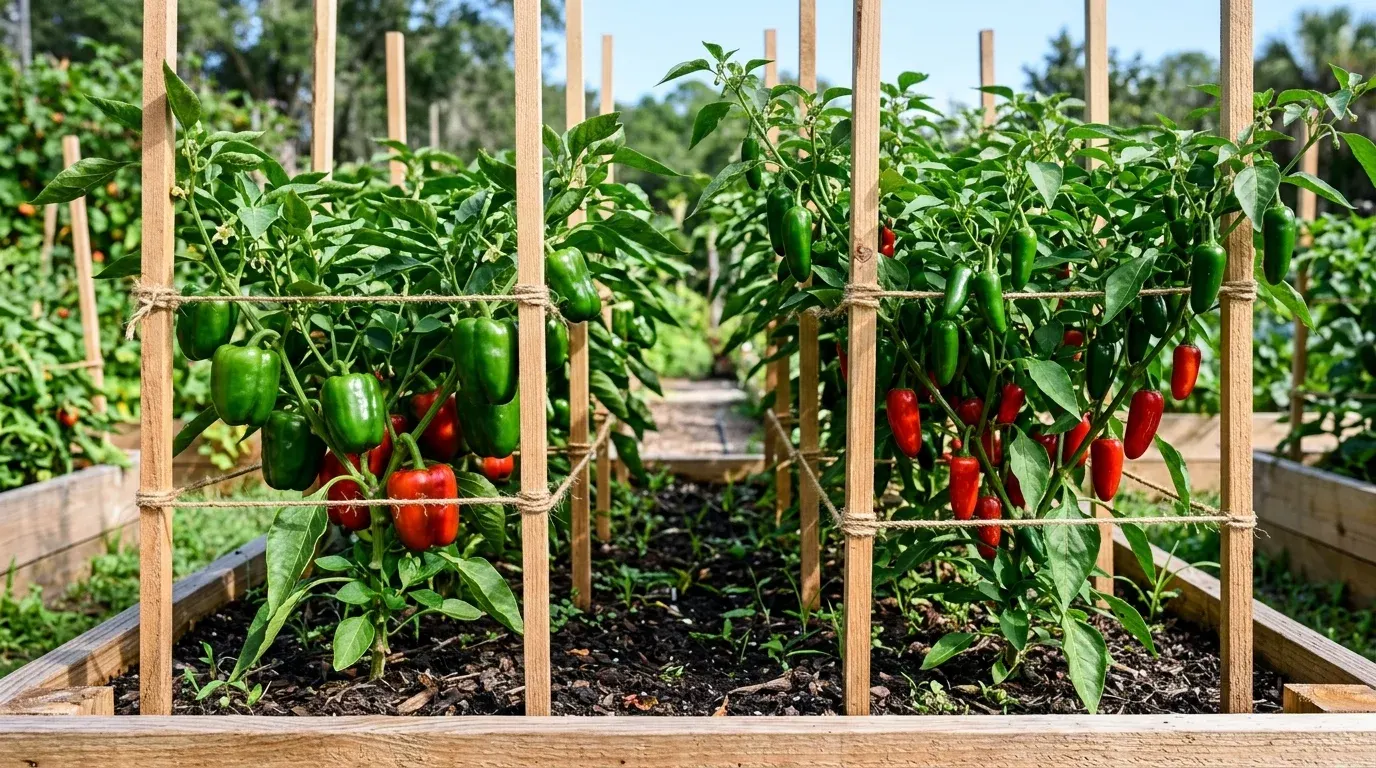
Pepper plants (Capsicum annuum and Capsicum chinense) are among the most rewarding vegetables in the home garden. However, few sights are more frustrating to a gardener than walking out after a summer thunderstorm to find heavy, fruit-laden branches split cleanly off the main stem.
Unlike flexible indeterminate tomatoes that produce sprawling vines, peppers form semi-woody, upright shrubs with notoriously brittle branch crotches.
Supporting your peppers isn't just about preventing breakage—proper staking elevates foliage off damp soil, dramatically cuts down on fungal blight and bacterial splash, and opens up the canopy for maximum sun interception and air circulation.
Should You "Top" Your Pepper Plants?
One of the most debated topics among pepper growers is topping—the practice of snipping off the growing apical tip of young plants when they reach 6 to 8 inches in height (around 4 to 6 true leaf sets).
        Topped Plant (Dense & Bushy)           Untopped Plant (Tall & Upright)

               \   /     \   /                               \   /
                \ /       \ /                                 \ /
                 |         |                                   |  (Single Main Stem)
                 \___   ___/                                   |
                     \ /                                       |
                      | (Punched Tip)                          |
                      |                                        |
When Topping Helps:
- Small, Prolific Hot Peppers: Jalapeños, serranos, habaneros, and Thai chilis naturally produce dozens of lightweight fruits. Topping forces dormant axillary buds to explode into 4 to 6 sturdy lateral branches, increasing total fruit sites.
- Long-Season Climates (USDA Zones 7–10): When your frost-free growing season exceeds 180 days, you have ample time to sacrifice the initial 2-week growth pause in exchange for a massive autumn harvest.
When To Skip Topping:
- Large Sweet Bell Peppers: Bell peppers take massive energy to size up individual thick-walled fruit. Topping results in smaller bell peppers and overcrowding.
- Short-Season Climates (USDA Zones 3–6): Northern gardeners must capitalize on every warm summer week. Topping sets back your first harvest by 14 to 21 days, risking unripe peppers when autumn frost arrives.
Removing King Blooms and Bottom Suckers
Beyond topping, two targeted pruning steps yield dramatic health and production dividends:
1. Pinching the "King Bloom"
As young pepper plants reach 10 to 12 inches tall, they divide into a distinct "Y" fork. Right in the junction between those two main branches, the plant will push out its very first single flower bud—the king bloom.
- Action: Gently pinch this flower bud out with your fingernails while it is still tight and green.
- Why: If allowed to set, this single fruit will monopolize up to 30% of the plant's metabolic carbohydrates, permanently stunting the plant's height and leaf development.
2. Clearing Bottom Foliage (Soil Splash Clearance)
Prune away all leaves and suckers along the lowest 4 to 6 inches of the main stem.
- Soil-borne pathogens (like Xanthomonas bacterial leaf spot and Phytophthora crown rot) infect leaves when raindrops bounce dirt upward onto low foliage.
- Clearing the stem creates an "air gap" that accelerates drying after irrigation and makes it impossible for slugs and snails to climb unobserved.
Comparing Pepper Staking Methods
| Staking Method | Best For | Pros | Cons |
|---|---|---|---|
| Single Stake (Wood/Bamboo) | Individual pots, 1–2 raised bed plants | Inexpensive, fast to install, minimal footprint | Requires constant re-tying as branches widen |
| Heavy-Duty Wire Cages | Dedicated large garden beds | 360° support, no tying required | High initial cost; cheap round tomato cages collapse |
| Florida Weave | 3+ plants in a raised bed row | Strongest storm resistance, cheapest per plant | Requires driving rigid end stakes |
Step-by-Step: The Florida Weave for Raised Beds
If you grow peppers in a row inside a 4x8 or 3x6 raised bed, the Florida weave is unbeatable:
  [End Stake]  ======== Pepper 1 ======== Pepper 2 ======== Pepper 3 ========  [End Stake]
      ||           (Twine wraps around)       (Twine wraps around)                ||
      ||==========================================================================|| (Run 1: 10")
      ||==========================================================================|| (Run 2: 18")
      ||==========================================================================|| (Run 3: 26")
  =================================================================================== (Soil Line)
- Drive Your Stakes: Pound a 1x1-inch hardwood stake (or 4-foot metal T-post) at both ends of the row, plus an intermediate stake between every 3 to 4 pepper plants. Stakes should be driven 12 inches into firm subsoil.
- First Twine Tier (10–12 Inches High): Tie high-tensile untreated jute or polypropylene box twine tightly to the end stake. Walk down the row, passing the string along the side of the plants. Keep the twine taut, loop it around each intermediate stake, and tie off securely at the opposite end.
- Double Back (The Sandwich): Return along the opposite side of the row, pulling tight and securing at the start stake. The pepper plants are now firmly sandwiched between two taut parallel lines.
- Subsequent Tiers: Add another run of twine every 8 to 10 inches of vertical growth (typically at 10", 18", and 26"). Side branches rest securely on the horizontal strings, preventing snapping under the weight of mature peppers.
Late-Season "Topping Off" for Rapid Ripening
As autumn approaches, immature pepper flowers and pea-sized fruits will never reach harvestable size before the first killing freeze.
Four weeks before your average first fall freeze date:
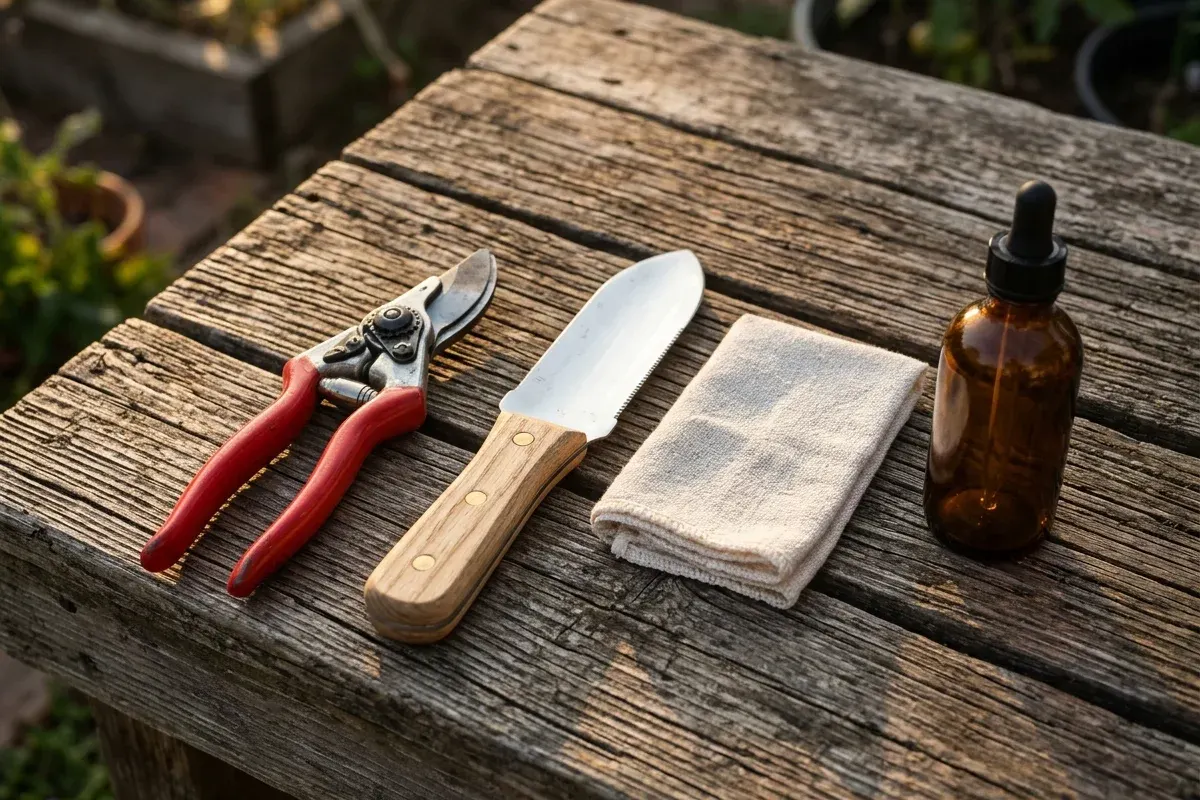
- Walk your pepper rows with sharp garden shears.
- Snip the terminal 2 to 3 inches off every branch tip.
- Strip away all newly forming flower blossoms and tiny marble-sized fruits.
This stops the plant from squandering energy on unfinishable fruit, forcing it to redirect all remaining starches and mobile sugars into blushing green peppers into vibrant, sweet reds, yellows, and oranges before winter.
Sources: Pepper Production in the Home Garden — Iowa State Extension, Growing Peppers — Cornell Cooperative Extension.
FAQ
Do all pepper plants need to be staked?
While dwarf ornamental varieties can stand unsupported, virtually all standard sweet bell peppers and heavy-yielding hot peppers (like jalapeños, poblanos, and habaneros) require physical staking. Pepper stems are relatively brittle at their lateral branch crotches. Once a plant bears 5 to 10 heavy fruits, summer thunderstorm wind or a soaking rain will easily snap branches or topple the root crown.
Should you top pepper seedlings to make them bushier?
It depends entirely on your climate and pepper variety. Topping (pinching off the terminal growth tip when seedlings have 4–6 true leaves) encourages lower horizontal branching on small-fruited hot peppers like jalapeños and serranos in long-season zones (zones 7–10). However, avoid topping large bell peppers or peppers grown in short northern growing seasons (zones 3–5), as topping delays initial fruit set by 2 to 3 weeks.
Should I remove the first flower (king bloom) on my pepper plant?
Yes. The very first flower that emerges directly in the center 'Y' fork of a young pepper plant is known as the king bloom. Plucking this first bud off directs early vegetative energy into root establishment and sturdy stem caliper rather than channeling all carbohydrates into ripening a single stunted fruit.
What is the best staking system for raised beds?
The Florida weave (also called the basket weave) is the most efficient and sturdy system for raised beds with three or more pepper plants in a row. It sandwiches foliage between alternating runs of taut synthetic twine suspended between rigid wooden or metal stakes, providing 360-degree lateral support without restricting air circulation.
When should I stop pruning peppers at the end of the season?
Approximately 3 to 4 weeks before your first expected fall frost date, 'top off' the entire plant by pinching all terminal leafy growing tips and removing any tiny flowers or pea-sized immature fruits. This signals the plant to cease new vegetative growth and channel all remaining sugars into ripening the existing mature green peppers on the vine.