How to Care for Broccoli: Soil, Head Formation & Side Shoot Harvest Guide

By Efraín Vega · Published November 24, 2026
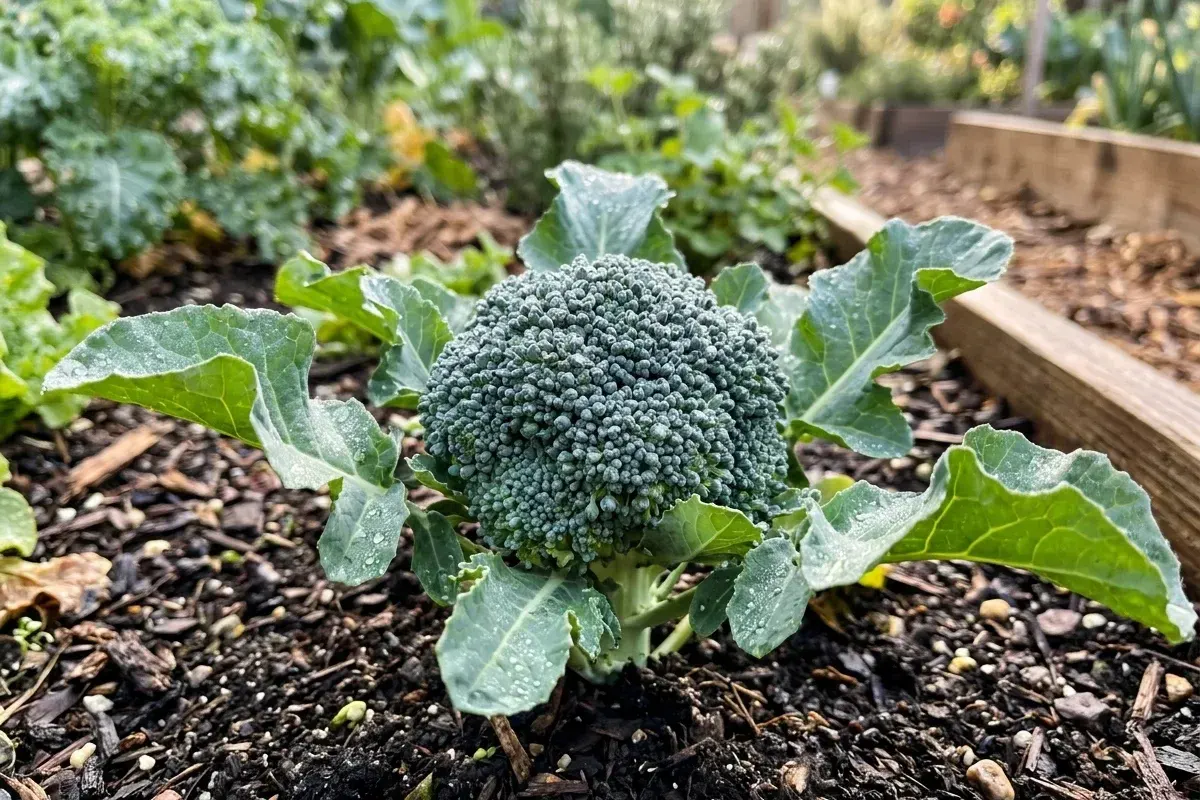
Broccoli (Brassica oleracea var. italica) is one of the most rewarding and nutrient-packed vegetables you can grow in a backyard raised bed. A single healthy plant not only delivers a massive, crisp central crown in late spring or autumn, but continues producing tender side shoots for up to two months after the main harvest.
However, gardeners frequently battle loose, premature flowering heads (bolting), tiny button heads, or green cabbage caterpillars chewing holes through the foliage.
The secret to homegrown broccoli that rivals commercial organic farm standards comes down to nitrogen-rich soil management, preventing heat-induced bolting, and the angled harvest cut that triggers secondary flushes.
Best Soil for Broccoli: Nitrogen, Moisture & pH
Broccoli is an aggressive feeder that constructs a massive root network and broad canopy of blue-green leaves before forming its crown:
                      BROCCOLI SOIL BENCHMARKS
   =====================================================================
   [ Target Soil pH ]         6.2 to 6.8 (Optimal 6.5 to suppress clubroot)
   [ Soil Depth ]             Minimum 12 inches of loose, fertile loam
   [ Nitrogen Demand ]        High (feeds leaf canopy that supports heads)
   [ Water Consistency ]      1 to 1.5 inches weekly without surface drying
   =====================================================================
- High Nitrogen Foundation: Broccoli requires substantial nitrogen to grow 15 to 20 large outer leaves before initiation of the center crown. Amend your bed with 2 to 3 inches of screened compost or aged manure. Calculate your compost needs with our Compost Bin Calculator.
- Moisture Consistency: Dry soil triggers premature heading. In sandy ground, incorporate peat moss and worm castings to hold water like a sponge. In dense clay, follow our clay soil remediation guide or build an 18-inch deep raised garden bed.
- Mid-Season Feeding: Side-dress plants with organic blood meal, feather meal, or a balanced 5-5-5 organic fertilizer 3 weeks after transplanting when the plants reach 12 inches tall.
Spacing: Why Crowding Stunts Broccoli
One of the most frequent beginner mistakes is planting broccoli too close together:
- In-Bed Spacing: Space transplants 18 to 24 inches apart in all directions (or a single plant per 2 square feet in raised beds).
- Consequences of Crowding: When planted 10 to 12 inches apart, root systems compete for nitrogen and water. The result is small 3-inch central heads and poor airflow that encourages powdery mildew and downy mildew.
Spring vs. Fall: The Superiority of Autumn Broccoli
While most gardeners buy transplants in April, autumn broccoli is dramatically sweeter and easier to grow:
| Season | Planting Window | Temperature Pattern During Head Formation | Flavor & Quality |
|---|---|---|---|
| Spring Planting | Transplant outdoors 2–3 wks before last spring frost. | Heads form in late May/June under rising heat and lengthening days. | Risk of premature bolting if early summer heatwaves hit 80°F+. |
| Fall Planting (Best) | Transplant into garden in midsummer (July–August). | Heads form in September/October under cooling nights and mild sun. | Crisp, dense, tightly beaded heads. Light frosts convert starches to natural sugars. |
The Angled Harvest Cut: Unlocking 6 Weeks of Side Shoots
Do not pull broccoli plants out of the ground after cutting the primary head:
                    THE 45-DEGREE HARVEST CUT
  ======================================================================
               ( CENTRAL HEAD: Cut When Buds Are Tight )
                               \ | /
                     [ SLANTED 45° ANGLE CUT ]  <- Prevents water pooling
                               / | \
                     [ LEAF AXIL NODE ] --------> [ NEW SIDE SHOOT FLUSH ]
                     [ LEAF AXIL NODE ] --------> [ NEW SIDE SHOOT FLUSH ]
                                 |  (Main Woody Trunk)
  ======================================================================
- Bud Tightness Check: Inspect the crown daily. Individual flower buds should be dark green and packed together like beads on a necklace. If you spot even a single fleck of yellow flower petal, cut the head immediately.
- The Slanted Cut: Slice through the main stalk 5 to 6 inches below the head using a sharp harvest knife held at a 45-degree angle.
- Why the Angle Matters: A flat horizontal cut creates a flat dish where rain or morning dew pools. Standing water rots the hollow center of the stem, killing the plant. An angled cut sheds water immediately.
- Feeding the Side Shoots: After cutting the main crown, apply a drench of liquid fish emulsion and kelp meal. Over the next 4 to 6 weeks, the leaf armpits will explode with 4 to 8 succulent side shoots (each 2 to 3 inches wide), providing delicious weekly harvest flushes until winter freeze.
Pest Management: Stopping the Cabbage Looper
- Imported Cabbageworm (Pieris rapae): The common white butterfly deposits tiny oval eggs on leaf undersides, hatching into velvety green caterpillars that burrow directly into broccoli florets.
- Organic Control: Spray Bt (Bacillus thuringiensis) every 7 to 10 days, or cover your beds with lightweight insect netting.
- Cabbage Aphids: Clusters of pale gray aphids often colonize leaf stems in dry autumn weather.
- Solution: Blast them off with a high-pressure hose nozzle, or spray organic insecticidal soap directly on colonies.
Related Growing Guides & Tools
- Broccoli Plant Profile: Botanical specs, companion planting, and spacing.
- How to Care for Cauliflower: Blanching techniques and boron requirements.
- How to Care for Kale: Cold sweetening and cut-and-come-again harvesting.
- Raised Bed Soil Calculator: Determine custom compost and soil volumes.
- Drip Irrigation Calculator: Plan steady emitter lines to prevent bolting.
FAQ
What is the best soil for growing broccoli?
Broccoli thrives in fertile, well-draining loam heavily amended with compost and a neutral pH of 6.2 to 6.8. It requires steady organic nitrogen and high potassium. Maintaining soil pH above 6.5 helps protect the roots from clubroot disease.
How do you get large heads on broccoli?
Large heads require uninterrupted early vegetative growth: space plants 18 to 24 inches apart, maintain 1 to 1.5 inches of consistent weekly moisture, and side-dress with organic nitrogen (blood meal or fish emulsion) 3 to 4 weeks after transplanting. Restricting roots, overcrowding, or drought stress causes stunted 2-inch 'button' heads.
When and how should you harvest the central broccoli head?
Harvest when the main crown is 5 to 8 inches in diameter, feels firm and compact, and individual green flower buds are tightly closed. Cut the main stalk at a sharp 45-degree angle 4 to 5 inches below the head. Cutting on a slant prevents rainwater from pooling on the severed stem and rotting the plant.
Does broccoli keep producing after you cut the main head?
Yes! Never pull up the plant after harvesting the central head. In the leaf armpits below the cut, the plant will produce 4 to 8 tender side shoots every 7 to 10 days for up to 6 weeks, providing an ongoing harvest of delicious mini-spears until hard frost.
Why did my broccoli turn yellow and flower?
Broccoli heads are actually clusters of hundreds of immature flower buds. When daytime temperatures consistently exceed 80°F (27°C) or plants experience drought stress, the buds burst open into tiny yellow flowers (bolting). Once flowers bloom, the stalks become tough, woody, and bitter. If you see yellow petals emerging, harvest the head immediately.