How to Care for Cauliflower: Soil, Head Blanching & Watering Guide

By Efraín Vega · Published November 24, 2026
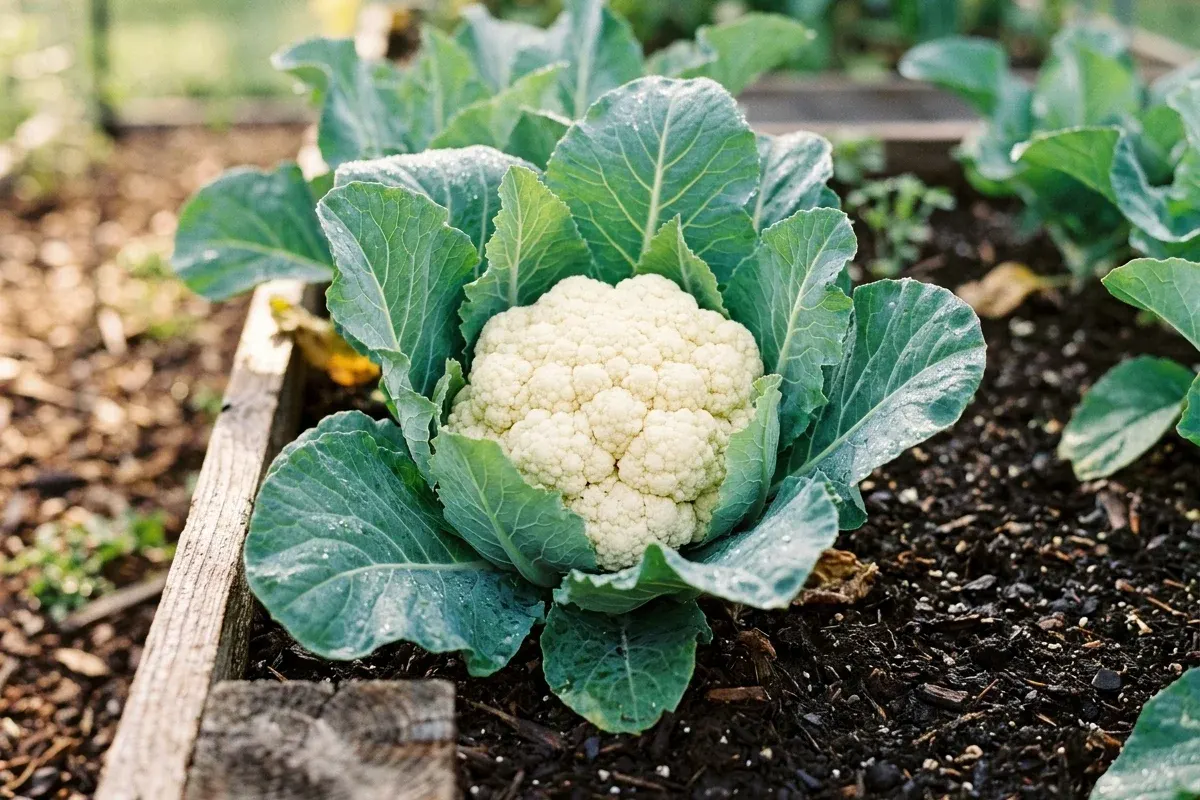
Cauliflower (Brassica oleracea var. botrytis) has a reputation among home gardeners as a temperamental, finicky crop. Gardeners frequently complain of plants that produce tiny button-sized heads, stems that turn hollow, or white curds that turn sunburned yellow-brown and bitter.
Yet when provided with its three non-negotiables—uninterrupted soil moisture, neutral pH with trace boron, and timely leaf blanching—cauliflower produces dense, snow-white, gourmet heads that rival anything found at high-end organic farm stands.
Understanding the sensitive physiology of this cool-weather brassica is the key to flawless harvests every spring and autumn.
Best Soil for Cauliflower: pH, Moisture & Boron
Cauliflower possesses the most demanding root zone requirements of the entire cabbage family:
                     CAULIFLOWER SOIL BENCHMARKS
   =====================================================================
   [ Target Soil pH ]         6.5 to 7.0 (Strictly neutral to slightly alkaline)
   [ Soil Moisture ]          1 to 1.5 inches per week (uninterrupted)
   [ Organic Matter ]         30% to 40% mature compost by volume
   [ Trace Minerals ]         Adequate available Boron (prevents hollow stem)
   =====================================================================
1. pH & Clubroot Defense
Cauliflower is severely vulnerable to clubroot (Plasmodiophora brassicae). Acidic soils (below pH 6.2) trigger rapid fungal spore germination, causing roots to balloon and starve the head. Keep soil pH between 6.5 and 7.0 using agricultural lime.
2. The Critical Trace Mineral: Boron
If you cut open a homegrown cauliflower and find a brown, water-soaked hollow cavity in the central stem, your soil lacks boron:
- Boron is essential for rapid cell division in the developing curd.
- Remediation: If soil tests show low micronutrients, dissolve 1 tablespoon of standard household Borax (sodium tetraborate) in 1 gallon of water and spray it evenly across 100 square feet of garden soil prior to transplanting.
3. Raised Bed Soil Blend
Because cauliflower demands consistent moisture without waterlogging, fill beds with:
- 40% Screened Rich Topsoil
- 40% Mature Compost or Decomposed Cow Manure: Calculate volume with our Compost Bin Calculator.
- 20% Coarse Perlite or Washed Sand: Guarantees oxygen reach to roots. Use our Raised Bed Soil Calculator to calculate cubic yards.
Preventing "Buttoning": The 4 Critical Triggers
"Buttoning" is the most heartbreaking failure in cauliflower growing: instead of a massive 7-inch head, the plant aborts vegetative leaf growth and flowers into a tiny 1-inch button curd.
                    CAULIFLOWER HEAD SIZING PATHWAYS
   =====================================================================
   [ STRESS-FREE GROWTH ]   --> 15–20 large leaves --> 7"-8" Jumbo Head
   [ STRESSED SEEDLING ]    --> Premature Flowering --> 1"-2" Button Curd
   =====================================================================
The 4 Causes of Buttoning & How to Stop Them:
- Cold Exposure on Seedlings: If young transplants with 4 to 6 true leaves experience temperatures below 40°F (4°C) for several consecutive days, they receive a vernalization signal that cold winter has arrived, triggering premature flowering. Fix: Cover spring plantings with medium-weight floating row cover until daytime temperatures stabilize above 55°F.
- Drought Stress: Even a single 48-hour period where the soil dries out completely will stall growth and force emergency heading. Fix: Install drip irrigation on an automated timer and lay down 3 inches of straw mulch. Use our Drip Irrigation Calculator and Mulch Calculator.
- Old Root-Bound Transplants: Transplants that sit in nursery 6-packs for more than 5 to 6 weeks become root-bound and stunted. Fix: Transplant seedlings when they are young, vigorous, and only 4 to 5 weeks old.
- Nitrogen Starvation: Insufficient nitrogen limits the plant's ability to construct 15 to 20 large wrapper leaves before curd initiation. Fix: Side-dress with organic blood meal or fish emulsion 3 weeks after transplanting.
Spring vs. Fall Crops: Why Autumn is Superior
While spring planting is traditional, fall cauliflower is significantly easier to grow:
| Season | Sowing Window | Curd Development Weather | Pest & Temperature Challenges |
|---|---|---|---|
| Spring Crop | Start indoors 6–8 wks before last frost. Transplant 2–3 wks before last frost. | Late May – June (Rising heat & long days) | Risk of early cold snaps (buttoning) followed by early heat waves (bitter, loose curds). |
| Fall Crop (Best) | Start indoors late June. Transplant to garden late July – early August. | September – October (Cooling nights & mild sun) | Moderate pest management in summer, followed by pristine, tight, sweet curds in autumn. |
The Art of Blanching Cauliflower
Unless you are growing modern orange, purple, or self-blanching varieties, sunlight is the enemy of white cauliflower:
                    BLANCHING A WHITE CAULIFLOWER HEAD
  ======================================================================
                  [ OUTER WRAPPER LEAVES GATHERED ]
                               \ | /
                     [ Rubber Band / Clothespin ]  <- Tie loosely at tips
                               / | \
                    +-------------------------+
                    |   CREAMY WHITE CURD     |  <- Shielded from sun
                    |   (2"–3" Diameter)      |
                    +-------------------------+
                                 |  (Central Stem)
  ======================================================================
- Monitor Head Emergence: Inspect your plants twice a week. Part the center leaves until you spot a developing curd about the size of a golf ball (2 to 3 inches across).
- Gather Wrapper Leaves: On a dry afternoon, pull 4 to 6 of the largest outer leaves up over the head, overlapping them like a tent.
- Secure Loosely: Fasten the leaf tips together using a strong rubber band, a wooden clothespin, or a strip of soft garden twine.
- Maintain Airflow: Leave air gaps at the sides so moisture from respiration can escape. Tying too tightly traps humidity and invites fungal head rot.
- Harvest Window: Check under the leaf tent every 3 to 4 days. In warm weather, heads size up to 6–8 inches in 5 to 8 days; in cool autumn weather, it takes 10 to 14 days.
Harvesting & Storing
- Peak Readiness: Cut the head when it reaches 6 to 8 inches across, feels rock-solid and compact, and florets are silky smooth.
- Over-Maturity Sign: If the smooth surface begins to separate into grainy, loose clusters (known as "riceyness"), harvest immediately. It is still edible, but tenderness declines.
- The Cut: Use a sharp harvest knife to slice through the main stem 1 to 2 inches below the head, leaving 2 to 3 outer leaves attached to protect the curd from bruising on your kitchen counter.
- Storage: Fresh homegrown cauliflower will hold crisp in the vegetable crisper drawer for 2 to 3 weeks if wrapped loosely in perforated plastic.
Related Guides & Calculators
- Cauliflower Plant Profile: Companion plants, days to maturity, and spacing.
- How to Care for Kale: Soil pH management and frost sweetening.
- How to Care for Leeks: Step-by-step dibber planting and blanching.
- Raised Bed Soil Calculator: Design rich, compost-heavy soil mixes.
- Drip Irrigation Calculator: Ensure steady moisture to prevent buttoning.
FAQ
What is cauliflower buttoning and how do you stop it?
Buttoning is the premature formation of tiny, loose, unmarketable curds (the size of a button or golf ball). It occurs when young seedlings suffer stress—primarily cold shock (temperatures below 40°F for several days), extreme heat (above 80°F), drought stress, or root disturbance during transplanting. Prevent buttoning by planting vigorous 4- to 5-week-old transplants, protecting them with row covers during cold snaps, and keeping soil consistently moist.
Why and how do you blanch cauliflower heads?
Blanching shields developing white curds from direct sunlight so they stay creamy white, sweet, and mild. Sun exposure triggers chlorophyll production, turning the curd yellow-brown and unpleasantly bitter. When the curd reaches 2 to 3 inches across, gather the large outer wrapper leaves up over the head and secure them loosely with a rubber band, clothespin, or twine. (Self-blanching varieties like 'Snowball' naturally curl their inner leaves over the curd).
What causes hollow stem or brown curd in cauliflower?
Hollow stems and water-soaked brown curd lesions are classic symptoms of boron deficiency, often exacerbated by rapid nitrogen-driven growth. Ensure your garden compost contains balanced trace minerals, or dissolve 1 tablespoon of household borax in 1 gallon of water and mist across 100 square feet of soil prior to planting.
What is the best soil for growing cauliflower?
Cauliflower requires fertile, moisture-retentive sandy loam with high organic compost content (30% to 40% by volume) and a neutral pH of 6.5 to 7.0. Soils below 6.2 encourage clubroot, while poorly drained soils suffocate the shallow root system.
When is cauliflower ready to harvest?
Harvest when the head reaches 6 to 8 inches in diameter, feels rock-solid and compact, and individual florets are still tightly clustered. If the curd sections begin to separate, look loose, or appear 'ricey', cut the head immediately before texture deteriorates.