How to Care for Brussels Sprouts: Topping, Staking & Winter Frost Harvest

By Efraín Vega · Published November 24, 2026
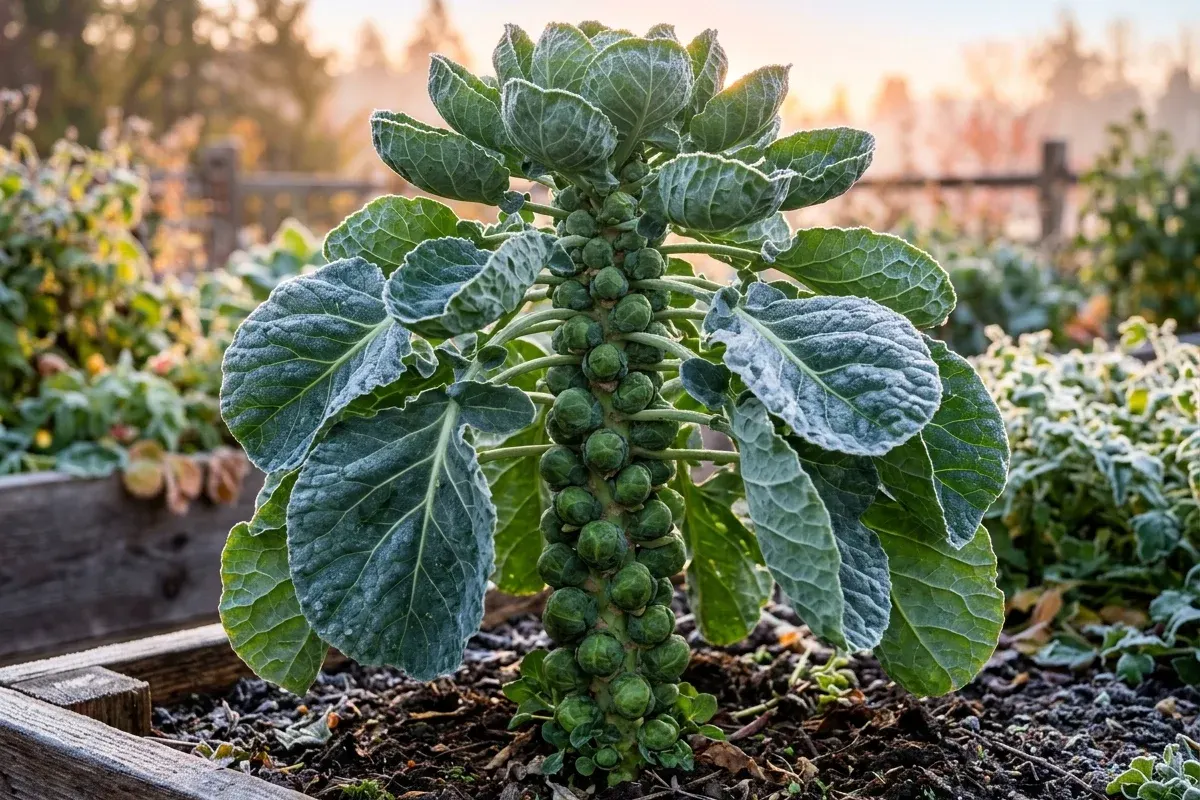
Brussels sprouts (Brassica oleracea var. gemmifera) are the ultimate cold-weather garden prize. While quick salad greens vanish with the first September frost, Brussels sprouts stand tall, braving autumn sleet, sub-freezing nights, and early snowstorms. In fact, cold weather is what makes them edible: sub-freezing temperatures trigger a biochemical transformation, converting bitter defense starches into rich, sweet plant sugars.
Yet many home gardeners struggle with Brussels sprouts, often ending up with miniature leafy cabbage heads that refuse to tighten into firm, restaurant-quality spheres. Producing dense, marble-sized sprouts requires precise timing, wind-resistant soil preparation, nutrient moderation, and a critical technique known as apical topping.
Explore our companion plant guide for Brussels Sprouts for variety recommendations, or calculate your soil volume with our Raised Bed Soil Calculator.
Seasonal Timing: Why Summer Planting is Non-Negotiable
The single most common mistake with Brussels sprouts is treating them like spring radishes or peas. Brussels sprouts require 90 to 120 days from transplant to reach maturity. If you transplant them in April, their sprouts will form in July and August. Heat forces the tiny buds to spread open into loose, bitter leafy sprigs that attract swarms of summer pests.
To grow hard, nutty sprouts, the plant must do its vegetative framework building in late summer and form its actual sprouts in the crisp, cooling weather of autumn:
  [Mid-Summer Transplant] =====> [Early Autumn: Stalk Formation] =====> [Late Autumn: Cold Frost Sweetening]
     (June 15 - July 15)                (August - September)                     (October - December)
  Deep roots & sturdy stem          Sprouts emerge at leaf axils            Starches convert to sugars
- Cool Northern Climates (Zones 3–5): Start seeds indoors in early May and transplant into beds by mid-June. Harvest begins in October and continues through November.
- Moderate Climates (Zones 6–7): Transplant seedlings in early to mid-July. Sprouts size up through October and hold on the stalk through December.
- Mild Winter Climates (Zones 8–10): Transplant in late August or September for continuous winter harvesting from December into February.
Soil Preparation: Firmness, pH & Boron Balance
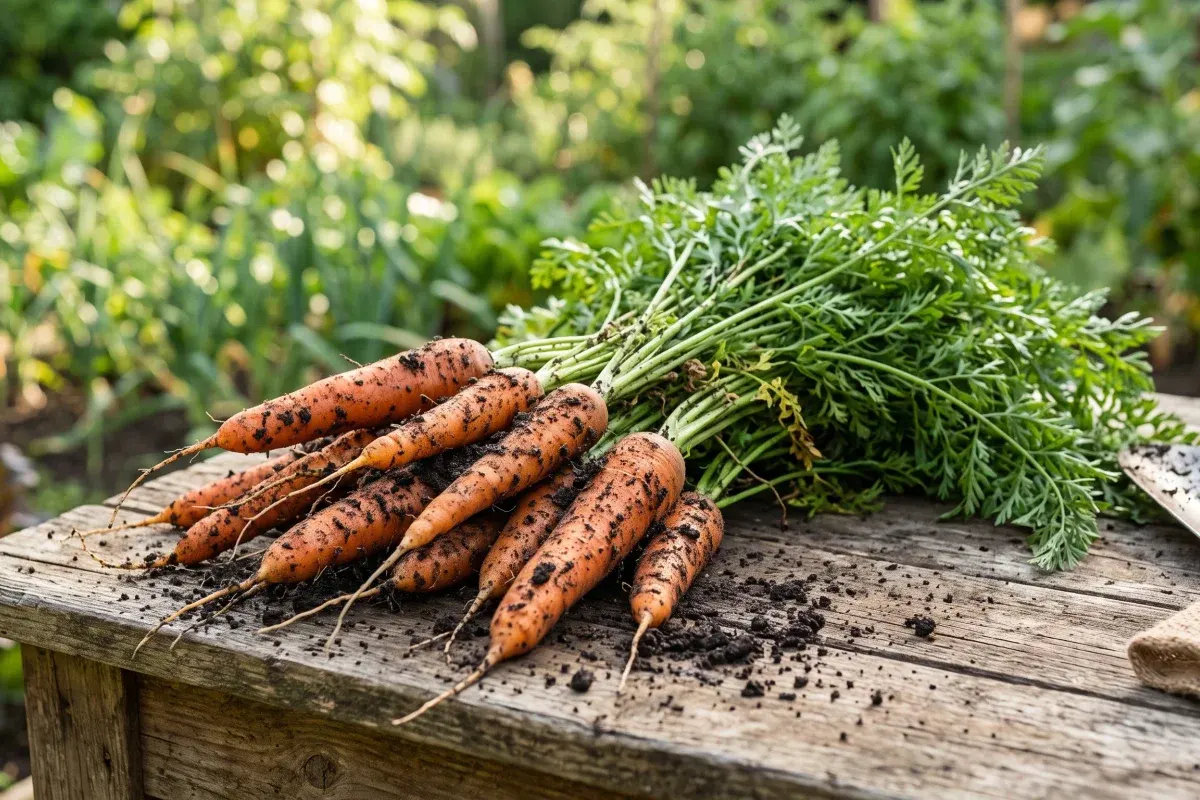
Unlike loose, airy potting soils ideal for taproots like Carrots, Brussels sprouts require firm, dense, mineral-rich soil. Because mature plants become heavy, top-weighted mini-trees with dense sprout clusters, wind-rocking can easily tear fine hair roots and halt development.
1. pH and Clubroot Prevention
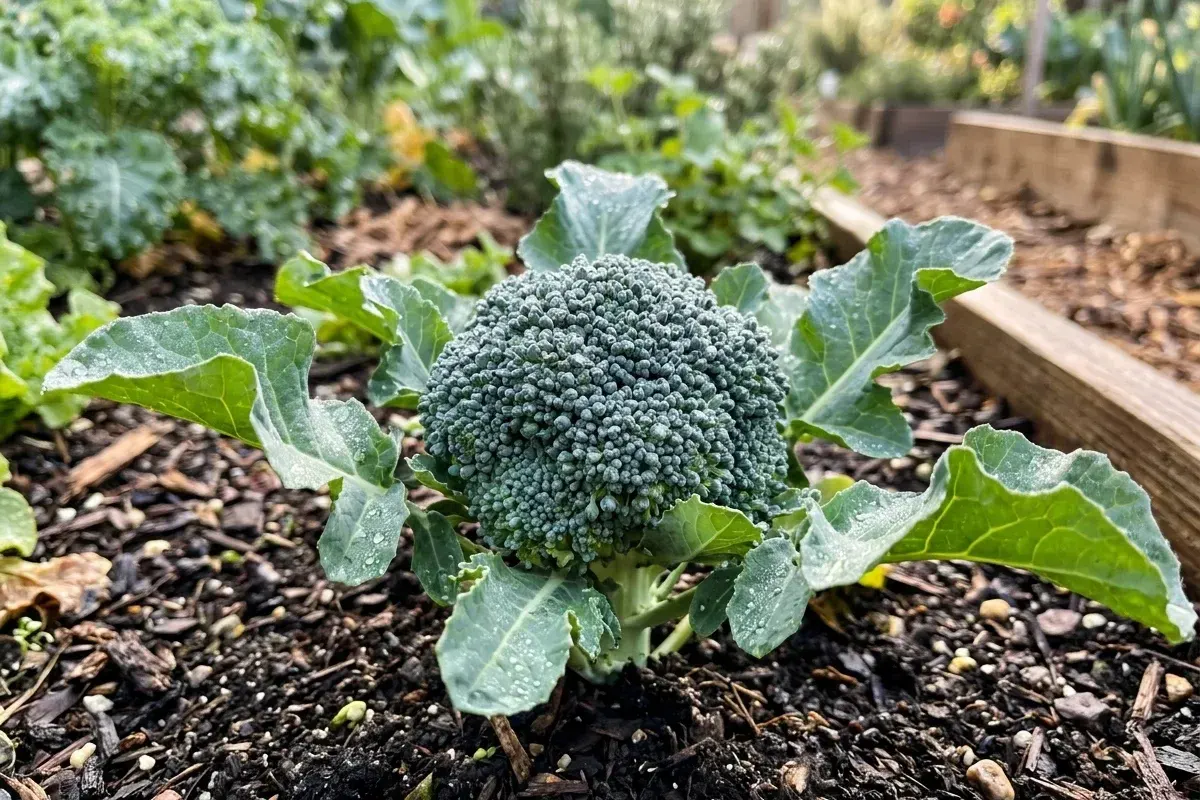
Maintain a soil pH between 6.5 and 7.5. Brussels sprouts, like Broccoli and Cauliflower, are vulnerable to clubroot (Plasmodiophora brassicae), a destructive soilborne pathogen that causes deformed, stunted root balls. Clubroot thrives in acidic soils below 6.5. If your soil tests below 6.5, broadcast agricultural lime 3 to 4 weeks prior to planting.
2. Physical Soil Compaction
When filling raised beds or preparing ground rows:
- Incorporate 2 to 3 inches of cured compost to supply organic matter, moisture retention, and baseline nitrogen.
- Step lightly across the bed or firmly tamp the surface with the back of a flat garden rake before digging transplant holes.
- Pack the soil firmly around each seedling's root ball to anchor the stem solidly in place.
3. Micronutrients: The Boron & Calcium Connection
Brussels sprouts have high demands for calcium and boron:
- Boron Deficiency: Leads to hollow, blackened stems and loose, unmarketable sprouts with internal browning. A light drench of liquid seaweed or compost tea provides essential trace boron.
- Calcium Deficiency: Causes internal tip burn, where the inner leaves of the sprout turn brown and papery. Ensure steady soil moisture to keep calcium moving steadily through the xylem.
Use our Compost Bin Calculator to calculate organic compost needs for heavy brassica feeders.
Spacing & Staking Heavy Autumn Stalks
Brussels sprouts demand plenty of garden real estate. Stunting their root systems or overcrowding leaves restricts sunlight and produces spindly stalks with pea-sized sprouts:
| Planting Parameter | Recommended Spacing | Purpose & Horticultural Rationale |
|---|---|---|
| In-Row Plant Spacing | 18 – 24 inches | Allows 360° sunlight to reach leaf axils where sprouts develop |
| Row Spacing | 24 – 36 inches | Accommodates sprawling horizontal fan leaves and foot traffic |
| Transplant Depth | Up to first true leaves | Encourages adventitious rooting for superior stem anchorage |
| Post Staking | 1 stake per plant | Prevents 3-foot stalks from lodging over in heavy autumn winds |
How to Stake Stalks
In late August, when stalks reach 18 to 24 inches tall, drive a sturdy 4-foot bamboo cane, metal T-post, or 1x1 cedar stake into the ground 3 inches from the main stem. Secure the stalk using soft garden twine tied in a loose figure-eight pattern. Staking prevents autumn gales and wet snow from toppling top-heavy stalks before harvest.
Watering & Nutrient Management
Irrigation Best Practices
Brussels sprouts need 1 to 1.5 inches of water per week. Uneven watering—such as drought followed by heavy rain—causes developing sprouts to split open and crack.
- Run drip irrigation tubing along the base of the plants beneath a 3-inch layer of clean straw or shredded hardwood mulch.
- Avoid overhead sprinklers. Wetting the dense leaf axils creates prime conditions for gray mold (Botrytis cinerea) and powdery mildew.
Fertilizer Schedule: Avoid the "Nitrogen Trap"
Excessive synthetic nitrogen is the number one cause of loose, leafy sprouts. Nitrogen promotes lush green foliage at the expense of tight flower bud clusters:
- At Transplanting: Apply a balanced organic fertilizer (5-5-5) or aged manure worked into the top 4 inches of soil.
- 4 Weeks After Planting: Side-dress with a nitrogen boost (such as blood meal, fish emulsion, or feather meal) to support rapid vegetative framework growth.
- Sprout Formation (Late Summer): Switch to a low-nitrogen, high-potassium formula (such as 3-5-8 or potassium sulfate). Potassium encourages cell density, wall thickness, and tight head closure. Stop applying nitrogen 8 weeks before anticipated harvest.
Defoliation & The Critical Topping Technique
To produce heavy, uniform yields from the base of the stalk all the way to the top, apply two essential cultural pruning techniques:
  [Lower Leaf Pruning]                               [Apical Topping]
  Snap off bottom 6-8 leaves as sprouts swell   ===> Snip top 2 inches 3-4 weeks before freeze
  (Improves airflow & light penetration)             (Forces energy down into upper sprouts)
1. Removing Lower Leaves (Defoliation)
As the lowest sprouts on the stalk reach the size of small marbles (about 1/2-inch in diameter), snap or prune off the large fan leaf directly beneath each sprout.
- Leave the topmost umbrella canopy intact to maintain photosynthetic sugar production.
- Defoliation channels nutrients directly into the swelling buds, prevents slugs and snails from climbing lower leaves, and exposes the stem to drying autumn breezes.
2. Apical Topping (Pinching the Terminal Bud)
Left on its own, a Brussels sprout plant will continue growing upward indefinitely, forming tiny, unusable pinhead-sized sprouts at the top while the bottom sprouts mature.
- When to Top: Mark your calendar for 3 to 4 weeks before your region's first hard killing freeze (typically mid to late October in zones 5–7).
- How to Top: Take sharp shears and cut off the top 1 to 2 inches of the apical growing tip—the central rosette of small cluster leaves at the very summit of the stalk.
- The Result: Severing the terminal growing bud eliminates apical dominance. The plant instantly redirects its vascular sap stream and photosynthates downward, forcing every immature sprout along the top half of the stalk to swell into firm, tight heads before winter freezes.
Pest & Disease Prevention
Because Brussels sprouts stand in the garden for up to 5 months, pest vigilance is essential:
1. Cabbage Aphids (Brevicoryne brassicae)
These grey-green, waxy aphids colonize the tight folds between developing sprouts and the main stem in late summer.
- Control: Blast stalks weekly with a strong jet of water from a hose nozzle before colonies expand. Apply insecticidal soap or horticultural oil directly into leaf axils. Hoverfly and ladybug larvae are effective natural predators.
2. Cabbage Loopers & Imported Cabbageworms
Velvety green caterpillars chew large holes in foliage and bore directly into forming heads, leaving black frass pellets.
- Control: Protect young summer transplants with lightweight floating row covers until stalks outgrow the fabric. For active infestations, spray Bacillus thuringiensis (Bt) every 7 to 10 days; Bt is a natural, organic bacterium toxic only to caterpillars.
Harvesting, Frost Sweetening & Winter Storage
When & How to Pick
Sprout harvest begins from the bottom of the stalk upward, as lower sprouts mature first:
- Harvest when sprouts feel rock-hard and measure 1 to 1.5 inches in diameter.
- Grasp the sprout firmly between your thumb and forefinger, twist sharply downward, and snap it cleanly off the stalk. Alternatively, use a sharp harvest knife to slice flush with the stem.
- Leave smaller upper sprouts on the plant to continue sizing up over subsequent weeks.
  [Harvest Bottom Sprouts First] ===> [Leave Upper Sprouts to Size Up] ===> [Full Stalk Winter Harvest]
     Firm 1 to 1.5" diameter                Swelling after topping               Cut entire stem at ground level
Winter Freezing & Field Storage
Brussels sprouts can tolerate temperatures down to 20°F (-6°C) without protection, and down to 10°F (-12°C) under a heavy blanket of snow or row fabric.
If severe zero-degree arctic blasts threaten your region, cut entire stalks off at the soil surface, trim away all outer fan leaves, and store the intact sprout-covered stalks in a root cellar, cold garage, or refrigerator crisper drawer wrapped in damp burlap. Unwashed stalks will keep fresh and crisp for 4 to 6 weeks.
Key Takeaways for Award-Winning Sprouts
- Plant for Autumn: Set transplants out in June or July so sprout formation coincides with cool autumn nights.
- Firm the Ground: Compact soil around the root zone and stake tall stalks to resist autumn wind damage.
- Limit Late Nitrogen: Stop high-nitrogen feeding by late summer to prevent loose, puffy, leafy heads.
- Prune Lower Foliage: Remove yellowing or lower leaves as sprouts swell to maximize sunlight and airflow.
- Top the Apex: Snip off the terminal bud 3 to 4 weeks before the first hard freeze to swell upper sprouts into tight, uniform spheres.
- Celebrate the Frost: Allow your plants to endure several light freezes for unbeatable sweet flavor.
FAQ
Why are my Brussels sprouts loose, open, and leafy instead of hard little balls?
Loose, blown-open sprouts are primarily caused by excessive heat (temperatures above 75°F during sprout formation) or over-fertilizing with quick-release synthetic nitrogen. Excessive nitrogen forces rapid, airy vegetative leaf growth rather than tight, compact heads. Planting transplants in mid-summer so that sprouts mature during chilly autumn weather fixes this issue.
When and how do you 'top' a Brussels sprouts plant?
Top your Brussels sprouts plants approximately 3 to 4 weeks before your region's first anticipated hard killing freeze (temperatures below 25°F). Using clean hand pruners, snip off the top 1 to 2 inches of the terminal apical growing tip. This stops vertical elongation and forces the plant's vascular sugars into rapidly swelling the smaller upper sprouts.
Do Brussels sprouts taste better after a frost?
Yes. When exposed to near-freezing temperatures and light frosts (28°F to 32°F), the plant produces natural sugars (glucose and fructose) to act as biological antifreeze for its cellular membranes. This chemical shift lowers sulfur compounds and turns bitter, cabbage-flavored sprouts remarkably sweet, tender, and nutty.
Why do Brussels sprouts stalks need firm, compacted soil?
Brussels sprouts grow into top-heavy, woody stalks reaching 30 to 36 inches in height with dense leaf canopies. Loose, fluffy soil allows autumn winds to rock the stalk back and forth, tearing delicate feeder roots and stunting sprout formation. Tamping the root zone firmly during planting provides the physical resistance needed to anchor the plant.
Should you prune the lower leaves off Brussels sprouts stalks?
Yes. As the bottom sprouts grow to the size of marbles, snap or prune off the lowest fan leaves directly below them. Defoliating the lower 8 to 12 inches improves airflow, deters grey mold and cabbage aphids, and allows direct sunlight to reach the swelling sprouts.