How to Build a Cold Frame (Size, Slope & Cut List)

By Rowan Plank · Published October 4, 2026
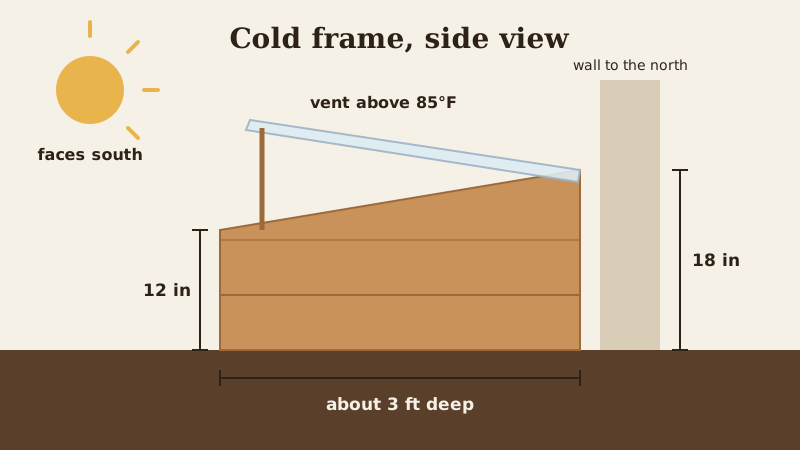
A cold frame is a bottomless box with a clear, sloped lid that turns the sun into a small greenhouse over your soil. Build it about 3 feet deep, 18 inches tall at the back and 12 inches at the front, face it south, and prop the lid open whenever the inside tops 85°F.
It's one of the simplest ways to keep harvesting greens into late fall and to start them earlier in spring.
What size should a cold frame be?
Iowa State Extension recommends:
- No more than 3 feet deep, so you can reach the back without stepping in.
- About 12 inches high in front and 18 inches in back. The slope lets more sunlight in and sheds rain.
Length is up to you. 6 feet is a practical size: it matches common lid materials and fits along the front of a raised bed or a garage wall.
What do you need to build one?
For a 3 × 6 ft frame from 2×6 lumber (5½ in actual width), use ground-contact treated wood or cedar, as for a raised bed:
| Part | Material | Pieces |
|---|---|---|
| Back wall (≈16½ in tall) | 2×6 × 6 ft | 3 |
| Front wall (≈11 in tall) | 2×6 × 6 ft | 2 |
| Sides (tapered 16½ → 11 in) | 2×6, 36 in pieces | 6 (three 8 ft boards) |
| Corner posts | 2×4 cut to height | 4 |
| Lid | Old window, polycarbonate panel, or clear rigid plastic on a 2×2 frame | 1 |
| Hardware | Exterior screws, 2 hinges, a prop stick | — |
Three rows of 2×6 make the back 16½ in and two rows make the front 11 in — close to Iowa State's 18 in and 12 in.
How do you build it?
- Build the back and front walls by screwing the boards to corner posts.
- Cut the side boards to taper from the back height to the front height, then screw them to the posts. Measure across the finished walls rather than trusting a single calculation — small differences add up.
- Set the frame on level, well-drained soil in full sun, facing south.
- Attach the lid to the back wall with two hinges, so it lifts from the front.
- Add a prop stick or notched board to hold the lid open at different heights.
Iowa State Extension suggests placing the north side against a house, garage or fence to cut heat loss, and banking straw bales or soil around the outside to insulate against temperature swings.
Venting matters more than building
On a sunny day, a closed cold frame can overheat fast, even in cold weather. Open the lid when the inside goes above 85°F and close it before sunset (Iowa State Extension). Keep a thermometer inside.
What should you grow in it?
Cool-season crops like lettuce, spinach and radishes. Iowa State Extension notes that a cold frame planted in late August or early September can keep producing well into November, and in spring you can start the same crops in early April. Water less often than in open beds — the lid holds in moisture.
For a lighter, cheaper option over a whole bed, see how to protect plants from frost. The Raised Bed Lumber Calculator helps with board counts if you're building the frame on top of a bed.
Sources: All About Cold Frames — Iowa State University Extension.
FAQ
How big should a cold frame be?
No deeper than about 3 feet front to back, so you can reach the back without leaning in. Length is flexible; 6 feet fits a standard window or polycarbonate panel. Iowa State Extension recommends about 12 inches high at the front and 18 inches at the back.
Which way should a cold frame face?
South, with the low side toward the sun. Iowa State Extension suggests putting the north side against a house, garage or fence to cut heat loss.
When do I open a cold frame?
When the air inside goes above about 85°F, which can happen on any sunny day, even in cold weather. Close it before sunset to hold heat overnight. A cheap thermometer inside takes the guesswork out.
What can I grow in a cold frame in fall?
Cool-season crops: lettuce, spinach, radishes and other greens. Iowa State Extension notes a frame planted in late August or early September can keep producing well into November.