Best Wood for Raised Beds: Cedar vs. Treated vs. Pine

By Rowan Plank · Published September 28, 2026
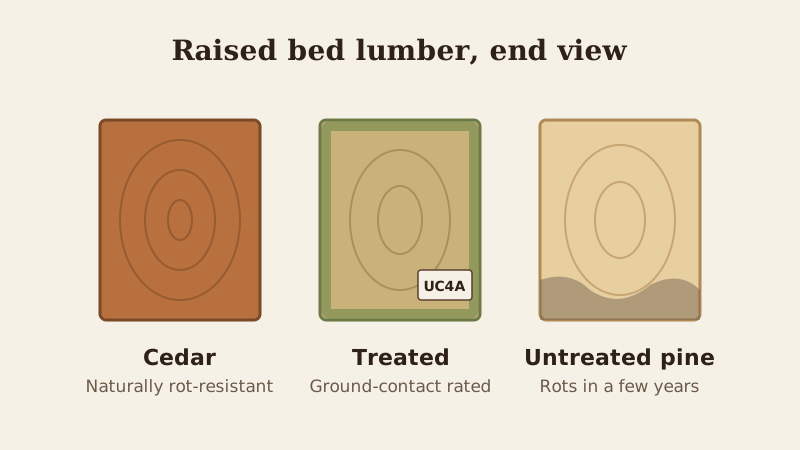
For most people, the best wood for a raised bed is ground-contact pressure-treated lumber if you want the longest life for the money, or cedar if you'd rather use untreated wood and can pay more. Untreated pine is the cheapest, but it rots within a few years once it's full of damp soil.
What are your options?
| Wood | Cost | How long it lasts in soil | Safe for vegetables? |
|---|---|---|---|
| Ground-contact pressure-treated (MCA, CA, ACQ) | Low | Longest of the three — only minor decay after 6 years in Oregon State's trial | Yes — no arsenic; copper stayed within 1 in of the board |
| Cedar, redwood, cypress | High | Long — naturally rot-resistant | Yes |
| Untreated pine, fir, spruce | Lowest | A few years | Yes |
| Old CCA-treated wood, railroad ties | — | — | Avoid |
Prices vary a lot by region, so compare the same board size at your local yard before deciding — cedar is usually the most expensive of the three.
Is pressure-treated wood safe for a vegetable garden?
Yes, if it's modern residential lumber. The arsenic-based preservative CCA (chromated copper arsenate) was pulled from residential lumber in 2004. What you buy today is treated with copper-based preservatives — micronized copper azole (MCA), copper azole (CA), or alkaline copper quaternary (ACQ) — which University of Maryland Extension describes as low in toxicity.
Oregon State University tested it directly. Over four growing seasons, raised beds built from copper azole ground-contact lumber raised soil copper only within 1 inch of the bed edge. Three to four inches in, levels were normal, and the vegetables and herbs grown in the beds showed no increase in copper in any season.
Buy ground-contact lumber
Treated lumber comes in "above ground" and "ground contact" grades. A raised bed sits in wet soil, so look for ground contact on the end tag — often labeled UC4A. Clemson Extension notes the American Wood Protection Association recommends UC4A or higher for horticultural use.
Why choose cedar?
Cedar, redwood and cypress contain natural compounds that resist rot and insects, so they last without any chemical treatment. Oregon State Extension calls cedar and redwood "a long-lasting, safe choice" for edible crops. The trade-off is price, and availability depends on where you live — western red cedar is common in the West, cypress in the Southeast.
If you go with cedar, use boards that are at least 1½ in thick (nominal 2× lumber). Thin cedar fence pickets are cheap, but they warp and bow under the weight of wet soil.
Is untreated pine worth it?
Only if you want the lowest up-front cost and don't mind rebuilding. Utah State University Extension notes untreated lumber such as fir "will rot and break down within a few years." In Oregon State's side-by-side trial, untreated boxes had advanced decay in the lower half after six years — more than half of the wood cross-section was fully decayed — while treated boxes showed only minor decay.
A 4×8 bed in untreated pine can make sense as a trial run for a season or two before you commit to a permanent layout.
What should you avoid?
- Old CCA-treated wood. Reclaimed decking or fencing from before 2004 may contain arsenic. If you don't know when it was made, don't use it for food crops.
- Railroad ties. They're treated with creosote. Oregon State Extension specifically warns against them for vegetable beds.
- Pallets of unknown origin. Many are heat-treated (stamped "HT"), which is fine, but others were fumigated or carried chemicals. If there's no stamp, skip it.
- Thin boards. Anything under nominal 2× thickness bows outward once the bed is full.
Can you line a bed to be extra safe?
Yes. If you're using treated wood and want another layer of caution, University of Maryland Extension suggests stapling heavy plastic sheeting to the inside of the frame, between the wood and the soil. Leave the bottom open so the bed still drains. Given Oregon State's results, this is optional rather than necessary.
Once you've picked your wood, the Raised Bed Lumber Calculator tells you how many boards to buy for your bed size, and the Raised Bed Soil Calculator covers the fill. For bed dimensions, see what size a raised bed should be.
Sources: Pressure-treated wood for raised bed construction in Oregon — OSU Extension, The Safety of Materials Used for Building Raised Beds — UMD Extension, Raised Bed Gardening — USU Extension, Raised Bed Gardening — OSU Extension, Raised Beds — Clemson HGIC.
FAQ
Is pressure-treated wood safe for a vegetable garden?
Modern residential pressure-treated lumber (copper azole or ACQ, no arsenic) is considered low in toxicity. In a multi-year Oregon State University study, copper from treated boards raised soil levels only within 1 inch of the bed edge, and vegetables grown in the beds showed no increase in copper.
How long does an untreated pine raised bed last?
Only a few years. Utah State University Extension notes untreated lumber like fir breaks down within a few years in soil contact, and Oregon State found untreated boxes had advanced decay in their lower half after six years.
Can I use old railroad ties or pallets?
Skip railroad ties — they're treated with creosote, which Oregon State Extension advises against for food gardens. Pallets are a gamble: you rarely know what they were treated with or what they carried.
Should I line a treated-wood bed with plastic?
It's optional. If you want extra peace of mind, University of Maryland Extension suggests a heavy plastic liner between the wood and the soil, leaving the bottom open for drainage.