How to Protect Plants From Frost: Row Covers, Cloches & Tunnels

By Rowan Plank · Published October 2, 2026
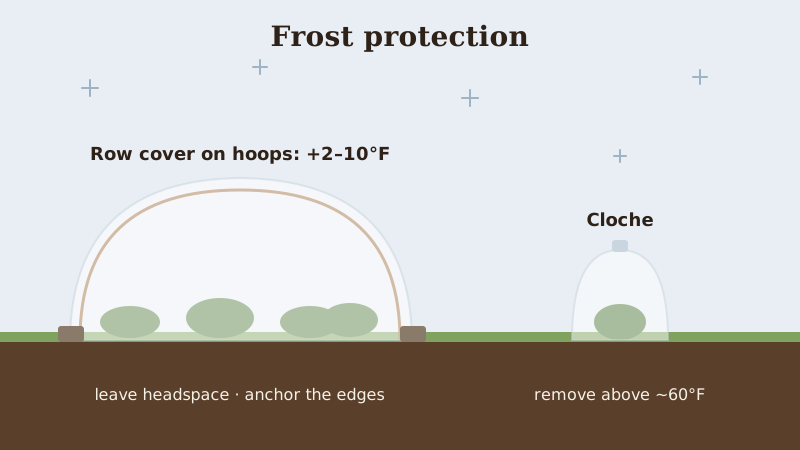
To protect plants from frost, cover them with row cover fabric held up on hoops, which keeps the air underneath about 2–10°F warmer than outside and protects plants down to roughly 24–28°F (Utah State University Extension). For single plants, a cloche works; for a whole bed through fall, a low tunnel or a cold frame.
Which frost protection should you use?
| Method | Extra warmth | Best for |
|---|---|---|
| Row cover fabric on hoops | About 2–10°F, by fabric weight | Whole beds, fall and spring |
| Low tunnel (hoops + cover) | About 2–4°F, by covering | Extending a bed of greens |
| Cloche | A few degrees | Single plants, seedlings |
| Old sheet or blanket | A few degrees, overnight | Emergency cover for one cold night |
Figures from Utah State University Extension and Clemson Extension.
How do row covers work?
Row covers are lightweight fabric — usually spun-bonded polypropylene or polyester — that lets light, air and water through while trapping heat radiating from the soil. Clemson Extension recommends lightweight covers (0.5–1 oz) for frost down to about 28°F, and heavier covers for deeper cold.
Heavier fabric protects more but lets less light through, so lightweight covers can stay on longer, while heavy ones are better for cold nights and short stretches.
How do you set up row covers?
- Bend hoops from heavy wire or PVC and push them into the soil every few feet along the bed.
- Drape the fabric over the hoops with room to spare on each side.
- Leave headspace. Clemson Extension stresses keeping space between the cover and the plants — frost can still form where fabric touches leaves.
- Anchor the edges with sandbags, soil, bricks or pins so wind can't lift it.
- Cover in the afternoon before a frost, so the soil's daytime warmth is trapped underneath.
Watch for overheating
Covers that save plants on a cold night can cook them on a sunny day. USU Extension notes cloches can run 20–40°F hotter than the outside air in sun. Vent or remove covers when days warm up.
What about cloches and low tunnels?
A cloche is a small cover over one plant — a glass bell, a cut-off plastic jug, or a purchased dome. It adds a few degrees but heats up fast in sun; USU recommends removing them once days are consistently above 60°F.
A low tunnel is a row of hoops covered with fabric or plastic along a whole bed. USU puts its protection at about 2–4°F depending on the covering. It's a good way to keep a bed of lettuce, spinach or kale producing later into fall.
Which crops need protecting?
Warm-season crops need nights above about 50°F to grow, and cool-season crops about 40°F (USU Extension). Frost damages tomatoes, peppers, beans, squash and basil, so cover them or harvest before a freeze. Kale, spinach, carrots, garlic and radishes shrug off light frosts.
A cold frame gives even more protection than a low tunnel for greens you want to harvest into winter.
For the bed itself, the Raised Bed Lumber Calculator sizes the frame, and the Drip Irrigation Calculator plans watering you can leave under the covers.
Sources: Extending the Garden Season — USU Extension, Extending the Growing Season: Row Covers, Cold Frames, and Other Tricks — Clemson HGIC.
FAQ
How much frost protection does a row cover give?
Utah State University Extension says air under the fabric stays about 2–10°F warmer than outside, depending on the fabric's weight, protecting plants down to roughly 24–28°F. Clemson Extension notes lightweight covers (0.5–1 oz) handle frost down to about 28°F.
Can I use a bedsheet or plastic tarp to cover plants?
A sheet or blanket works for a night or two if it's held above the plants and removed in the morning. Avoid plastic touching leaves: it transfers cold, and on a sunny day it can cook plants underneath.
When should I take row covers off?
When the cold snap passes and days warm up. Cloches especially can overheat — USU Extension notes they can run 20–40°F hotter than outside on a sunny day, so remove them once days are consistently above 60°F.
Which plants survive frost without covers?
Many cool-season crops handle light frost: kale, spinach, cabbage, carrots, garlic and radishes among them. Warm-season crops like tomatoes, peppers, beans, squash and basil are damaged by frost and need protection or harvesting first.