How to Grow Eggplants
Solanum melongena

By Efraín Vega · Published October 28, 2026
Sun
Full sun (6–8+ hrs of direct heat and light)
Water
1–1.5 in/week; deep and uniform moisture prevents bitter fruit
Spacing
18–24 in apart (24–36 in row spacing)
Soil pH
5.8–6.8
Days to maturity
65–85 days from transplant
Hardiness zones
Tender perennial grown as an annual in zones 4–11; extremely sensitive to frost and cold snaps below 50°F
When to plant: 2–3 weeks after last frost once night temperatures reliably stay above 55°F and soil reaches 65°F+ • Calculate planting dates for your city →
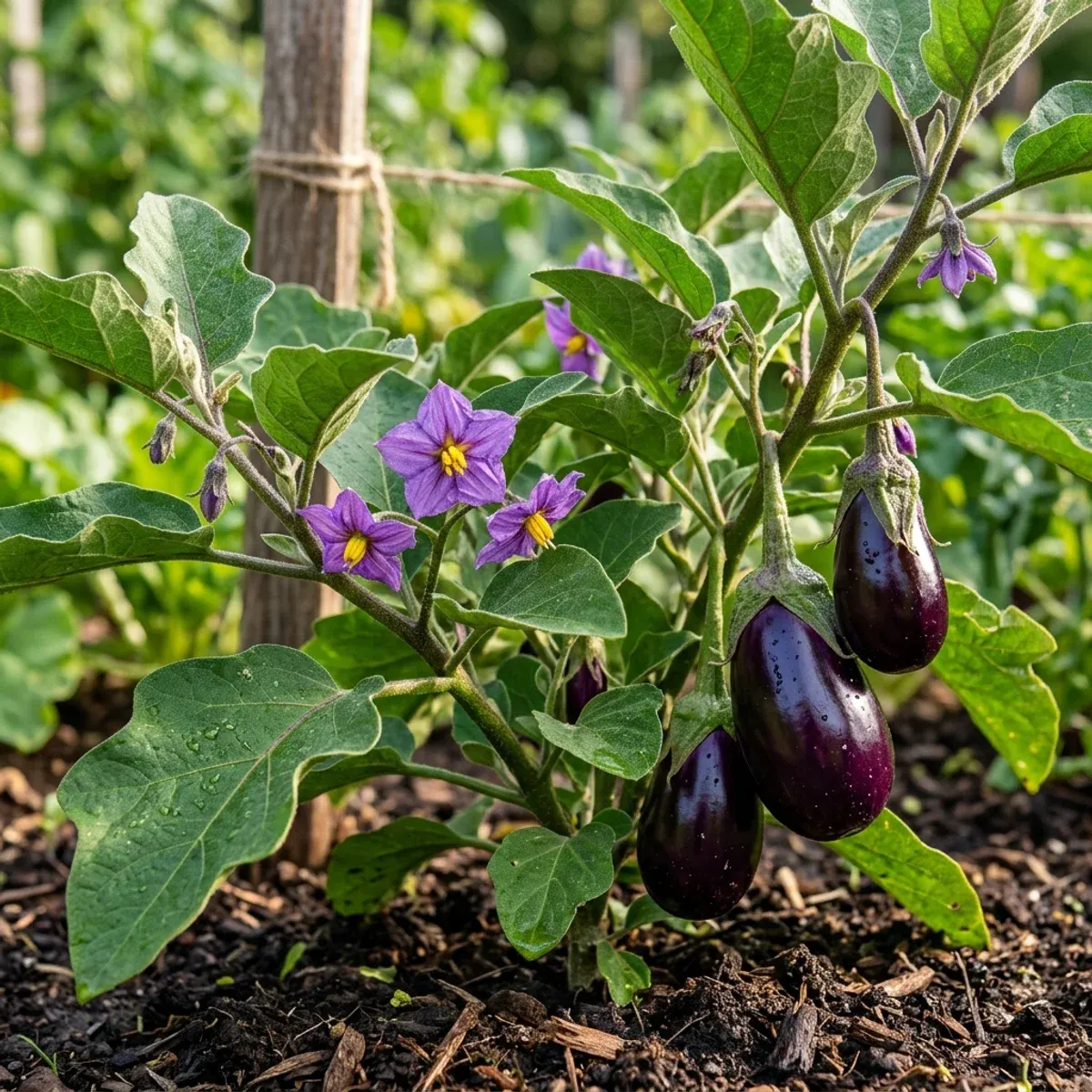
Eggplants are heat-loving nightshades that produce gorgeous violet blossoms and glossy, culinary fruits ranging from classic deep purple globes to slender Asian varieties. They require full sun, warm soil above 65°F, and 18 to 24 inches of spacing.
Eggplants are even more sensitive to cold than tomatoes and peppers. Raised beds are ideal because their soil warms up weeks earlier in the spring, giving eggplants the rapid start they need to produce heavily before autumn.
Selecting varieties for your climate
- Standard Globe / Italian: Large, teardrop-shaped fruits (Black Beauty, Nadia). Ideal for eggplant parmesan and roasting.
- Asian / Slender: Long, narrow, thin-skinned fruits with fewer seeds and delicate flavor (Ping Tung Long, Ichiban). Faster to mature and more tolerant of fluctuating temperatures.
- Small Fruited / Container: Compact varieties producing clusters of egg-sized or round fruits (Fairytale, Patio Baby).
When to plant eggplants
Do not rush eggplants into the garden. Transplant outdoors 2 to 3 weeks after your average last spring frost, when daytime temperatures consistently hover between 70°F and 85°F and nighttime lows stay reliably above 55°F.
According to University of Maryland Extension, planting into soil cooler than 60°F stunts growth permanently and makes plants susceptible to soil fungi and verticillium wilt.
Spacing and physical support
Space transplants 18 to 24 inches apart in beds, with 30 to 36 inches between rows in traditional layouts.
Install a stake or tomato cage immediately upon transplanting. Mature plants reach 2 to 4 feet in height, and the weight of 3 or 4 developing fruits can easily topple or snap unsupported branches during summer winds.
Defeating flea beetles
Young eggplant seedlings are a magnet for flea beetles. Cover newly transplanted beds with floating row cover immediately, burying the fabric edges with soil. Remove the covers once flowers begin to appear so bees can pollinate the blossoms.
Water and soil management
Eggplants require rich, moisture-retentive, well-draining loam packed with aged compost, with a soil pH of 5.8 to 6.8.
Provide 1 to 1.5 inches of water weekly. Inconsistent moisture leads to bitter flesh and blossom-end rot. Apply a 2–3 inch layer of clean organic mulch (straw or shredded leaves) to moderate soil temperature and retain root moisture.
Harvesting eggplants
Always harvest eggplants when the skin is high-gloss and reflective. When you press your thumb lightly against the fruit, the flesh should give slightly and spring back. If the skin turns dull, the fruit has passed its prime and the internal seeds have turned bitter and hard.
Use sharp hand pruners to cut the fruit with 1 inch of green calyx stem attached; never twist or yank fruits off the bush. Regular harvesting encourages plants to set continuous new blossoms until the first fall frost.
Building a summer nightshade bed? Size your garden soil and compost amendments with our Raised Bed Soil Calculator.
Sources: UMD Extension — Growing Eggplant, Clemson HGIC — Eggplant, Cornell Cooperative Extension — Eggplant.
Beneficial Companion Plants for Eggplant
Plant eggplant near: Bush Beans, Marigold, Spinach, Oregano, Thyme.
FAQ
How do you tell when an eggplant is ripe?
Check the skin glossiness: a ripe eggplant has a brilliant, mirror-like glossy sheen and yields slightly when pressed with your thumb without leaving an indent. If the skin turns dull, matte, or yellowish-brown, the fruit is overripe and full of tough, bitter seeds.
Why do my eggplant leaves have tiny shot holes in them?
Flea beetles are the classic culprit. These tiny, jumping black beetles chew hundreds of pin-sized holes in tender eggplant leaves. Protect young transplants with lightweight floating row covers until flowering begins, or dust with food-grade diatomaceous earth.
Do eggplants need to be staked?
Yes. As eggplants develop, heavy fruits weigh down brittle side branches, causing them to crack or drag fruit into damp soil where slugs and soil-borne rots take hold. Support each plant with a sturdy wooden stake or a small tomato cage at planting time.
Why are my eggplant flowers dropping without setting fruit?
Extreme temperatures are the main trigger. When daytime temperatures exceed 90–95°F or nighttime temperatures stay below 55°F, pollen becomes sterile and blossoms drop. Inconsistent watering or excess high-nitrogen fertilizer also causes blossom drop.
Can you eat eggplant raw?
While tiny amounts aren't lethal, eggplants are not meant to be eaten raw. Like all nightshades, raw eggplant contains solanine and bitter saponins that can cause gastrointestinal upset. Cooking breaks down these compounds, yielding a tender, creamy texture.