How to Grow Swiss Chard
Beta vulgaris subsp. vulgaris

By Efraín Vega · Published November 12, 2026
Sun
Full sun to partial shade (4–6+ hrs)
Water
1–1.5 in/week, deep and consistent moisture
Spacing
Thin to 8–12 in apart; rows 18 in apart
Soil pH
6.0–7.0
Days to maturity
50–60 days from seed (30 days for baby greens)
Hardiness zones
Grown as an annual in all US zones (zones 3–10); overwinters in mild climates
When to plant: 2–3 weeks before the last spring frost, and again in mid-to-late summer for fall harvests • Calculate planting dates for your city →
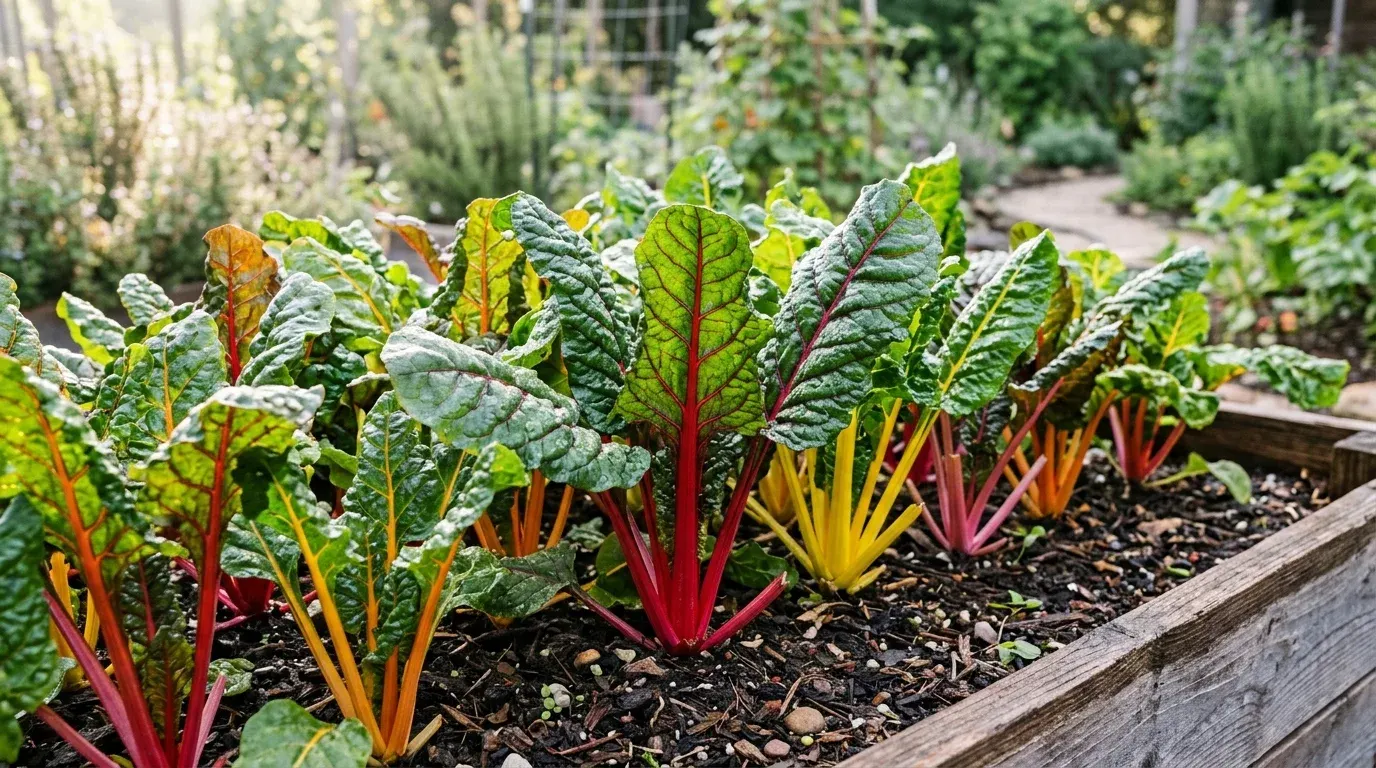
Swiss chard is one of the most reliable, productive greens in the backyard garden. Unlike spinach, which bolts as soon as summer temperatures rise, chard tolerates both midsummer heat and autumn frost with ease. Most varieties are ready in 50–60 days, though you can start snipping tender baby leaves in just 30 days.
Because chard grows in a continuous upright rosette, a single 4×8 ft raised bed can supply an entire household with fresh greens from late spring through Thanksgiving.
When should you plant Swiss chard?
Plant Swiss chard twice a year for an uninterrupted harvest:
- Spring planting: Direct sow or transplant seedlings 2–3 weeks before your last spring frost date, as soon as the ground is workable. Chard seeds germinate in soils as cool as 50°F.
- Fall planting: Sow seeds 40–50 days before your first fall frost date. Plants establish quickly in warm soil and thrive into early winter.
You can look up exact spring and fall frost probability dates for your city in our NOAA frost dates tool.
How far apart should you plant Swiss chard?
Each Swiss chard "seed" is actually a rough seed cluster containing two to three individual seeds. Thinning is essential to give plants room to develop broad, fleshy stems:
| Harvest Style | In-Row Spacing | Between-Row Spacing | Best Use |
|---|---|---|---|
| Baby greens | 4–6 in | 12 in | Salad mixes, fast harvest |
| Full-size upright heads | 8–12 in | 18 in | Braising, sautéing, continuous picking |
In a raised bed, space plants on an 8×8 inch or 10×10 inch grid to maximize yield without overcrowding the roots. If you are building or refilling your beds, calculate your compost and soil needs with our Raised Bed Soil Calculator.
Sun and watering requirements
Chard is adaptable:
- Sun: It performs best in full sun (6+ hours), but tolerates partial shade (4–5 hours) better than almost any other warm-weather vegetable. Afternoon shade is especially beneficial in southern climates.
- Watering: Provide 1 to 1.5 inches of water per week. Deep, uniform watering prevents the leaves from becoming bitter and encourages thick, succulent stalks. A 2-inch layer of straw or wood shavings mulch keeps root zones cool and damp.
How to harvest Swiss chard (Cut-and-Come-Again)
Never pull up the entire plant unless you are clearing the garden at the end of the year. Instead:
- Wait until outer leaves reach 8–12 inches long.
- Cut the outermost stalks 1–2 inches above ground level using clean shears or a garden knife.
- Leave the inner central bud untouched — it will continually generate new foliage within 7 to 10 days.
Best companion plants for Swiss chard
Swiss chard pairs exceptionally well with shallow-rooted crops and alliums:
- Onions & Garlic: Allium scents confuse aphids, flea beetles, and leafminers.
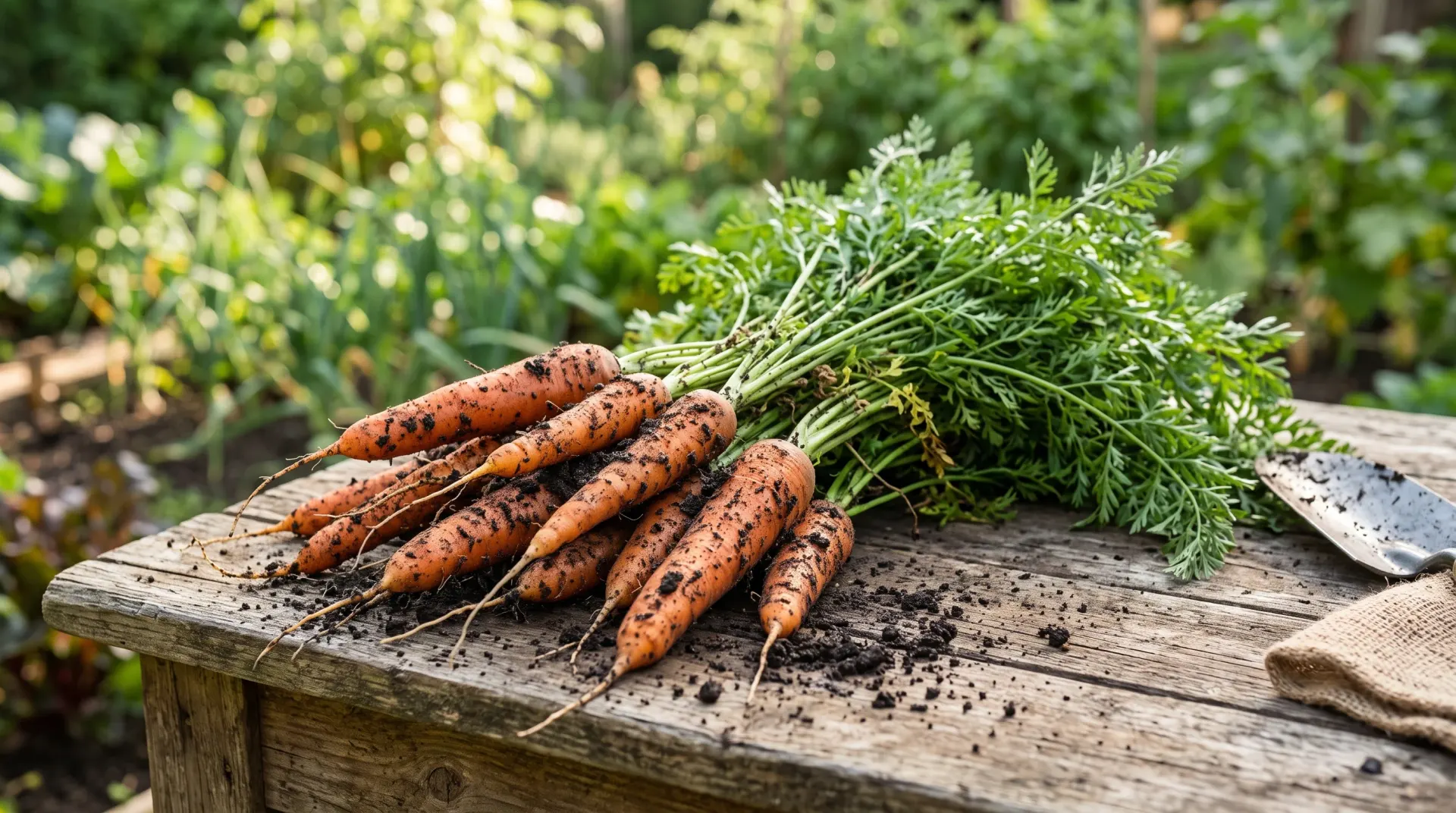
- Carrots & Radishes: Taproots cultivate deep soil channels without encroaching on chard's fibrous surface roots.
- Bush Beans: Fix atmospheric nitrogen into the soil to fuel leafy chard growth.
Check companion compatibility and layout tips with our Companion Planting Checker.
Beneficial Companion Plants for Swiss Chard
Plant swiss chard near: Onions, Carrots, Bush Beans, Radishes.
FAQ
Can Swiss chard survive frost?
Yes. Swiss chard is cold-hardy down into the mid-20s (°F). A light frost actually sweetens the foliage by concentrating natural sugars.
Does Swiss chard bolt in the summer heat?
Unlike spinach or lettuce, Swiss chard is remarkably heat-tolerant and rarely bolts during summer as long as soil moisture remains steady.
How do you harvest Swiss chard so it keeps growing?
Harvest using the cut-and-come-again method: slice the outermost leaves about 1–2 inches above the soil line with a sharp knife, leaving the central growing heart intact to produce new leaves.
How much sun does Swiss chard need?
Full sun (6+ hours) gives the highest yield, but Swiss chard also grows vigorously in partial shade with only 4–5 hours of sunlight.
How far apart should you space Swiss chard?
Thin seedlings to 8–12 inches apart for full, thick-stemmed heads, or 4–6 inches apart if harvesting strictly for tender baby greens.
How long does Swiss chard take to mature?
50–60 days from seed for full-sized stalks, or about 30 days for young salad leaves.