How to Grow Pumpkins
Cucurbita pepo

By Efraín Vega · Published October 28, 2026
Sun
Full sun (6–8+ hrs)
Water
1–2 in/week; deep soakings at ground level prevent powdery mildew
Spacing
4–6 ft apart on mounds (hills); 6–10 ft between vine rows
Soil pH
6.0–6.8
Days to maturity
90–120 days from direct seeding
Hardiness zones
Tender annual in zones 3–11; intolerant of frost
When to plant: Late spring once soil reaches 65–70°F (late May to early June for October Halloween harvest) • Calculate planting dates for your city →
Pumpkins are iconic, vigorous warm-season squash prized for autumnal carving, decorative displays, and sweet culinary pies. They require full sun, vast garden space, rich organic matter, and consistent moisture of 1 to 2 inches weekly.
Whether growing miniature Jack-B-Little pie varieties or massive carving gourds, pumpkins need warm soil and a long frost-free summer to set and ripen their heavy fruit.
Carving pumpkins vs. Sugar pie pumpkins
Not all pumpkins are created equal in the kitchen:
- Sugar / Pie Pumpkins (Cucurbita pepo): Smaller (3 to 6 lbs), round, with dense, sweet, fiber-free flesh containing high sugar levels (Small Sugar, Winter Luxury).
- Jack-O'-Lantern Carving (Cucurbita pepo): Medium-to-large (12 to 25 lbs), hollow interior with thin walls, stringy flesh, and sturdy handles (Howden, Connecticut Field).
- Jumbo Exhibition (Cucurbita maxima): Gigantic specimens that can exceed hundreds of pounds (Atlantic Giant).
When to plant pumpkins
Pumpkins are very sensitive to frost and cold ground. Sow seeds outdoors 2 to 3 weeks after your average last spring frost, once soil temperatures have reached at least 65°F to 70°F.
For Halloween carving, timing is critical: most carving varieties take 100 to 110 days to mature. Sowing between late May and June 10th in zones 5–7 ensures firm, bright orange pumpkins ready for picking in early-to-mid October.
Soil, mounding, and spacing
Pumpkins thrive in rich, loose, moisture-retentive loam enriched with abundant compost and well-rotted manure, with a soil pH between 6.0 and 6.8.
Create raised mounds or "hills" 4 to 6 feet apart, with rows spaced 6 to 10 feet apart:
- Plant 4 to 5 seeds per hill, 1 inch deep.
- When seedlings reach 2 to 3 inches tall with true leaves, thin to the strongest 2 to 3 plants per hill.
- For raised beds, plant one mound at the corner and allow the vines to spill down over the frame into nearby grassy walkways.
Protect fruit from ground rot
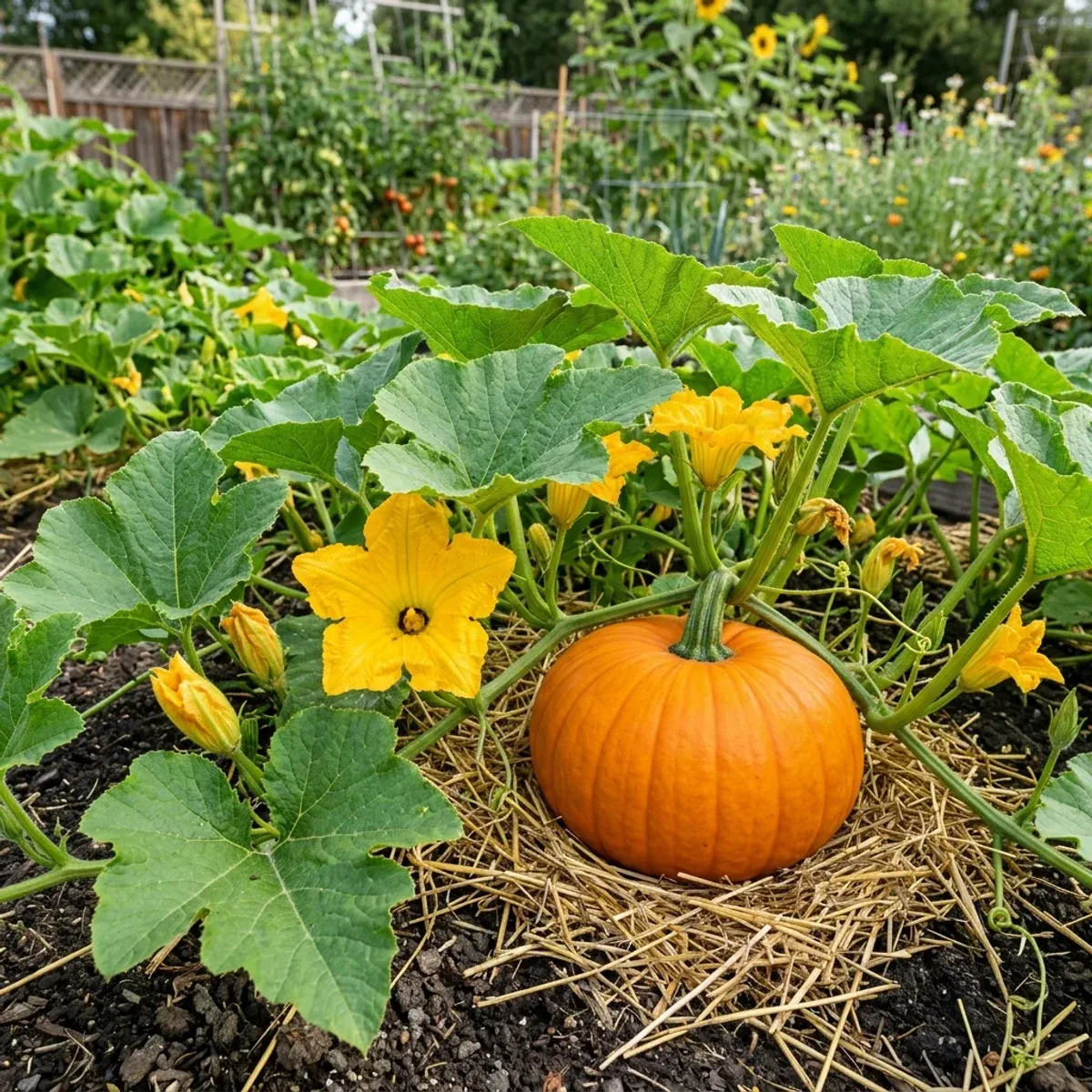
As green pumpkins swell and begin coloring up, slip a clean cedar shingle, tile, or thick pad of clean dry straw underneath each fruit. This prevents direct contact with damp soil, dramatically reducing bottom rot and insect tunneling.
Water and powdery mildew management
Pumpkins require 1 to 2 inches of water per week. Their broad, shallow root systems dry out quickly during mid-summer heatwaves.
Always water at the base of the plant using drip irrigation or soaker hoses. Wetting the sprawling leaves encourages powdery mildew (Podosphaera xanthii), a white powdery fungal disease that defoliates vines in late summer.
Harvesting and curing pumpkins
Harvest pumpkins before the first hard frost. A fully mature pumpkin has a hard, puncture-resistant rind and a woody, ribbed stem.
Cut the stem with sharp hand pruners, leaving 3 to 4 inches of stem attached like a sturdy handle; never carry a pumpkin by its stem, as breaking it opens a wound that invites rapid decay.
The curing step
Cure newly harvested pumpkins in the warm sun (or a dry room at 75–80°F) for 10 to 14 days. Curing hardens the rind and seals minor scratches, allowing healthy pumpkins to store at 50–55°F for 3 to 6 months.
Planning a pumpkin patch? Size your compost and soil mounds with our Raised Bed Soil Calculator.
Sources: Illinois Extension — Pumpkins and More, UMN Extension — Growing Pumpkins in Home Gardens, Clemson HGIC — Pumpkin & Winter Squash.
Beneficial Companion Plants for Pumpkin
Plant pumpkin near: Corn, Bush Beans, Marigold, Radish, Nasturtium.
FAQ
When should you plant pumpkins for a Halloween harvest?
Count backward 95 to 110 days from mid-October based on your seed packet. In most temperate regions (zones 5–7), plant seeds between late May and mid-June. Planting too early results in pumpkins that ripen and rot by September.
Why are my pumpkin flowers falling off without making pumpkins?
Pumpkin plants produce separate male and female flowers. The first 10 to 20 blossoms to appear are almost always male flowers (on long thin stems) designed to attract bees. Female flowers (with a miniature baby pumpkin at the base) appear 1 to 2 weeks later. Low bee activity or heat waves above 90°F can also prevent pollination.
How do you keep pumpkins from rotting on the damp ground?
Once developing pumpkins reach grapefruit size, slide a piece of untreated wood board, clean dry straw, or a plastic melon cradle underneath the fruit to break contact with wet soil and discourage burrowing slugs and fungal rot.
Can you grow pumpkins in a small raised bed?
Standard vining pumpkins send out 15 to 20-foot vines that quickly overwhelm garden beds. If growing in raised beds, plant compact 'semi-bush' varieties (like *Spooktacular* or *Jack-B-Little*) or plant at the outer corner and train vigorous vines out into lawn or gravel paths.
How do you know when a pumpkin is ready to harvest?
A pumpkin is ready when the rind turns a solid, uniform color and cannot be pierced or dented with a fingernail, and the vine stem turns woody and hard. Always harvest before the first hard autumn freeze.