How to Grow Potatoes
Solanum tuberosum

By Efraín Vega · Published October 28, 2026
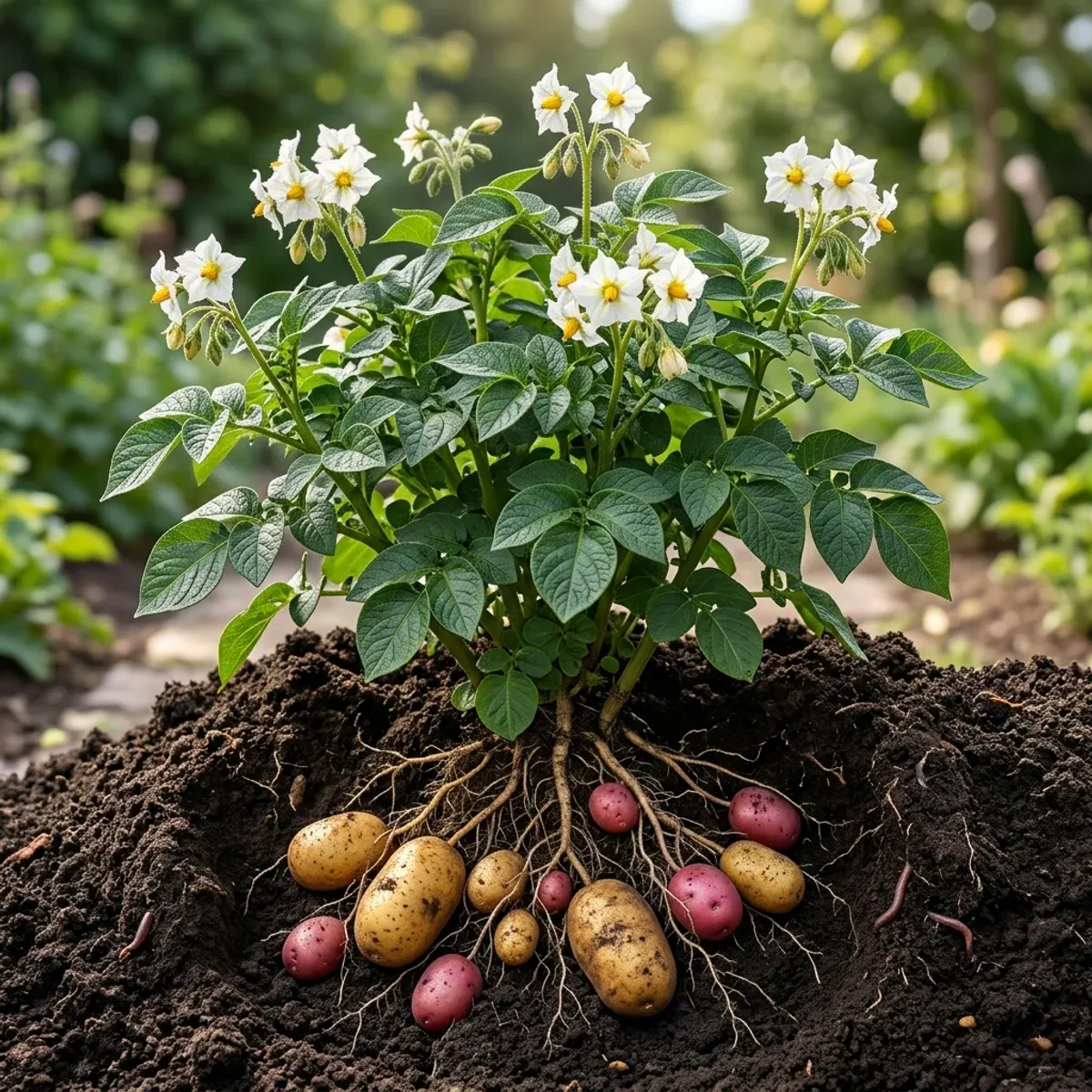
Sun
Full sun (6–8+ hrs)
Water
1–2 in/week; critical during flowering and tuber sizing
Spacing
10–12 in apart in trenches/beds (24–36 in row spacing)
Soil pH
5.0–6.0 (acidic soil suppresses common scab fungus)
Days to maturity
70–90 days (early new potatoes); 100–120 days (maincrop storage)
Hardiness zones
Tender perennial grown as an annual in zones 3–10; frost-sensitive foliage
When to plant: Early spring (2–4 weeks before last frost) once soil reaches 45–50°F • Calculate planting dates for your city →
Potatoes require full sun, loose well-drained soil, and active hilling as vines grow. Space seed pieces 10 to 12 inches apart, provide 1 to 2 inches of water weekly, and harvest tender "new" potatoes in 70–80 days or fully cured storage tubers in 100–120 days.
Growing potatoes in deep raised beds or fabric grow bags eliminates the heavy digging required in compacted native clay and ensures smooth, unblemished tubers.
Preparing and chitting seed potatoes
Always start with certified disease-free seed potatoes. Two to three weeks before planting, "chit" or pre-sprout your seed tubers by placing them in an open egg carton or shallow crate in a cool (60°F), brightly lit indoor room. This encourages short, sturdy green sprouts rather than weak, brittle white shoots.
Two days before planting, cut large seed potatoes into blocky chunks roughly the size of a golf ball (1.5 to 2 ounces), ensuring each piece contains at least one to two strong eyes. Let the cut pieces rest at room temperature so the sliced faces form a protective, callused skin (suberization), which prevents rot once planted into cool, moist garden soil. Small seed potatoes can be planted whole.
When should you plant potatoes?
Plant seed potatoes 2 to 4 weeks before your average last spring frost, as soon as the soil has warmed to at least 45°F to 50°F. In mild-winter southern regions (zones 8–10), potatoes are traditionally planted in late autumn or mid-winter for spring harvest.
Trenching and planting depth
Dig a trench 6 to 8 inches deep in a bed filled with loose, organic-rich soil. Place seed pieces cut-side down, eyes facing upward, spaced 10 to 12 inches apart. Cover them with just 3 to 4 inches of soil.
How and why to hill potatoes
As the green leafy vines grow to 8–10 inches tall, begin hilling. Gently pull loose soil, compost, or clean straw up around the stems, burying the lower half of the plant and leaving the top 4 inches of leafy growth exposed.
Repeat this process every 2 to 3 weeks until you have created a mound 8 to 12 inches high. Hilling achieves two goals:
- Prevents greening: Light exposure causes tubers to synthesize chlorophyll and solanine, a bitter toxic compound.
- Increases yield: On indeterminate varieties, buried stem nodes produce additional underground stolons that swell into tubers.
Soil pH and potato scab
Keep soil pH slightly acidic between 5.0 and 6.0. The soil-borne fungus Streptomyces scabies, which causes rough corky lesions known as potato scab, is significantly suppressed in acidic soils below pH 5.2. Avoid adding lime or fresh alkaline wood ash to your potato beds.
Watering and nutrient needs
Potatoes require steady, even moisture of 1 to 2 inches per week. Moisture stress during tuber initiation and flowering leads to misshapen, hollow-heart, or knobby potatoes. Cease watering 2 weeks prior to final harvest to allow the skins to toughen.
Avoid excessive nitrogen fertilizers, which produce luxuriant green top growth but small, watery tubers. Focus on phosphorous and potassium (such as bone meal and greensand or sulfate of potash) for root development.
Harvesting and curing
- New potatoes: Gently hand-dig around the outer perimeter of the hill 2 to 3 weeks after flowering ends to harvest small, tender-skinned baby potatoes for immediate eating.
- Storage potatoes: When the vines turn yellow and collapse in late summer, cut or mow the vines and leave the tubers in the dry ground for 10 to 14 days. This skin-setting period toughens the outer peel. Dig carefully on a dry day using a spading fork, brush off dry dirt (do not wash), and cure at 50–60°F in the dark for 10 days before storing at 38–42°F.
Planning a dedicated potato bed? Use our Raised Bed Soil Calculator to size your bed depth for optimal 12–18 inch root and tuber volume.
Sources: University of Idaho Extension — Potato Growing Guide, Cornell Cooperative Extension — Potatoes, Purdue University Extension — The Potato.
Beneficial Companion Plants for Potato
Plant potato near: Bush Beans, Cabbage, Corn, Marigold, Horseradish.
FAQ
Why do you have to hill potatoes?
Hilling mounds soil or straw around growing potato vines. This serves two vital purposes: it prevents sunlight from hitting developing shallow tubers (which turns them green and toxic with solanine) and provides loose, dark volume where stolons branch out to set more tubers.
Can you plant sprouted potatoes from the grocery store?
It is not recommended. Supermarket potatoes are often treated with sprout inhibitors (chlorpropham) to prevent sprouting on shelves. More critically, grocery potatoes can harbor seed-borne pathogens like bacterial ring rot or late blight. Always purchase certified disease-free seed potatoes.
What causes green skin on potatoes?
Green skin occurs when tubers are exposed to light while growing or in storage. Light stimulates chlorophyll production alongside solanine, a bitter glycoalkaloid toxin. Discard heavily greened potatoes or trim away all green portions before cooking.
What is the difference between determinate and indeterminate potatoes?
Determinate varieties (like Yukon Gold, Norland, and Red Pontiac) grow in a single tier just above the seed piece and do not benefit from heavy hilling. Indeterminate varieties (like Russet Burbank, German Butterball, and Elba) produce tubers in multiple tiers up the stem as you hill them.
When are new potatoes ready vs storage potatoes?
New potatoes can be harvested 2 to 3 weeks after flowering begins by gently 'bandicooting' (digging by hand under the plant without pulling it). For long-term storage potatoes, wait until foliage naturally dies back completely, then let tubers cure in dry soil for 10 to 14 days before digging.