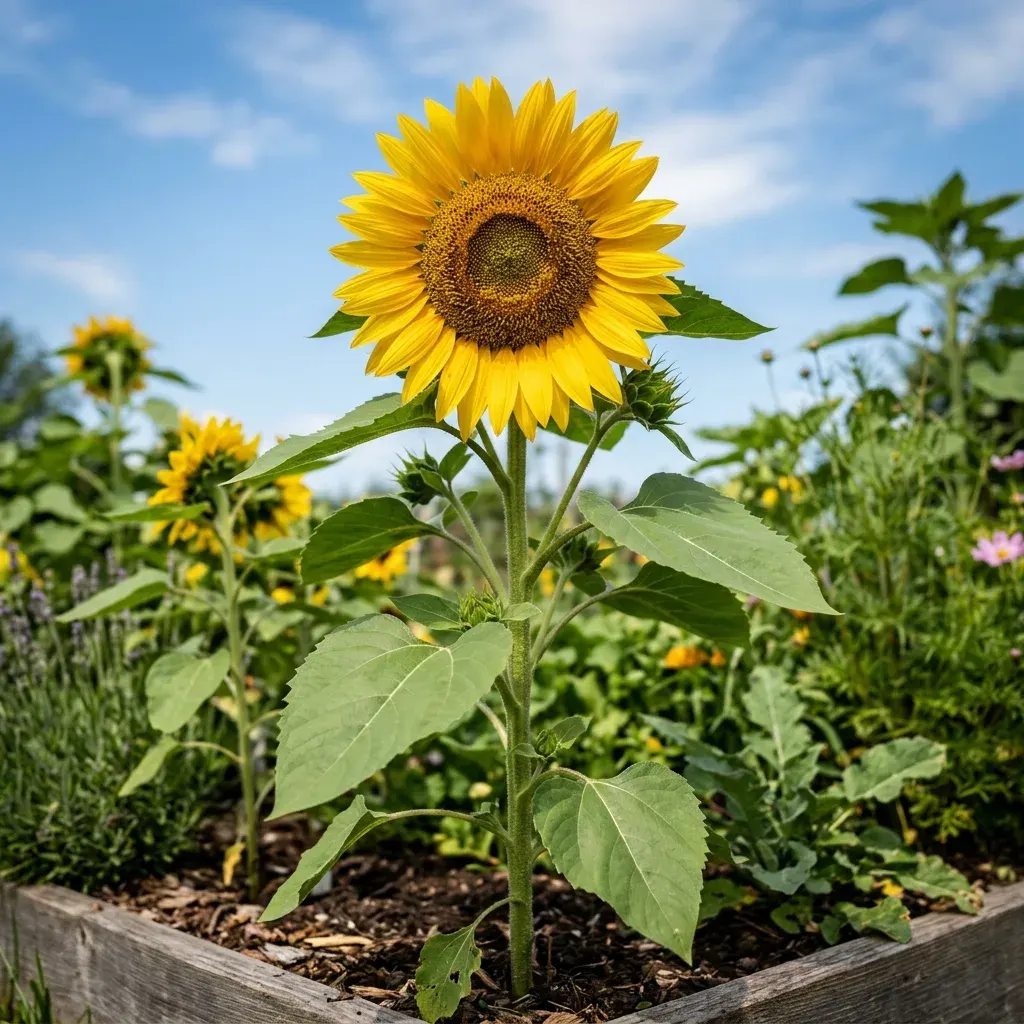
How to Grow Sunflower
Helianthus annuus

By Efraín Vega · Published October 30, 2026
Sun
Full sun (6–8+ hrs direct sunlight)
Water
Moderate — deep watering once a week; drought tolerant once taproot establishes
Spacing
12–24 in apart (depending on dwarf vs mammoth variety)
Soil pH
6.0–7.5 (adaptable, prefers nutrient-rich, well-draining loam)
Days to maturity
70–100 days from seed to harvest
Hardiness zones
Annual in all zones (Zones 2–11)
When to plant: Direct sow in spring after all danger of frost has passed and soil reaches 55–60°F • Calculate planting dates for your city →
Sunflowers (Helianthus annuus) are dynamic North American native annuals that transform a garden with towering vertical interest, nutrient-dense edible seeds, and unmatched pollinator magnetism. They are famous for heliotropism: young flower buds actively follow the sun from east to west across the sky every day.
How to direct-sow sunflowers
Direct sow seeds outdoors 1 to 2 weeks after your region's last spring frost date, once the soil has warmed to at least 55°F to 60°F. Sunflowers thrive in deep, well-draining garden soil enriched with finished compost.
- Sowing Depth: Push seeds 1 to 1.5 inches deep into damp soil, pointing the tapered tip downwards.
- Spacing: Space dwarf varieties (1 to 3 ft tall) 8 to 12 inches apart. Space giant heirloom cultivars like 'Mammoth Russian' (8 to 12+ ft tall) 18 to 24 inches apart so their heavy root systems have room to support thick stalks.
- Moisture: Keep the top inch of soil consistently moist until germination, which takes 7 to 10 days at 70°F.
Use sunflowers as living bean poles
Take advantage of sunflowers' sturdy, fibrous stalks by companion planting them with pole beans. When sunflowers reach 2 feet tall, plant 2 pole bean seeds at their base; the beans will climb the sunflower stalk while fixing atmospheric nitrogen to feed the sunflower.
Sunlight, watering, and staking
Sunflowers require unobstructed, full day sunlight (at least 6 to 8 hours). Position giant varieties on the northern edge of your garden beds so they do not cast heavy shade over lower-growing tomatoes, peppers, and greens.
While seedlings need regular surface moisture, mature sunflowers develop deep vertical taproots capable of mining water deep in the soil profile. Water deeply once a week at the base of the plant rather than frequent shallow sprinkling.
In windy coastal or plains climates, tie giant single-stem sunflowers to garden stakes using soft twine or stretchy garden tape to prevent heavy seed heads from snapping during late-summer thunderstorms.
Popular sunflower varieties for backyard growers
| Variety | Mature Height | Days to Bloom | Best For |
|---|---|---|---|
| Mammoth Russian | 10–14 ft | 90–110 days | Huge edible seeds, contest height, living screens |
| Autumn Beauty | 5–8 ft | 75–85 days | Multi-branching, cut flowers in bronze, gold and red |
| Teddy Bear | 2–3 ft | 65–75 days | Fluffy double pom-pom blooms for containers and borders |
| Lemon Queen | 5–7 ft | 75–80 days | High nectar production; top pollinator research choice |
Beneficial Companion Plants for Sunflower
Plant sunflower near: Cucumber, Corn, Squash, Pole Beans.
FAQ
Can you start sunflowers indoors in seed trays?
Direct sowing outdoors is strongly recommended. Sunflowers develop a rapid, sensitive central taproot that dislikes root disturbance. If starting indoors, use biodegradable peat or paper pots that can be planted directly into the ground without touching the root ball, and transplant within 2 to 3 weeks of germination.
How deep should you plant sunflower seeds?
Plant seeds 1 to 1.5 inches deep into loose, warm soil. Lightly firm the soil over the seed to ensure good soil contact and protect them from hungry birds.
How do you keep tall mammoth sunflowers from falling over in storms?
Plant seeds against a sturdy garden fence, or stake stalks with 6-foot hardwood stakes or rebar when plants reach 3 feet tall. Providing deep, infrequent irrigation encourages the taproot to grow several feet down into the subsoil, creating self-anchoring stability against wind.
When are sunflower seeds ready to harvest?
Harvest when the backside of the flower head turns from green to rich yellow-brown, the petals shrivel and drop off, and the seed hulls become hard and distinctly striped. Cover maturing heads with cheesecloth or paper bags to keep birds and squirrels from stripping the seeds.
Do sunflowers hurt other plants nearby?
Sunflowers produce mild allelopathic chemicals in their seed hulls and roots that can inhibit the germination of certain small seeds like pole beans or potatoes if grown too closely together. Plant them on the north or east side of vegetable beds so their towering height doesn't shade sun-hungry crops.