How to Grow Parsnip
Pastinaca sativa

By Efraín Vega · Published November 15, 2026
Sun
Full sun: 6–8 hours of direct sunlight daily; tolerates light partial afternoon shade
Water
Even moisture; 1 inch per week. Deep watering encourages straight, deep taproot elongation
Spacing
3–4 inches apart in rows 15–18 inches apart; or 9 plants per square foot in deep raised beds
Soil pH
6.0–6.8; deep, stone-free friable sandy loam with generous organic matter
Days to maturity
105–130 days from seeding. Left in the ground past first hard autumn frosts
Hardiness zones
Zones 2–9; extremely cold hardy down to 0°F (-18°C) under winter mulch
When to plant: Direct sow in early spring (2–4 weeks before last frost) once soil can be worked • Calculate planting dates for your city →
Parsnips (Pastinaca sativa) are the ultimate cold-season culinary root crop. A biennial grown as an annual, this close relative of carrots and parsley demands patience—taking between 105 and 130 days to reach maturity—but rewards the gardener with long, tapering, ivory roots packed with a nutty, caramel-like sweetness.
Because parsnips develop taproots extending 12 to 18 inches deep, standard hard-packed backyard soil often results in stunted, misshapen roots. Deep raised beds filled with loose, stone-free loam create the ideal environment for growing prize-winning, straight parsnip roots.
The Cold-Weather Sugar Conversion Biology
The single most critical rule of growing parsnips is: never harvest them before autumn frost.
          PARSNIP SEASONAL FLAVOR PROFILE:

  Late Summer (Aug–Sep):      Starchy, woody, earthy, mildly bitter.
                              (Plant is storing energy as starch)

  First Frosts (Oct–Nov):     Soil cools below 40°F (4°C).
                              Enzymes activate starch-to-sugar conversion.

  Deep Winter (Dec–Feb):      Peak culinary perfection! Roots taste
                              sweet, nutty, and buttery with rich aroma.
When soil temperatures decline in late autumn, the plant hydrolyzes its complex carbohydrate reserves into soluble fructose and sucrose. This increases the osmotic concentration within the root cells, lowering their freezing point and creating an extraordinarily sweet, tender texture that cannot be replicated in a commercial supermarket warehouse.
Soil Preparation and Deep Bed Requirements
Parsnips cannot tolerate heavy rocks, gravel pockets, or dense hardpan:
            PARSNIP ROOT EXPANSION ZONE:

        Surface ───────╤───────────────╤───────
                       │               │
        Top 6"         │ Dense Foliage │
                       │               │
        Mid 6"–12"     █ Tapered Ivory Root (12"–18")
                       █ Needs stone-free friable loam
        Deep 12"–18"   ▼ Fine Taproot Tip
        ═══════════════╧═══════════════╧═══════
        Compacted Native Subsoil or Obstacle
        (Hits stone -> forks into multiple crooked roots)
- Depth: Loosen garden soil to a depth of at least 14 to 18 inches. Deep raised beds (15"–20" tall) are ideally suited for parsnips. Calculate exact soil volume with our Raised Bed Soil Calculator.
- Organic Matter: Mix in mature, fully rotted finished compost. Never add fresh manure or high-nitrogen synthetic fertilizers, which cause the taproot to branch out into unsightly, tangled forks instead of a single straight spear.
- Soil pH: Target a pH between 6.0 and 6.8. Highly acidic soils impair phosphorus absorption and slow seedling vigor.
Sowing & The Radish Marker Trick
Parsnip seed is notoriously slow to emerge and loses its germination vigor within one year:
| Step | Action | Practical Tip |
|---|---|---|
| Seed Freshness | Buy new seed every season | Parsnip seed viability drops below 30% by year two. Throw away old packets. |
| Sowing Window | 2–3 weeks before last spring frost | Check your local frost schedule with our Frost Dates & Planting Calendar. |
| Sowing Depth | 1/2 inch deep | Keep soil consistently moist; a dry crust halts germination. |
| Row Marker | Interplant with quick radish seed | Radishes pop up in 4 days, marking the row while parsnips take 14–21 days. |
| Thinning | Thin to 3–4 inches apart | Snip excess seedlings with scissors when 2 inches tall. Never pull by hand. |
Use Board Shading During Dry Springs
If planting parsnip seeds during warm, windy spring weather, cover the seeded furrow with a wooden 1x4 board for 7 to 10 days to trap surface moisture. Check daily and remove the board the instant the first green loops break the surface.
Companion Planting Matrix
Smart plant pairings protect slow-growing parsnip seedlings from competing weeds and underground pests:
- Radish (Radish Profile): The classic companion. Radishes break heavy soil crusts and are harvested within 25 days, leaving ready-made aerated holes for the slower parsnips.
- Onions & Garlic (Onion, Garlic, Leek): Pungent allium sulfur aromas mask the parsnip foliage from flying insect pests.
- Lettuce (Lettuce Profile): Fast-maturing, shallow root systems shade the soil surface around upright parsnip greens, suppressing weed germination without stealing moisture from deep taproots.
- Rosemary (Rosemary Profile): Strong pinene terpenes deter flying root flies.
Incompatible Plants to Avoid
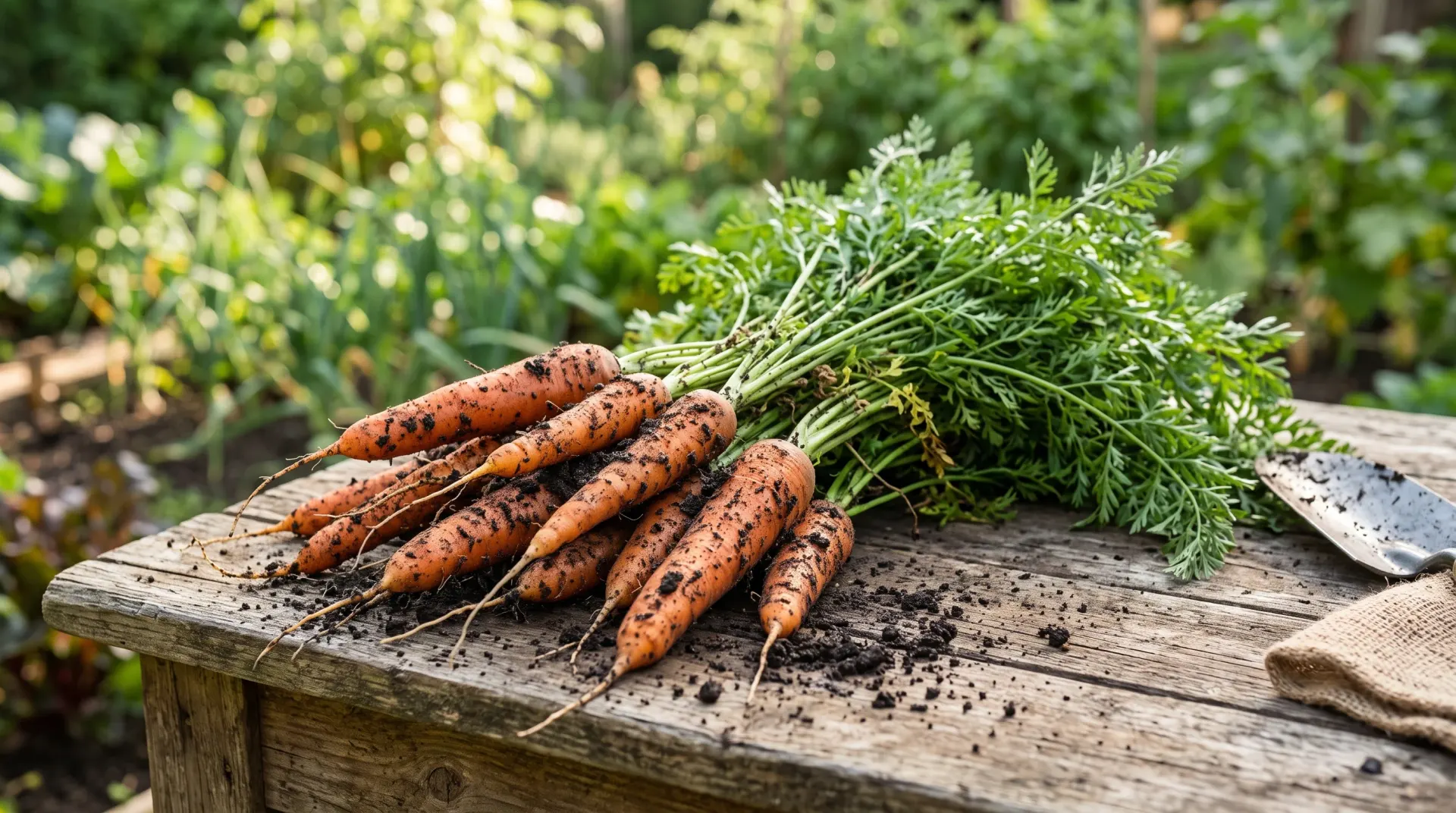
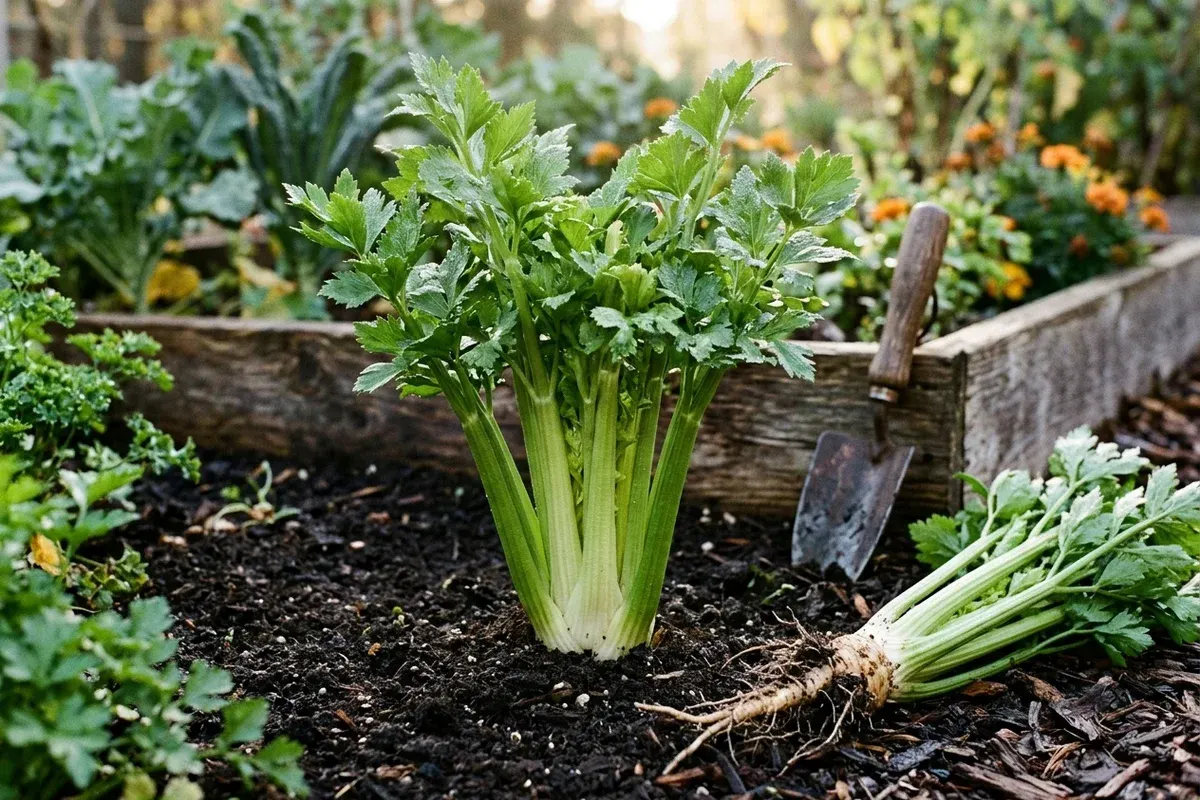
Do not plant parsnips directly adjacent to Carrots or Celery. All three belong to the Apiaceae family and attract the destructive carrot rust fly (Psila rosae). Plant them in separate garden beds across your yard. Cross-reference bed pairings using our interactive Companion Plant Checker.
Winter Harvest & Ground Storage Techniques
Unlike tender summer vegetables that must be salvaged before freezing weather, parsnips are custom-built for winter gardening:
              IN-GROUND WINTER CLAMP METHOD:

               Snowpack / Freezing Air (-10°F)
               ▼▼▼▼▼▼▼▼▼▼▼▼▼▼▼▼▼▼▼▼▼▼▼▼▼▼▼▼▼▼▼
             ░░░░░░░░░░░░░░░░░░░░░░░░░░░░░░░░░ ◄── 8"–12" Clean Straw Mulch
             ═════════════════════════════════ ◄── Heavy Burlap / Tarp
                     Parsnip Foliage
                        \   │   /
                       ───══╧══───  ◄── Soil remains unfrozen (34°F)
                         \  █  /
                          \ █ /     (Dig fresh sweet parsnips
                           \█/       all winter long as needed)
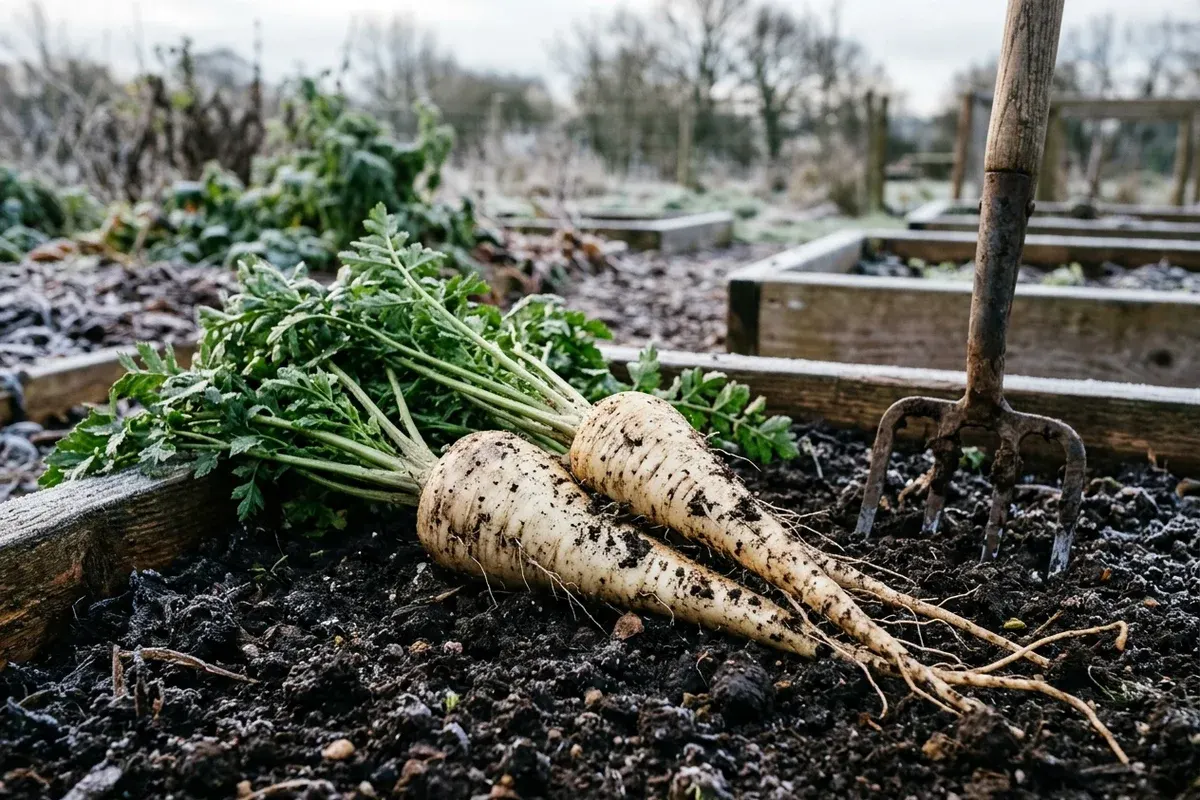
- Harvesting Leverage: Parsnips anchor firmly into subsoil. Never pull by the leaves or you will snap the root top. Drive a spading fork straight down 6 inches away from the crown, lever gently backwards, and lift the root intact.
- Overwintering in the Bed: Before the ground freezes solid in November, cover the parsnip rows with 8 to 12 inches of clean straw or shredded fall leaves, weighted down with burlap or evergreen boughs. The mulch prevents frost from penetrating the top layer, letting you dig fresh roots throughout midwinter.
- The Early Spring Deadline: Any parsnips remaining in the bed must be harvested in early spring before new green shoots emerge. Once the plant enters its second year to produce flowers, the taproot turns woody, hollow, and inedible.
- Root Cellar Storing: If severe ground freeze prevents winter digging, lift parsnips in late November, trim tops to 1/2 inch, and pack them in damp sand or sawdust in a cold basement or root cellar at 32°F–36°F (0°C–2°C) with 95% humidity. For complete cellar guides, read How to Store Root Vegetables for Winter.
Related Guides & Planning Tools
- Raised Bed Soil Calculator — Sizing deep, stone-free root beds.
- How to Store Root Vegetables for Winter — Sand storage, root cellars, and clamps.
- First & Last Frost Dates by City — Sowing timetables and freeze dates.
- Square Foot Gardening Plant Spacing Chart — Maximize root yield with 9 per square foot.
- Companion Plant Checker — Check neighbor compatibility across your vegetable plot.
Beneficial Companion Plants for Parsnip
Plant parsnip near: Radish, Onion, Garlic, Lettuce, Rosemary.
FAQ
Why do parsnips taste sweeter after a hard frost?
When soil temperatures drop below 40°F (4°C), parsnips undergo cold acclimation. The plant converts complex root starches into simple sugars (sucrose and glucose) to act as a natural cellular antifreeze. Parsnips harvested in late winter after freezing taste dramatically sweeter and richer than those harvested in warm late summer.
Why do parsnip seeds take so long to germinate?
Parsnip seeds have a thick natural seed coat and fragile embryos that take 14 to 21 days to sprout in cool 50°F to 60°F soil. Additionally, parsnip seed loses viability faster than almost any other garden vegetable; always use fresh seeds packaged for the current growing season.
Can you leave parsnips in the frozen ground all winter?
Yes. Parsnips hold exceptionally well in frozen soil. In northern zones (Zones 3–6), pile 8 to 12 inches of clean straw mulch over the bed before the ground freezes solid. The insulation prevents the soil from turning into concrete, allowing you to dig fresh parsnips right through January, February, and March.
What causes parsnips to grow crooked, forked, or branched?
Crooked or forked roots occur when the growing taproot hits an obstacle—such as dense compacted clay subsoil, stones, or clumps of fresh, unrotted manure. Always plant parsnips in deep, fluffy raised bed soil that is free of rocks to a depth of at least 14 to 18 inches.
Can parsnip leaves cause skin burns or rashes?
Yes. Parsnip foliage contains natural chemical compounds called furanocoumarins. When plant sap gets on skin and is exposed to ultraviolet sunlight, it can trigger a blistering phytophotodermatitis rash. Always wear long sleeves, long pants, and garden gloves when weeding or harvesting parsnips on sunny days.