How to Store Carrots and Root Vegetables for Winter

By Efraín Vega · Published October 21, 2026 · Last updated November 16, 2026
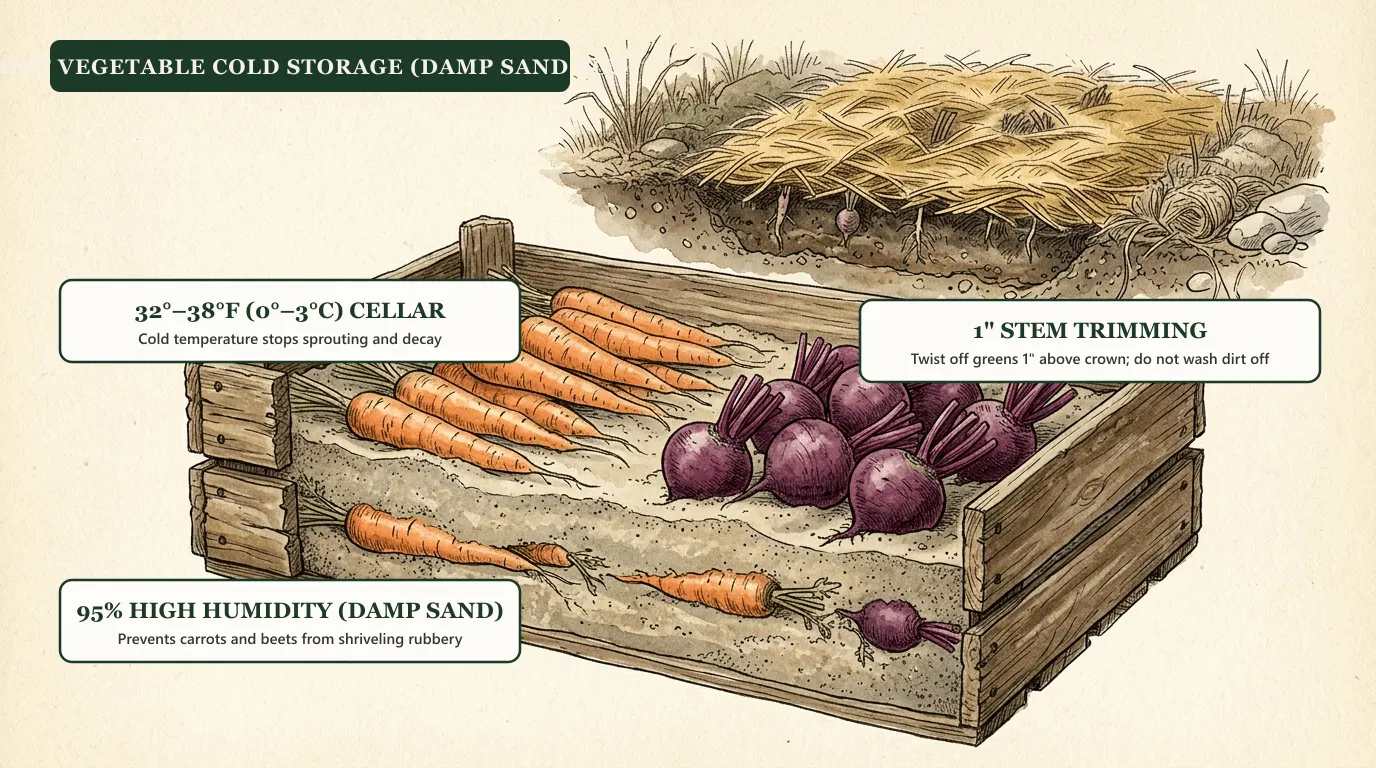
Root vegetables keep best cold and moist: as close to 32°F as you can get without freezing, at 95% humidity or more. Cut the tops off, then store the roots in perforated plastic bags in the refrigerator, in buckets of damp sand somewhere cold, or leave them in the ground under a thick layer of straw. Topped carrots stored that way keep 4–6 months.
Two ways to store root crops
1. Leave them in the ground. University of Illinois Extension says a straw mulch over the row lets you harvest carrots until the ground freezes solid, and a heavy mulch can let you dig them all winter. The same works for beets, parsnips, turnips and rutabagas. It's the least work.
2. Dig and store them cold. Pull the roots on a dry day, trim the tops to about 1 inch, and store them in one of these:
- Perforated plastic bags in the refrigerator. A fridge is cold but dry, so the bag holds in moisture while the holes let air circulate. Wisconsin Extension recommends this for carrots.
- Buckets of damp sand. For bigger harvests, Wisconsin Extension suggests 5-gallon buckets of damp sand in a cool place such as a cold basement or root cellar.
- An insulated pit or trench outside, for beets, per Wisconsin Extension. Leave space between roots and keep air moving.
Storage temperature and time by crop
| Crop | Temperature | Humidity | How long |
|---|---|---|---|
| Carrots | 32–36°F | 98–100% | 4–6 months |
| Beets (tops removed) | 32–35°F | 98–100% | 3–4 months |
| Parsnips | 34–36°F | 98–100% | Several months |
| Turnips | 32–35°F | 95–100% | 2–6 months |
| Rutabagas | Near 32°F | High | 4–6 months |
| Radishes | 32–34°F | 95–100% | 2–3 weeks |
| Potatoes (cured) | 40°F | 90–95% | 5–10 months |
Data from Utah State University, University of Illinois and University of Wisconsin–Madison Extension.
Potatoes are the exception. They need curing first, at 45–60°F and 85–95% humidity for about 2 weeks to heal cuts and toughen the skin, and then storage at about 40°F, not near freezing.
How to prepare roots for storage
- Harvest late. Wisconsin Extension says to leave carrots in the soil as long as possible. Parsnips and rutabagas get sweeter after a light frost; just don't let parsnips drop below 30°F before you dig.
- Dig carefully. Bruised or cut roots rot first. Eat damaged ones right away.
- Trim the tops. Illinois Extension says to cut carrot tops off about 1 inch above the root; the leaves pull moisture out of the root.
- Clean them. Utah State and Wisconsin say to wash the roots before bagging.
- Store only the best. Check every few weeks and remove anything soft.
Keep apples away
Apples, pears and tomatoes give off ethylene gas. Wisconsin Extension warns it can make sensitive vegetables yellow, soften and decay, so store them in a different spot.
What about onions, garlic and squash?
They want different conditions. Onions and garlic keep best cold and dry (32–40°F, about 65% humidity). Winter squash wants cool and dry at 50–55°F; see how to harvest and store winter squash.
Growing more next year? See our carrot, rutabaga, turnip, and radish guides for spacing and sowing dates, and the Mulch Calculator for how much straw to buy to cover your beds.
Sources: Carrots — University of Illinois Extension, Root Crops: Harvest and Storage — Utah State University Extension, Storing Fruits and Vegetables from the Home Garden (A3823) — University of Wisconsin–Madison Extension, How do I store carrots long term? — University of Maine Cooperative Extension.
FAQ
Can you leave carrots in the ground over winter?
Yes. A thick straw mulch over the row keeps the soil from freezing so you can dig carrots until the ground freezes solid, and in many areas through the winter.
Should you wash carrots before storing them?
Extension guides from Utah State and Wisconsin say to wash the roots and remove the tops before storing them in bags. Store only undamaged roots.
Why do stored carrots go limp?
They dried out. Carrots need very high humidity, around 95% or more. Refrigerators are cold but dry, so keep carrots in a perforated plastic bag or in damp sand.
Can I store root vegetables with apples?
Keep them apart. Apples, pears and tomatoes give off ethylene gas, which can cause yellowing, softening and decay in sensitive vegetables.