How to Store Winter Squash (Butternut, Acorn & Hubbard Chart)

By Efraín Vega · Published October 18, 2026 · Last updated November 7, 2026
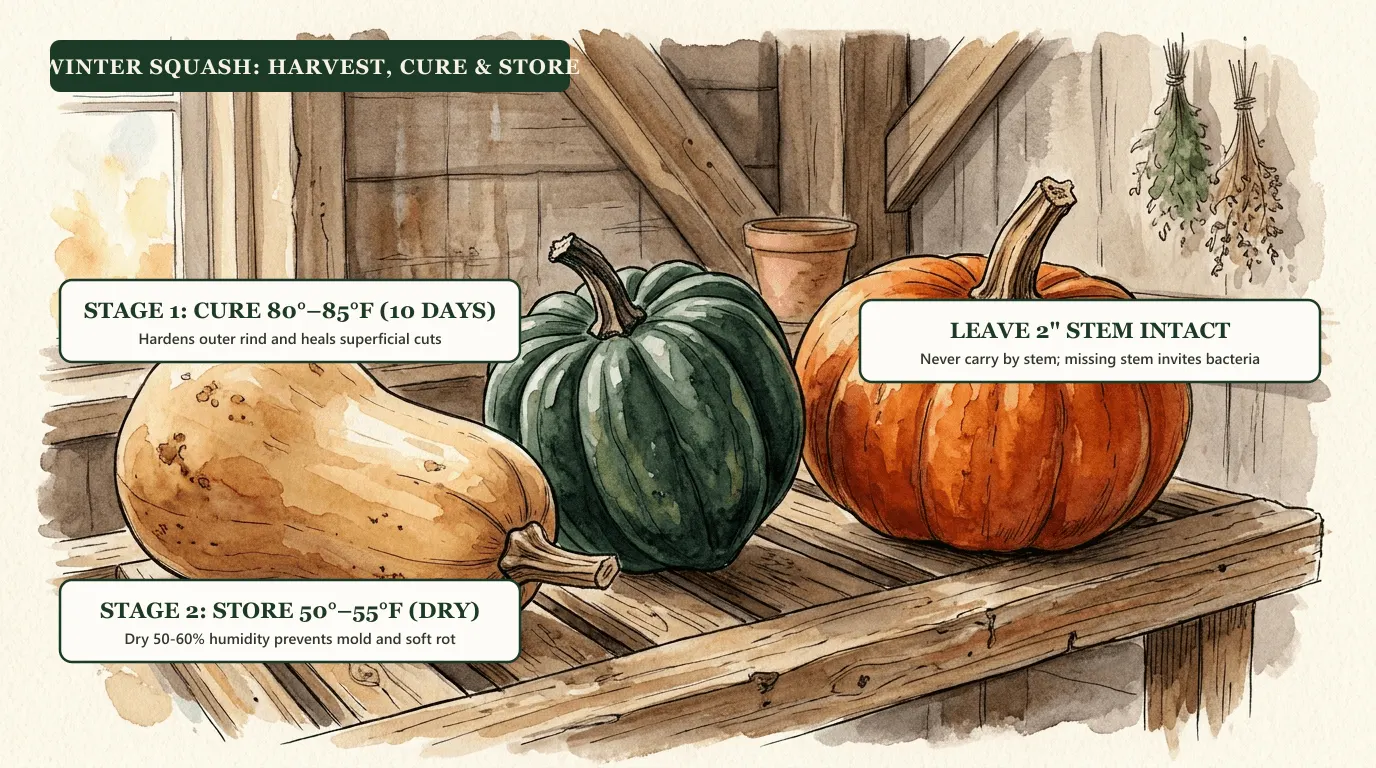
Harvest winter squash when the rind resists your fingernail and the stem is dry and corky. Cut it with 2–4 inches of stem, cure it warm (about 80–85°F) for a week or so, then store it cool and dry at 50–55°F. Stored that way, butternut keeps about 2–3 months and hubbard up to 6 months.
When is winter squash ready to pick?
Look for both signs:
- The rind is hard. Press a fingernail into it. On a ripe squash it won't dent.
- The stem is dry and corky, not green and soft.
Then watch the weather. Oregon State Extension says to bring the crop in when nights stay below 50°F for more than a week, or when rain becomes frequent. Wisconsin Extension says to harvest before a hard frost. Cold damages squash even before it freezes: Penn State Extension notes that squash held below 50°F develops pitting and rots faster in storage.
How to cut and handle squash
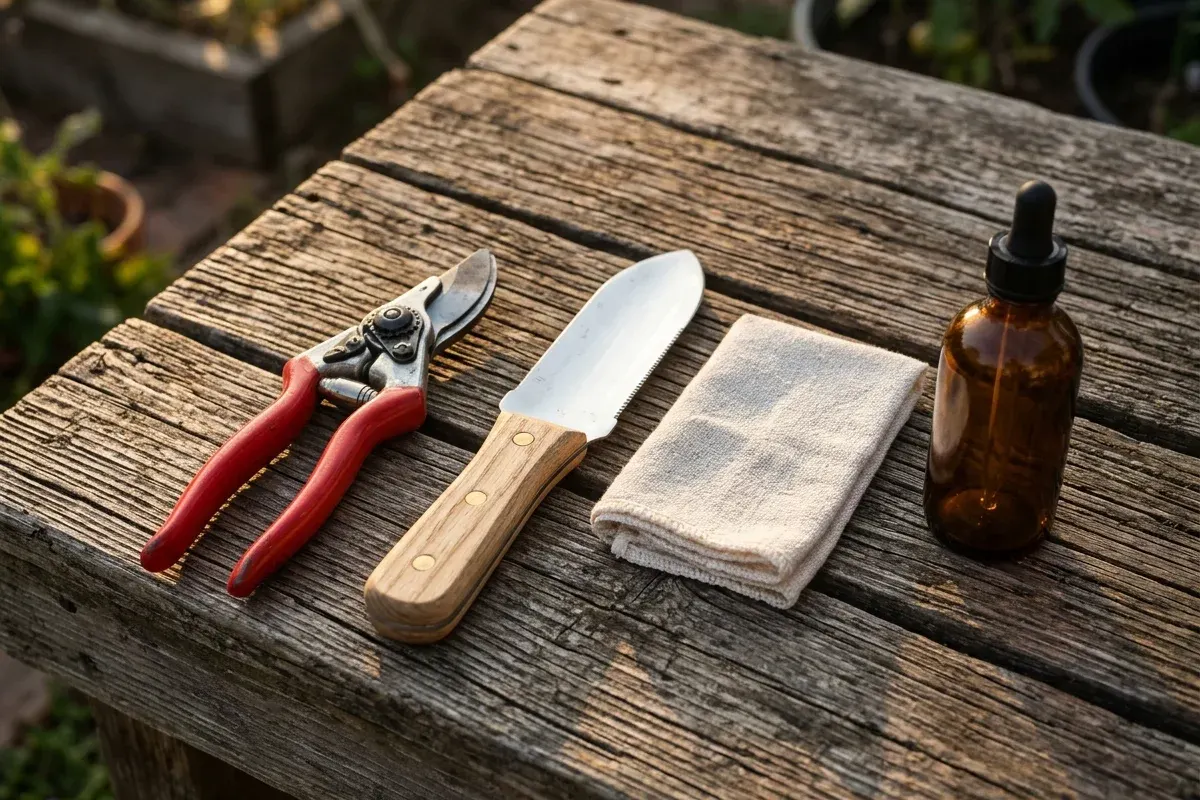
Use pruners or a sharp knife and leave 2–4 inches of stem. Oregon State notes that pumpkins without stems don't store well. Hubbard-type squash is the exception: it stores best with the stem removed entirely.
Handle the fruit gently. The rind looks tough, but bruises and nicks let rot in. Don't drop squash or pile it high. Wipe off soil with a cloth instead of washing.
How do you cure winter squash?
Curing hardens the rind and heals small cuts before storage.
| Source | Temperature | Time |
|---|---|---|
| Oregon State Extension | 80–85°F | Several days |
| Wisconsin Extension | 80°F | 7–10 days |
| Penn State Extension (in the field, warm dry weather) | 70–80°F | 7–10 days |
Keep air moving around each squash while it cures.
What temperature should you store squash at?
50–55°F, cool and dry, with good air circulation. Oregon State says not to let it fall below 50°F. Penn State gives 50–60°F with about 60% humidity. A cool basement or a spare room usually works. A refrigerator is too cold, and an unheated garage can drop below 50°F at night.
Store squash in a single layer or low piles so moisture doesn't collect between fruits, and check them every couple of weeks. Use any with soft spots first.
How long does winter squash keep?
| Type | Storage life at 50–55°F |
|---|---|
| Acorn | 1–2 months (Oregon State); 5–6 weeks (Wisconsin) |
| Butternut | 2–3 months |
| Pumpkin | 2–3 months |
| Buttercup | About 3 months (Wisconsin) |
| Turban | 3 months (Wisconsin); up to 6 months (Oregon State) |
| Hubbard | Up to 6 months |
Eat acorn squash first; butternut and hubbard can wait. Penn State's figures for storage at 50°F are similar: 8–11 weeks for butternut.
When your beds are empty, use the space: cover crops or a layer of shredded fall leaves protect the soil over winter.
Sources: Plan now to harvest and store pumpkins and winter squash — Oregon State University Extension, Prevent Rot of Winter Squash in Storage — Penn State Extension, Storing Fruits and Vegetables from the Home Garden (A3823) — University of Wisconsin–Madison Extension.
FAQ
Can winter squash stay on the vine after frost?
Bring it in before a hard frost. Winter squash is damaged by cold: Penn State Extension says temperatures below 50°F can cause pitting and more rot in storage. Oregon State Extension suggests harvesting once it drops below 50°F for more than a week or rain becomes frequent.
How long does butternut squash last in storage?
About 2 to 3 months at 50–55°F, according to Oregon State and Wisconsin Extension. Penn State lists 8 to 11 weeks at 50°F.
Should you wash squash before storing it?
Wipe it instead. Penn State suggests removing soil with a dry cloth, and Wisconsin a damp cloth. Keep the rind dry going into storage.
Why is my squash rotting in storage?
The usual causes are storage below 50°F, bruises or cuts from harvest, missing stems, and moisture trapped between fruit in tall piles. Store only sound fruit, in a single layer or low piles, with air moving around it.