Cover Crops for Raised Beds: What to Plant in Fall

By Efraín Vega · Published October 5, 2026
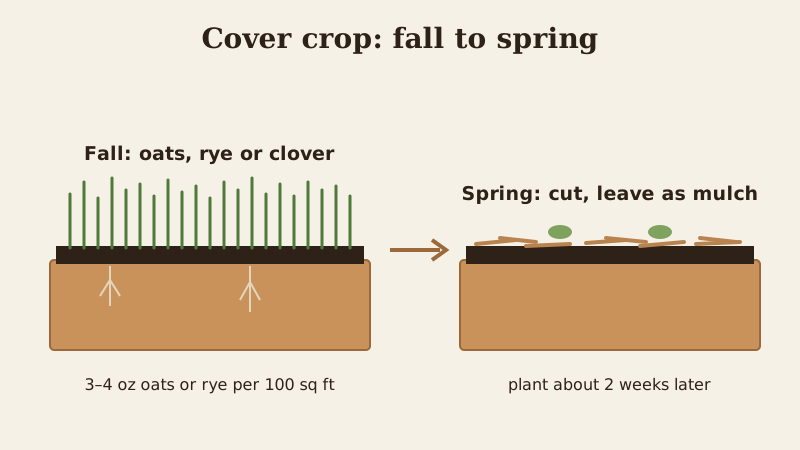
The best fall cover crops for a raised bed are oats (easiest — they die over winter), cereal rye (toughest), and crimson clover (adds nitrogen). Sow about 3–4 oz of oats or rye, or 1–2 oz of clover, per 100 sq ft in late summer or early fall, then cut them down about two weeks before spring planting.
A cover crop keeps live roots in the soil over winter, so the bed doesn't sit bare.
Why grow a cover crop in a raised bed?
Clemson Extension lists the benefits: cover crops keep live roots in the ground, increase soil microbial diversity, prevent erosion, help retain moisture, and return nutrients to the soil as the residue breaks down. In a raised bed, where you add expensive soil, protecting it matters.
Which cover crop should you choose?
| Cover crop | Seed per 100 sq ft | Over winter | Good to know |
|---|---|---|---|
| Oats | 3–4 oz | Dies in a hard freeze | Easiest; nothing to cut in spring |
| Cereal rye | 3–4 oz | Survives | Very hardy; cut before it sets seed |
| Crimson clover | 1–2 oz | Survives | Legume that adds nitrogen |
| Hairy vetch | 3–4 oz | Survives | Legume; vining |
| Forage (daikon) radish | 1–2 oz | Dies in a freeze | Deep taproot; residue acts as mulch |
Seeding rates and winter survival from University of Maryland Extension. For mixes, Maryland suggests about 60% of the normal rate of each crop.
When should you plant cover crops?
In late summer or early fall, once summer crops come out. University of Maryland Extension gives the ideal window as August 15 to October 1 for the mid-Atlantic; Clemson Extension plants raised beds in early October in South Carolina. Plant earlier in colder regions and later in the South.
If it's already past your window, don't force it — a 2–3 inch layer of shredded leaves or straw protects the soil over winter just as well.
How do you plant a cover crop in a raised bed?
- Clear the bed of spent plants and weeds.
- Rake the surface smooth.
- Scatter the seed evenly at the rate in the table.
- Rake lightly so the seed is just covered, then water.
- Keep it moist until it sprouts, usually within a week or two.
First time? Start with oats
Oats die when temperatures drop well below freezing and leave a mat of dead stems. In spring there's nothing to cut — you plant right through the residue, even for early crops like peas and lettuce.
How do you get rid of a cover crop in spring?
Crops that survive winter (rye, clover, vetch) have to be terminated before you plant. In a raised bed, Clemson Extension cuts them at the base with shears and lays the cuttings on the soil as mulch, then moves the residue aside where it plants. Maryland Extension also lists mowing, tarping and turning them under.
Give it about two weeks after cutting before you plant, so the residue can start breaking down (Maryland Extension).
Planning the bed itself? The Raised Bed Soil Calculator sizes the fill, and the Mulch Calculator covers the leaf-mulch alternative.
Sources: Cover Crops for Gardens — UMD Extension, Cover Crops in Raised Beds — Clemson HGIC.
FAQ
What is the easiest cover crop for a raised bed?
Oats. They grow quickly in fall and die in a hard freeze, leaving a mat of dead stems. There's nothing to cut down in spring, and you can plant early crops right through the residue.
Is it too late to plant a cover crop in October?
It depends on your climate. University of Maryland Extension puts the ideal window at mid-August to October 1 in the mid-Atlantic; Clemson plants in early October in South Carolina. If you're past your window, cover the bed with 2–3 inches of shredded leaves or straw instead.
How long before planting do I cut down a cover crop?
About two weeks. Maryland Extension notes spring planting may be delayed because terminated cover crops need roughly two weeks to break down — except oats and usually daikon radish, which die over winter.
Do I have to dig the cover crop into the soil?
No. In a raised bed you can cut the plants at the base with shears and leave them on the surface as mulch, as Clemson Extension does, then move the residue aside where you plant.