How to Grow Turnip
Brassica rapa subsp. rapa

By Efraín Vega · Published November 13, 2026 · Last updated November 16, 2026
Sun
Full sun to partial shade (at least 6 hours direct sunlight daily)
Water
Consistent moisture; 1 inch per week. Uneven watering causes woody, cracked, or bitter roots
Spacing
3–4 inches apart after thinning; 12–15 inches between rows; or 9 plants per square foot in raised beds
Soil pH
6.0–6.8; loose, well-draining sandy loam with moderate organic matter
Days to maturity
40–55 days for roots; 25–35 days for tender turnip greens
Hardiness zones
Zones 2–11 grown as an annual cool-season spring or autumn crop
When to plant: Direct sow 3–4 weeks before last spring frost, or in late summer (8–10 weeks before first fall frost) • Calculate planting dates for your city →
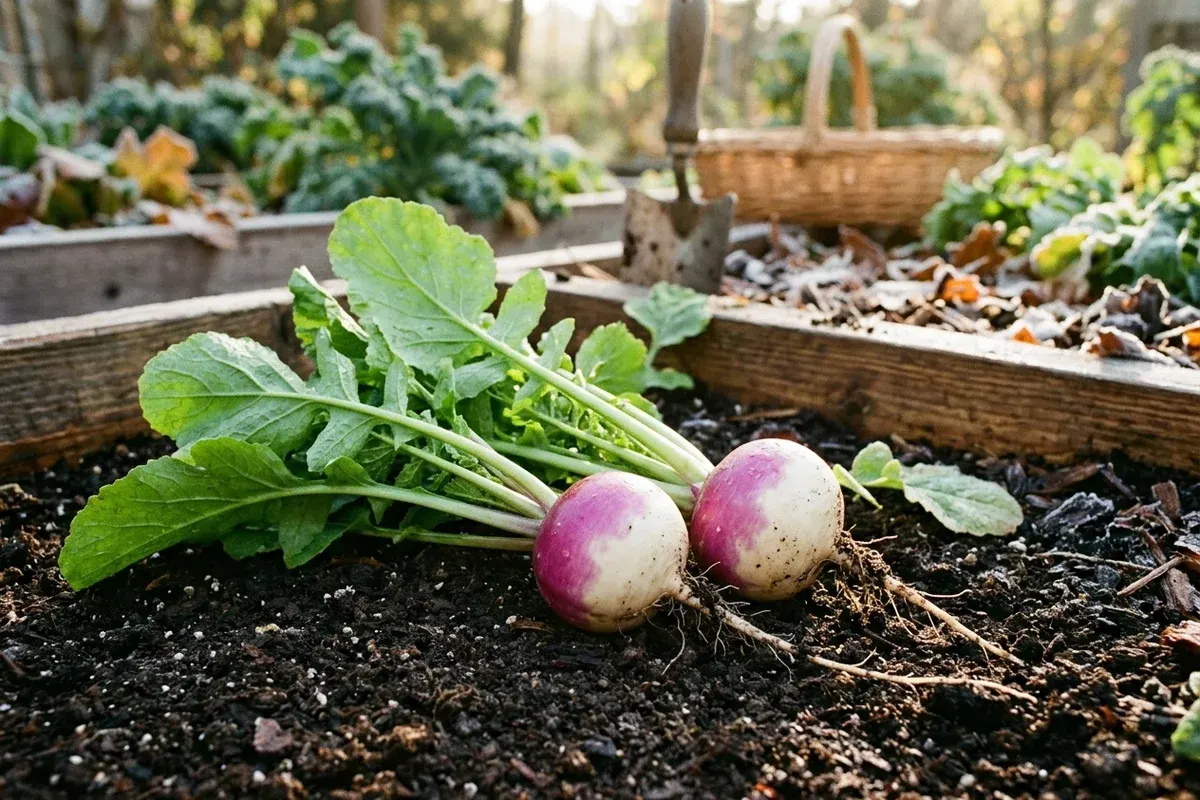
Turnips (Brassica rapa subsp. rapa) are among the fastest, most reliable dual-purpose crops in the home kitchen garden. In just 40 to 55 days from seed, you harvest both tender, nutrient-packed cooking greens and sweet, crisp root globes.
While grocery store turnips often taste bland and fibrous from prolonged cold storage, garden-fresh turnips harvested at the tennis-ball stage deliver a juicy, mildly peppery sweetness reminiscent of apples and baby radishes.
Turnip Variety Comparison
Select your cultivar based on whether you want rapid dual-purpose harvests, salad-grade baby roots, or continuous leaf harvesting:
| Variety | Type | Days to Harvest | Best Use | Key Characteristics |
|---|---|---|---|---|
| Purple Top White Globe | Heirloom dual-purpose | 50–55 days | Roasting, soups, mashing | Classic magenta shoulder with clean white base; highly productive roots and greens. |
| Tokyo Market (Hakurei) | Japanese salad turnip | 35–40 days | Eaten raw, snacking, pickling | Pure white, buttery-sweet, tender flesh with zero bitterness; eaten fresh like radishes. |
| Golden Ball | Heirloom yellow | 45–50 days | Baking, winter storage | Golden-amber flesh with sweet, nutty flavor; holds texture in long-simmering stews. |
| Seven Top | Greens specialist | 30–40 days | Southern pot greens, stir-fries | Grown exclusively for vigorous, vitamin-rich leafy tops; roots remain tough and woody. |
For a larger, golden-fleshed root brassica that takes 90–120 days to mature and stores through midwinter for up to 6 months in a root cellar, compare with heirloom rutabagas.
Direct Sowing & Thinning Guide
Turnips possess sensitive, fast-growing taproots and should always be direct-sown where they will grow. Transplanting from cell trays will disturb the taproot and cause stunted, branched, or deformed roots.
          TURNIP SQUARE FOOT SPACING (9 PER SQ FT):

          ┌────────┬────────┬────────┐
          │   ○    │   ○    │   ○    │  Row 1 (4" Spacing)
          ├────────┼────────┼────────┤
          │   ○    │   ○    │   ○    │  Row 2 (4" Spacing)
          ├────────┼────────┼────────┤
          │   ○    │   ○    │   ○    │  Row 3 (4" Spacing)
          └────────┴────────┴────────┘
                    12 Inches
- Seed Depth: Sow seeds 1/4 to 1/2 inch deep in loose, well-draining soil.
- Germination: Seeds germinate quickly in 3 to 6 days when soil temperatures are between 50°F and 75°F.
- The Thinning Rule: When seedlings reach 2 to 3 inches tall, thin them rigorously to 3 to 4 inches apart.
- Do not pull seedlings by hand, as this disturbs the roots of neighbors. Instead, snip excess seedlings at ground level with scissors and enjoy them as microgreens.
Check your regional planting dates using our Frost Dates & Planting Calendar or review our First and Last Frost Date Guide.
Soil Fertility and Moisture Management
Turnips grow rapidly and require steady, uninterrupted moisture to remain tender and sweet:
- Avoid High Nitrogen: Excessive nitrogen fertilizer produces enormous leafy green tops while leaving the underground roots small, cracked, and pungent. Mix in finished compost and a low-nitrogen, high-phosphorus organic fertilizer (such as bone meal or 3-5-5) prior to seeding. Size your bed soil with our Raised Bed Soil Calculator.
- Even Soil Moisture: Provide 1 inch of water weekly. Fluctuating between drought and sudden soaking causes root cracking and triggers fibrous woodiness.
- Mulching: Once seedlings are thinned to 4 inches, apply a 2-inch layer of clean straw or shredded leaves. Mulch moderates summer soil temperatures and prevents moisture evaporation. Calculate mulch volume with our Mulch Calculator.
Companion Planting Matrix
Turnips benefit significantly from companion plants that deter flea beetles and root maggots:
- Peas (Peas Profile): Early peas fix atmospheric nitrogen in cool spring beds, fueling turnip leaf expansion.
- Onions & Alliums (Onion Profile, Leek Profile, Garlic Profile): Pungent sulfur aromatics confuse and repel flea beetles and root flies.
- Rosemary & Thyme (Rosemary): Herbaceous aromatic terpenes mask brassicas from egg-laying cabbage moths.
- Lettuce (Lettuce Profile): Shallow root systems and low leafy rosettes shade soil around growing turnip globes without root competition.
Plants to Keep Away
Avoid planting turnips directly next to Potatoes (which compete aggressively for underground space and potassium) or dense climbing Pole Beans that block needed sunlight. Verify your bed companions with our interactive Companion Plant Checker.
Harvesting and Long-Term Winter Storage
Turnips provide two distinct harvests throughout their 50-day lifecycle:
            HARVESTING DUAL-PURPOSE CROPS:

                 Turnip Foliage
                  \  │  /
                   \ │ /     Harvest outer 2–3 leaves
                    \│/      at 25–30 days for greens.
                    ═╪═  ◄── Soil Surface
                   /   \
                  │  ○  │ ◄── Harvest root at 2"–3" diameter
                   \   /      (Tennis ball size = peak sweetness)
                     │
                     ▼ Delicate Taproot
- Harvesting Greens: Pick outer leaves when they reach 4 to 6 inches long. Always leave the inner crown leaves intact to continue fueling root bulb growth.
- Harvesting Roots: Pull roots when they reach 2 to 3 inches in diameter (roughly golf-ball to tennis-ball size). Large, overgrown turnips (over 4 inches) become woody, pithy, and bitter.
- Winter Storage: Cut greens back to 1/2 inch above the crown (do not wash until ready to eat). Store firm, unblemished turnips in perforated plastic bags in the crisper drawer of your refrigerator at 32°F–36°F (0°C–2°C) with 95% humidity for up to 3 to 4 months. For root cellar and clamp storage methods, see our guide on How to Store Root Vegetables for Winter.
Related Guides & Calculators
- Raised Bed Soil Calculator — Determine precise compost and topsoil volume for root vegetables.
- How to Store Root Vegetables for Winter — Storing turnips, carrots, and beets through freezing temperatures.
- First and Last Frost Dates by City — Sowing timetables for autumn brassica crops.
- Companion Plant Checker — Cross-reference optimal pairings across your garden beds.
- Square Foot Gardening Plant Spacing Chart — Maximize raised bed yields with intensive spacing.
Beneficial Companion Plants for Turnip
FAQ
Can you eat both turnip greens and the roots from the same plant?
Yes, but with moderation. You can harvest a few outer leaves from each turnip plant at 25–30 days for fresh cooking greens without hurting root enlargement. Never harvest more than one-third of the foliage at a time, or the plant will lack the photosynthetic energy required to swell the underground root globe.
Why are my homegrown turnips woody, bitter, or spicy?
Woody, bitter turnips are caused by summer heat (temperatures above 80°F), drought stress, or waiting too long to harvest. Turnips are at peak sweetness and crisp tenderness when harvested at 2 to 3 inches in diameter during cool weather. Fall-grown turnips kissed by light frosts taste far sweeter than spring crops.
How far apart should you thin turnip seedlings?
Direct-sow seeds 1/2 inch deep and about 1 inch apart. Once seedlings reach 2 to 3 inches tall with true leaves, thin them to 3 to 4 inches apart (or 9 per square foot). Crowded turnip plants will produce lush greens but skinny, elongated, stringy roots.
Why are there tiny holes in my turnip leaves and how do I prevent them?
Tiny shothole punctures are caused by flea beetles, the most common brassica pest. Protect young seedlings by installing lightweight floating row covers immediately after seeding, dusting with food-grade diatomaceous earth, or interplanting with alliums.
When should you plant turnips for a fall and winter harvest?
Sow seeds in late summer, approximately 8 to 10 weeks before your first expected fall frost date (typically late July to late August depending on your hardiness zone). Fall turnips mature in cooling temperatures, developing higher sugar content.