How to Grow Kohlrabi
Brassica oleracea var. gongylodes

By Efraín Vega · Published November 15, 2026
Sun
Full sun (6+ hours direct sunlight daily; tolerates light afternoon shade in warm zones)
Water
Consistent and moderate (1 inch per week). Inconsistent moisture causes globe splitting and tough fibrous woody skin
Spacing
5–6 inches apart in rows 10–12 inches apart (or 4 per square foot in raised beds)
Soil pH
6.0–7.0; fertile, crumbly loam rich in organic matter
Days to maturity
45–55 days for standard varieties; 60–70 days for giant winter storage cultivars
Hardiness zones
Zones 3–10 grown as a cool-season spring and autumn annual
When to plant: Direct sow 3–4 weeks before last spring frost, or late summer (6–8 weeks before first autumn frost) for sweet cold-hardy winter harvests • Calculate planting dates for your city →
Kohlrabi (Brassica oleracea var. gongylodes) is one of the most underappreciated gems of the cool-season vegetable garden. Despite looking like a whimsical extraterrestrial satellite resting atop the soil, kohlrabi is a member of the cabbage and wild mustard family.
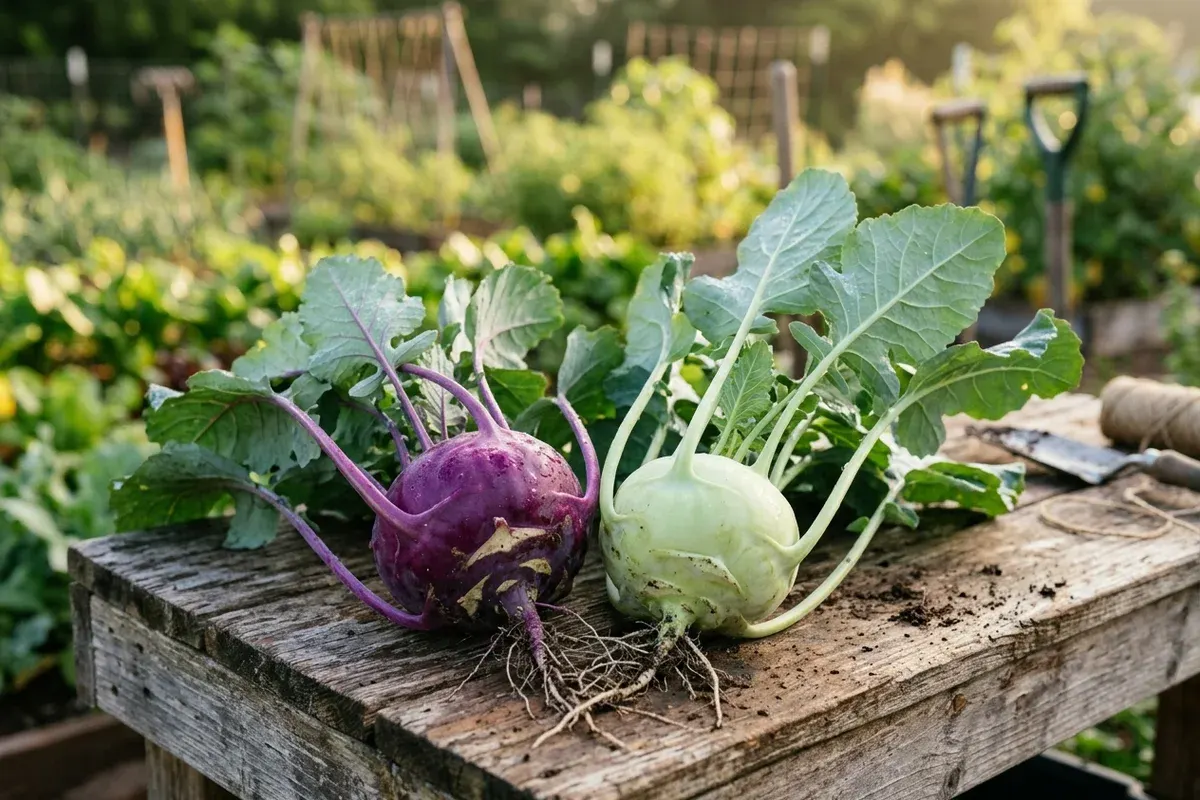
Unlike root crops such as turnips, carrots, or beets, the edible globe of kohlrabi is actually a swollen stem (hypocotyl) that enlarges entirely above the soil line, surrounded by radiating leaf stalks.
With a rapid maturity window of just 45 to 55 days, kohlrabi is a high-yielding, space-efficient crop perfect for intensive raised bed plantings in spring and autumn.
Kohlrabi Anatomy & Botanical Basics
Understanding where and how the edible bulb forms is critical for successful cultivation:
                  THE KOHLRABI STEM GLOBE
                        \  |  /      <- Edible leaves and petioles
                         \ | /
                        (#####)      <- Swollen above-ground stem (2"-3")
                        (#####)         (Do NOT bury in soil!)
                         \ | /
      Ground Level ═══════\═|═/═══════
                            |        <- Soil line
                            |        <- Slender underground taproot
- Above-Ground Swelling: Because the bulb develops above the soil line, seeds must be planted shallowly (1/4 to 1/2 inch deep). Never hill soil up around the swollen stem as you would with potatoes or leeks; burying the stem invites stem rot.
- True Taproot Below: Kohlrabi anchors into the subsoil with a slender, fibrous taproot that pulls moisture and soluble nutrients upward into the swelling globe.
- Outer Rind vs. Tender Core: The exterior skin (which can be vibrant purple or pale jade green) contains a tough fibrous vascular ring. When preparing kohlrabi, use a paring knife to slice away this fibrous outer layer, revealing the pale ivory, apple-crisp interior flesh.
Top Heirloom & Modern Cultivars
Selecting the right cultivar depends on your planting window and storage goals:
| Cultivar | Skin Color | Days to Harvest | Optimal Bulb Size | Flavor & Growing Notes |
|---|---|---|---|---|
| Early White Vienna | Pale Jade Green | 45–50 days | 2" – 2.5" | Heirloom standard pre-1860; ultra-crisp, mild, and fast; best harvested small before heat arrives. |
| Early Purple Vienna | Deep Violet / Plum | 55–60 days | 2.5" – 3" | Eye-catching heirloom with purple skin and snow-white interior; slightly more cold-hardy than White Vienna. |
| Kolibri F1 | Electric Purple | 45–50 days | 3" – 3.5" | Vigorous commercial hybrid with exceptional fiber resistance and uniform, spherical globes. |
| Kossak (Giant Storage) | Light Green | 70–80 days | 6" – 10" | Massive winter storage kohlrabi that grows to bowling-ball size (8+ lbs) without turning woody. |
Soil Preparation & Feeding Requirements
Kohlrabi requires uninterrupted, steady vegetative growth to stay crisp. Any interruption in moisture or nutrients triggers the plant to produce lignified, stringy fibers:
┌────────────────────────────────────────────────────────┐
│               IDEAL SOIL SPECIFICATIONS                │
├────────────────────────────────────────────────────────┤
│ Soil pH Range       : 6.0 - 7.0 (Slightly acidic)      │
│ Organic Matter      : 5% - 8% (Finished compost)       │
│ Soil Texture        : Rich, friable sandy loam         │
│ Bed Drainage        : High; avoid pooling standing bed │
│ Nitrogen Need       : Moderate; balanced 5-5-5 organic │
└────────────────────────────────────────────────────────┘
- Avoid Dense Heavy Clay: In unamended, compacted clay, root expansion stalls and bulbs stunt. If gardening in heavy ground, incorporate plenty of coarse compost and expanded shale, or follow our guide on how to fix clay soil in raised beds.
- Calculate Soil Volumes: When preparing new raised beds for brassicas, use our Raised Bed Soil Calculator to calculate the ideal 1/3 compost, 1/3 peat, and 1/3 vermiculite ratio.
- Mulching is Mandatory: Apply a 2- to 3-inch layer of clean straw or shredded leaves around the base once seedlings are 4 inches tall. Mulch maintains cool root temperatures and prevents moisture swings.
Spring vs. Autumn Planting Schedules
Because high summer temperatures above 80°F (27°C) cause kohlrabi stems to turn woody, bitter, and fibrous, timing your plantings is crucial:
         SPRING CROP                                 AUTUMN CROP
  ┌────────────────────────┐                  ┌────────────────────────┐
  │ Direct sow 3–4 weeks   │                  │ Direct sow late summer │
  │ before last frost.     │                  │ 6–8 weeks before fall  │
  │ Harvest before summer  │                  │ frost. Sweetened by    │
  │ heat exceeds 80°F.     │                  │ autumn cold snaps!     │
  └────────────────────────┘                  └────────────────────────┘
1. The Spring Crop (Early & Fast)
- Indoor Seed Starting: Start seeds indoors 5 to 6 weeks before your last spring frost date under grow lights.
- Direct Sowing: Sow seeds outdoors 3 to 4 weeks before the last frost date as soon as the soil is workable (soil temperature at least 45°F).
- Spacing: Thin seedlings to 5 to 6 inches apart. In Square Foot Gardening, plant 4 kohlrabi plants per square foot.
2. The Autumn Crop (The Superior Harvest)
- Fall-grown kohlrabi is consistently sweeter, tenderer, and less prone to pests than spring crops. As night temperatures drop toward freezing, the plant converts complex starches into natural sugars to act as antifreeze within cell tissues.
- Sow seeds outdoors in mid-to-late summer (typically late July to late August depending on your hardiness zone).
- Mature bulbs withstand hard freezes down to 20°F (-7°C) when protected under an unheated low tunnel hoop greenhouse.
Companion Planting for Kohlrabi
Interplanting aromatic herbs and complementary vegetables keeps destructive brassica insects at bay:
| Companion | Botanical Relationship | Mechanism & Benefit |
|---|---|---|
| Onion & Garlic | Beneficial Protector | Strong volatile sulfur compounds mask kohlrabi scent trails, deterring cabbage root flies and aphids. |
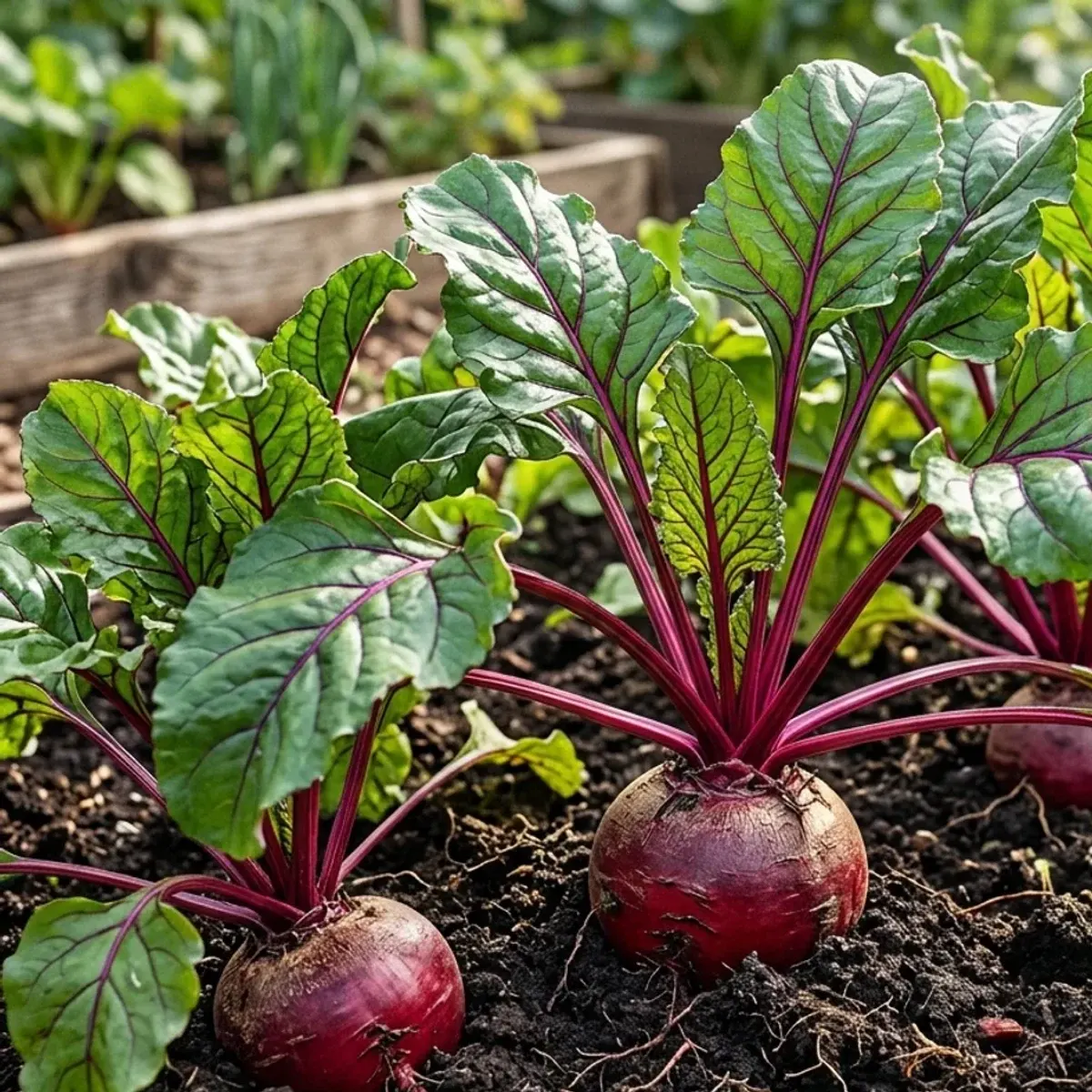
| Beets | Complementary Root | Beets pull nutrients from deep soil strata while kohlrabi bulbs near the surface; identical moisture requirements. |
| Bush Beans | Soil Enhancer | Legume root nodules fix atmospheric nitrogen to support kohlrabi leaf development (avoid pole beans that cast dense shade). |
| Thyme & Mint | Aromatic Pest Deterrent | Strong terpenes confuse cabbage white butterflies (Pieris rapae), preventing egg laying. |
| Fennel | Antagonistic (Avoid) | Produces allelopathic root exudates that stunt kohlrabi bulb formation and brassica vigor. |
| Tomatoes & Nightshades | Antagonistic (Avoid) | Compete aggressively for identical macro-nutrients and invite early fungal blight. |
Preventing Common Pests & Disorders
Like all brassicas, kohlrabi requires diligent defense against common kitchen garden pests:
- Cabbage Worms & Loopers: Velvety green caterpillars of the small white cabbage butterfly chew large ragged holes in the leaves.
- Prevention: Cover beds with ultra-fine insect barrier cloth or floating row covers from seedling emergence. Spray organic Bacillus thuringiensis (Bt) at the first sign of caterpillar frass.
- Flea Beetles: Tiny metallic black beetles that puncture foliage with hundreds of miniature shotholes.
- Defense: Apply insect mesh immediately after seeding. Dust young plants with food-grade diatomaceous earth on dry mornings.
- Bulb Cracking: Rapid influx of water after a dry spell causes the inner pith to swell faster than the outer skin.
- Remedy: Maintain continuous soil moisture with drip irrigation lines and a thick layer of organic mulch.
Harvesting, Storage & Culinary Uses
- The Golden Harvest Rule: Harvest standard cultivars when bulbs are 2 to 3 inches in diameter (the size of a tennis ball). Waiting for bulbs to grow baseball-sized causes the basal vascular ring to turn as tough as cardboard.
- Harvest Method: Grasp the stem firmly and use a sharp knife to slice through the taproot 1 inch below the bulb.
- Storage: Cut off the leaf stems 1/2 inch above the globe. Unwashed kohlrabi bulbs keep in a perforated plastic bag in the refrigerator crisper drawer for 4 to 6 weeks. Giant storage cultivars (like Kossak) keep for up to 4 months in a cool, damp root cellar at 34°F to 38°F.
- Kitchen Preparation: Peel away the fibrous outer rind with a chef's knife down to the juicy white flesh. Slice into matchsticks for raw dipping slaws, toss in lemon and flaky sea salt, roast in cubes at 425°F with olive oil, or shred into potato pancakes.
Beneficial Companion Plants for Kohlrabi
Plant kohlrabi near: Beet, Onion, Bush Beans, Thyme, Mint, Chamomile.
FAQ
What does kohlrabi taste like?
Kohlrabi has a remarkably sweet, crisp, and refreshing profile often described as a cross between a crunchy apple, mild sweet broccoli stem, and a water chestnut. It lacks the sharp, sulfurous bite of radishes or mature turnips.
Why is my kohlrabi tough, stringy, and woody?
Kohlrabi turns woody when it is harvested too late (larger than 3 inches in diameter for standard varieties), or when the plant experiences drought stress, extreme heat, or nitrogen starvation during bulbing. Consistent moisture and rapid 45-to-55-day growth are essential to maintain tender cellular walls.
When and how should kohlrabi be harvested?
Harvest standard varieties when the swollen stem reaches 2 to 3 inches in diameter (tennis ball size). Use a sharp garden knife or pruners to sever the taproot 1 inch below the base of the globe. Trim the radiating leaf petioles, keeping the tender young leaves for sautéing.
Can you eat kohlrabi leaves and greens?
Yes! Kohlrabi greens are completely edible and taste similar to mild collard greens or young kale. Harvest outer leaves sparingly while the bulb grows, or trim all leaves at harvest time to steam, sauté in olive oil with garlic, or shred into soups.
How do you prevent kohlrabi bulbs from cracking or splitting?
Splitting occurs when dry, thirsty plants absorb a sudden deluge of water from heavy rain or sporadic irrigation, causing internal cells to expand faster than the outer rind can stretch. Maintain even soil moisture by applying a 2- to 3-inch layer of organic straw or shredded leaf mulch.