How to Grow Sweet Potatoes
Ipomoea batatas

By Efraín Vega · Published October 28, 2026
Sun
Full sun (6–8+ hrs of hot direct sunlight)
Water
1 in/week; drought tolerant once established, but requires steady moisture during root bulking
Spacing
12–18 in apart along mounded ridges (36–48 in between rows)
Soil pH
5.5–6.5 (moderately acidic)
Days to maturity
90–120 days from slips
Hardiness zones
Tender perennial grown as an annual in zones 4–11; killed by even a light frost
When to plant: 3–4 weeks after last frost once soil warms to at least 65–70°F • Calculate planting dates for your city →
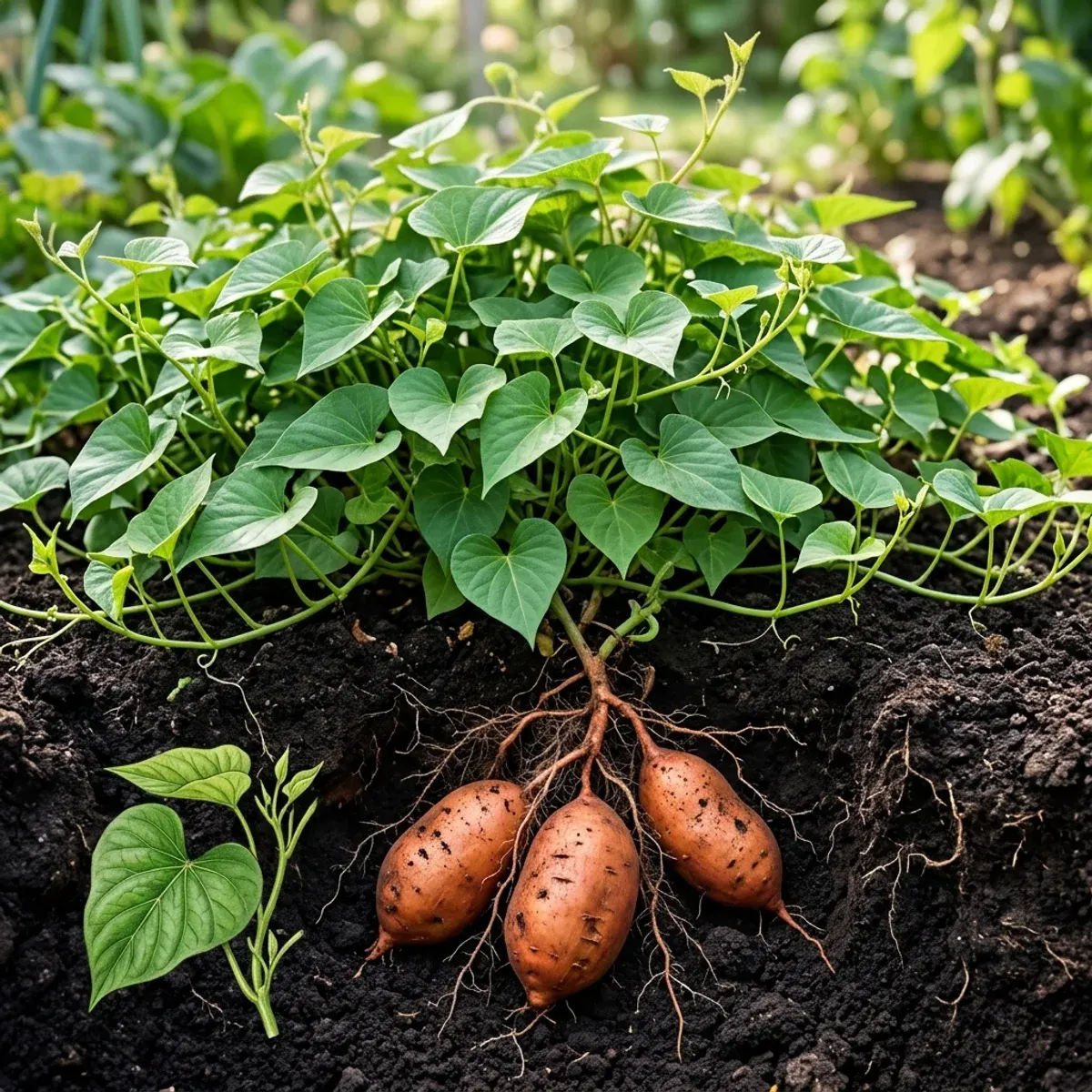
Sweet potatoes (Ipomoea batatas) are heat-loving, drought-tolerant tropical vines belonging to the morning glory family. They require full sun, high summer heat, loose well-draining soil, and 12 to 18 inches of spacing.
Sweet potatoes produce dual bounties: lush, edible green vine tips for summer stir-fries and sweet, vitamin-rich storage roots in autumn. Deep raised beds are particularly well-suited for sweet potatoes because loose, uncompacted soil allows long storage roots to expand smoothly without bending against hard clay.
Slips vs. seed pieces
Sweet potatoes are never grown from chunks of tuber. Instead, they are grown from slips—green sprouts that emerge from a mature sweet potato root:
- Two months before planting, place organic sweet potatoes in a tray of damp potting mix or suspend them half in water.
- Maintain temperatures around 75°F to 80°F.
- When green sprouts reach 6 to 9 inches tall with several leaves, gently snap them off at the base and place them in a glass of water for 2 to 3 days to develop a dense root cluster before transplanting.
When to plant sweet potatoes
Sweet potatoes are tropical perennials that have zero tolerance for cold soil. Plant outdoors 3 to 4 weeks after your average last spring frost, once soil temperatures reliably exceed 65°F to 70°F.
In northern climates (zones 4–6), laying black plastic mulch over garden beds two weeks before planting warms the soil significantly and accelerates root establishment.
Soil, ridging, and planting depth
Sweet potatoes demand well-drained, loose, sandy or loamy soil with a pH of 5.5 to 6.5. Heavy, sticky clay results in distorted, twisted roots, while soggy soil invites black rot.
NC State Extension recommends planting slips into raised ridges or mounds 8 to 10 inches high. Space slips 12 to 18 inches apart, burying 3 to 4 nodes (leaves removed) deep into the ridge, leaving only the top 2 sets of leaves exposed.
Avoid high-nitrogen fertilizers
Excessive nitrogen stimulates tremendous, runaway green vine canopies that produce nothing but skinny, pencil-thin roots underground. Choose low-nitrogen, high-potassium organic amendments (such as compost and greensand or sulfate of potash) to promote thick root bulking.
Water management
Sweet potatoes require 1 inch of water weekly during their first month of establishment. Once vines cover the ground, their dense leaf canopy forms a living mulch that conserves soil moisture and shades out summer weeds.
Stop watering 2 to 3 weeks before harvest to prevent roots from splitting or developing sour skin in saturated soil.
Harvesting and the critical curing process
Harvest sweet potatoes before the first fall frost, typically in late September or October when vine tips begin to turn yellow. If a sudden frost blackens the vines, dig the roots immediately; decay organisms in dying foliage quickly travel down stems into the tubers.
Dig carefully using a spading fork, starting 12 inches away from the crown to avoid slicing large roots. Do not wash freshly dug roots.
The 7-day curing secret
Freshly harvested roots taste starchy rather than sweet. Cure roots by placing them in a warm, dark, humid room (80°F to 85°F at 85% relative humidity, such as near a furnace or in an insulated shed) for 5 to 7 days.
Curing heals harvest cuts, thickens the outer peel, and activates maltase enzymes that convert complex starches into sweet maltose sugars. After curing, store in a cool (55°F to 60°F) dark pantry for up to 9 to 12 months.
Planning a sweet potato patch? Calculate your raised mound volume and compost mix with our Raised Bed Soil Calculator.
Sources: NC State Extension — Growing Sweetpotatoes, LSU AgCenter — Sweet Potato Production Guide, Clemson HGIC — Sweet Potato.
Beneficial Companion Plants for Sweet Potato
Plant sweet potato near: Bush Beans, Thyme, Oregano, Dill, Marigold.
FAQ
What is a sweet potato slip?
A slip is a rooted green sprout grown from a mother sweet potato tuber. Sweet potatoes are never grown from true seeds or cut potato chunks with eyes; they are always propagated from these tender vegetative slips.
Can you eat sweet potato leaves?
Yes. Sweet potato leaves and tender vine tips are completely edible and highly nutritious, widely eaten steamed, stir-fried, or in soups across Asia and Africa. In contrast, regular white potato (*Solanum tuberosum*) leaves are toxic nightshades and must never be eaten.
Why are sweet potatoes not cured right away?
Freshly dug sweet potatoes are starchy, bland, and have paper-thin skin that scrapes off easily. Curing them in warm, humid conditions (85°F at 85–90% humidity for 5 to 7 days) activates enzymes that convert starches into sugars while thickening and healing the outer skin for long storage.
What is the difference between a sweet potato and a true yam?
In American supermarkets, soft orange sweet potatoes are often colloquially labeled 'yams.' However, true yams (*Dioscorea*) are native to Africa and Asia, featuring rough, bark-like brown skin with dry, white or purple starchy flesh. What is grown in North American gardens is always *Ipomoea batatas* (sweet potato).
Do sweet potatoes take over raised beds?
Standard vining varieties send out aggressive 10 to 15-foot runners that will blanket entire gardens. For raised beds, choose compact 'bush' or 'semi-bush' varieties (such as *Vardaman* or *Porto Rico*) and train runners to spill over bed edges onto surrounding paths.