How to Grow Okra
Abelmoschus esculentus

By Efraín Vega · Published November 13, 2026
Sun
Full sun (8+ hours of direct sunlight)
Water
Moderate — 1 inch per week; deep taproots survive hot dry spells
Spacing
12–18 in apart in rows; reaches 4–6 ft tall
Soil pH
6.0–6.8
Days to maturity
55–65 days from seed
Hardiness zones
Summer annual across USDA zones 3–11
When to plant: 3–4 weeks after last frost once soil warms to 70°F+ (21°C) • Calculate planting dates for your city →
Originating in tropical Northeast Africa, okra (Abelmoschus esculentus) is the champion of heat-tolerant summer gardening. When sweltering July and August temperatures exceed 95°F and cause tomatoes and green beans to drop their blossoms, okra thrives, flowering and fruiting with relentless vigor.
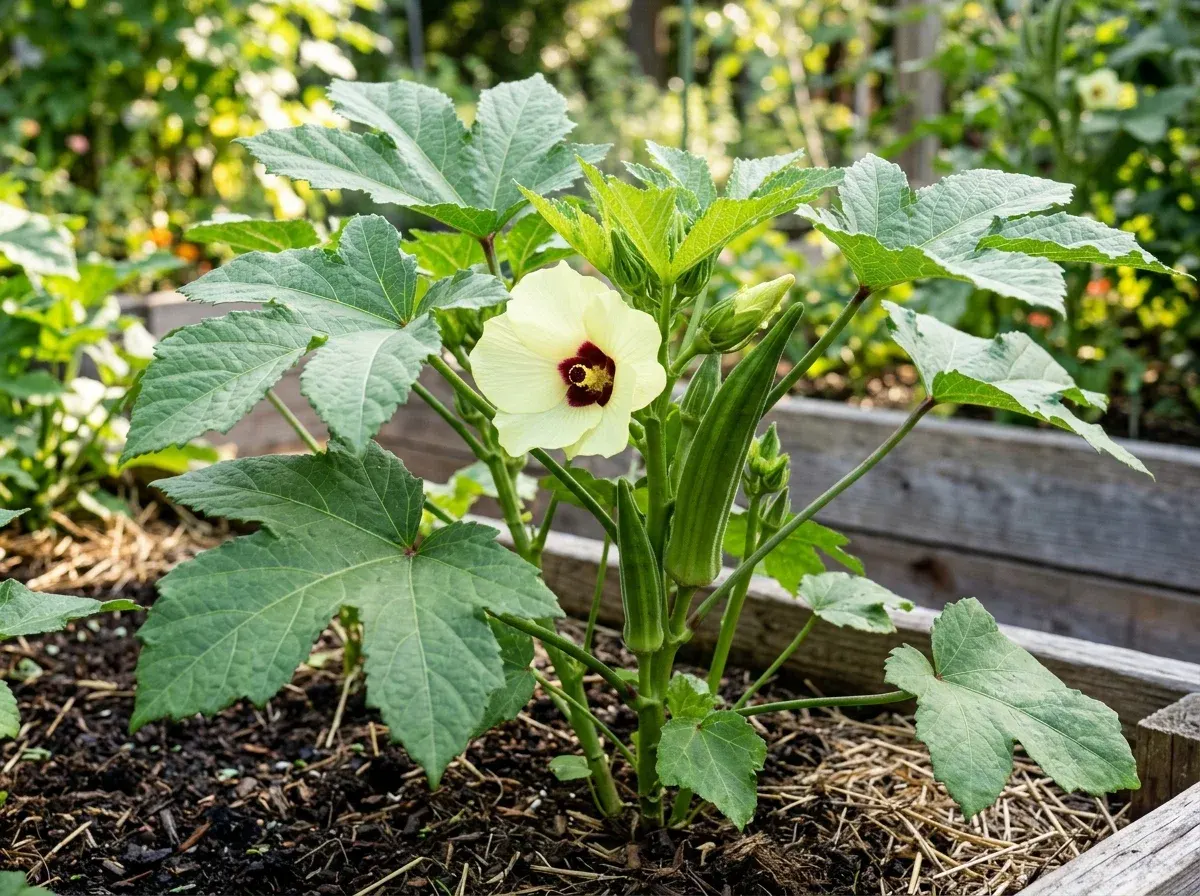
A member of the mallow (Malvaceae) family, okra produces stunning creamy-yellow blossoms with deep burgundy throats that are just as ornamental as culinary hibiscus.
Seed Germination & Soil Warmth
Okra seeds will not germinate in cold, waterlogged spring soil:
  [Soil Below 65°F] ==================> Seeds rot in damp soil
  [Soil 70°F–85°F] ===================> Sprouting within 4–6 days (after soaking)
- The Overnight Soak: Place seeds in a small dish of warm water 12 to 24 hours before planting. Discard any seeds that float, as they are often hollow or unviable.
- Direct Sowing: Okra forms a delicate, brittle primary taproot that resents root disturbance. Direct sowing into warm garden soil 3 to 4 weeks after the last frost produces stronger plants than transplanting from plastic seedling trays.
- Soil Composition: Okra is not demanding, but heavy, waterlogged clay causes root rot. Prepare loose, free-draining soil with our Raised Bed Soil Calculator.
Spacing and Bed Layout
Okra grows into substantial, architectural mini-trees:
- In-Bed Spacing: Thin seedlings to 12 to 18 inches apart in rows spaced 24 to 36 inches apart.
- Sun Orientation: Because mature stalks reach 4 to 6 feet tall, position okra at the northern edge of raised beds to prevent shading your peppers, herbs, and dwarf vegetables.
Companion Planting Synergies
Okra's tall, sturdy stalks and open branching structure make it a natural companion for warm-season vegetables:
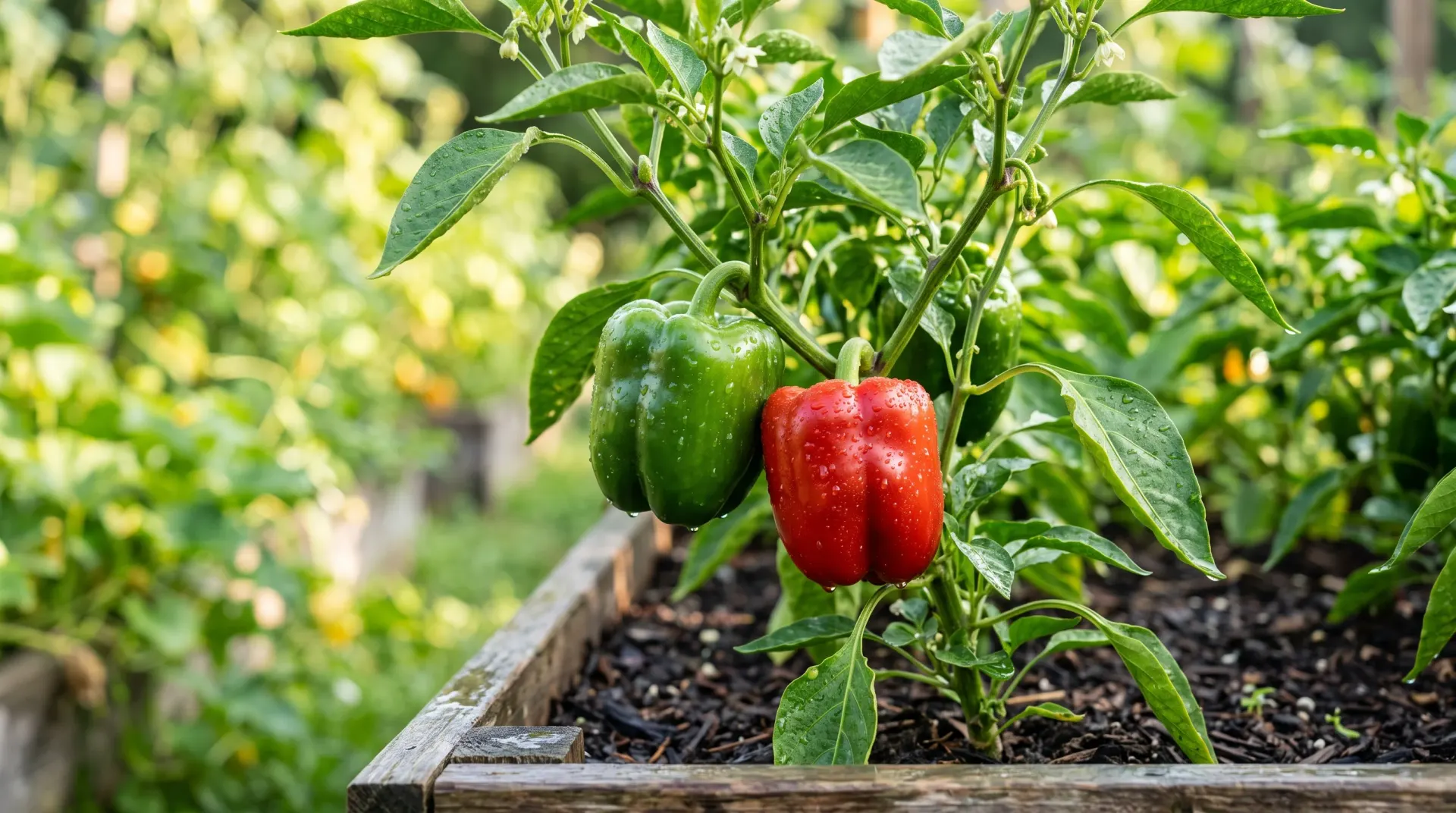
- Peppers (Bell Pepper, Jalapeño): Okra and peppers share identical high-heat, full-sun preferences. The tall canopy of okra provides light dappled shade during the hottest afternoon hours, preventing sunscald on ripening peppers.
- Eggplants: Share identical soil moisture needs and benefit from the mutual attraction of pollinator bees drawn to okra's large showy flowers.
- Melons (Cantaloupe): Trailing cantaloupe or watermelon vines create an edible living mulch around the base of upright okra stalks, suppressing weeds and conserving soil moisture.
- Basil (Basil): Aromatic oils mask okra foliage from flea beetles and spider mites.
Watch Out for Nematodes
In sandy southern soils, okra is vulnerable to root-knot nematodes (Meloidogyne). Interplant borders of French Marigolds (Tagetes patula) to secrete natural nematicidal compounds into the root zone.
Daily Harvesting Technique
To maintain high culinary quality:
- Harvest Every 48 Hours: Walk your okra row with sharp bypass pruners or kitchen shears every two days once plants begin blooming.
- The 3-Inch Rule: Snip pods when they reach 2 to 3.5 inches long. At this stage, the pod tip snaps crisply between your fingers, indicating tender, low-mucilage flesh perfect for roasting, grilling, or slicing into gumbos.
- Cut, Don't Pull: Never yank or twist pods off by hand; doing so can rip the main stem's vascular bark or snap the branch. Snip the small stem just above the pod shoulder.
- Pruning Lower Leaves: As you harvest pods from the lower nodes of the stalk, snap off the adjacent lower leaves. This practice (called "legging up" okra) improves airflow, deters aphids, and keeps the plant channeling its energy into upper growth.
Sources: Growing Okra in Home Gardens — Texas A&M AgriLife Extension, Okra — University of Florida IFAS Extension.
Beneficial Companion Plants for Okra
Plant okra near: Bell Pepper, Eggplant, Basil, Cantaloupe.
FAQ
Why should you soak okra seeds before planting?
Okra seeds possess hard, thick, water-impermeable seed coats that can delay germination for weeks. Soaking seeds in lukewarm water for 12 to 24 hours (or gently nicking the seed coat with nail clippers) softens the exterior shell, accelerating germination from 14 days down to 4 to 6 days.
How often do you need to harvest okra pods?
Every 2 to 3 days once production begins. Okra pods grow with astonishing speed during hot weather, expanding from tender 2-inch delicacies into tough, fibrous, unchewable pods in less than 48 hours. Harvest pods when they are 2 to 3.5 inches long. Frequent harvesting also triggers the plant to continuously set new flower buds all summer.
What should you do if an okra pod becomes too large and woody?
Do not leave oversized, tough pods on the plant unless you intend to save seed. Allowing mature pods to dry on the stalk signals the plant that its reproductive cycle is complete, slowing down new flower production. Cut old pods off with pruners and toss them in your compost bin to keep the plant blooming.
Why do okra leaves make my skin itch when harvesting?
Okra plants are covered in fine, microscopic spines (trichomes) that release mild skin-irritating chemicals upon friction. Even with 'spineless' varieties like Clemson Spineless, always wear garden gloves and long sleeves when harvesting or pruning among dense okra leaves.
Can okra be grown in raised garden beds?
Yes, okra thrives in raised beds because the loose, aerated soil accommodates its long central taproot. However, because standard varieties grow 4 to 6 feet tall with broad umbrella leaves, always plant okra along the north or northeast side of your bed so it does not cast midday shade over shorter crops.