How to Grow Yellow Squash
Cucurbita pepo var. recticollis

By Efraín Vega · Published November 12, 2026
Sun
Full sun (6–8+ hrs direct sunlight)
Water
1–1.5 in/week; deep soakings at ground level to keep foliage dry
Spacing
24–36 in apart; requires a 2x2 ft (4 sq ft) footprint in raised beds
Soil pH
6.0–6.8 (rich, well-draining soil with abundant compost)
Days to maturity
45–55 days from seed; fruit swells 4–6 days after flowering
Hardiness zones
Warm-season annual in all US zones; frost-tender
When to plant: 1–2 weeks after the last spring frost date, once soil reaches 65°F+ • Calculate planting dates for your city →
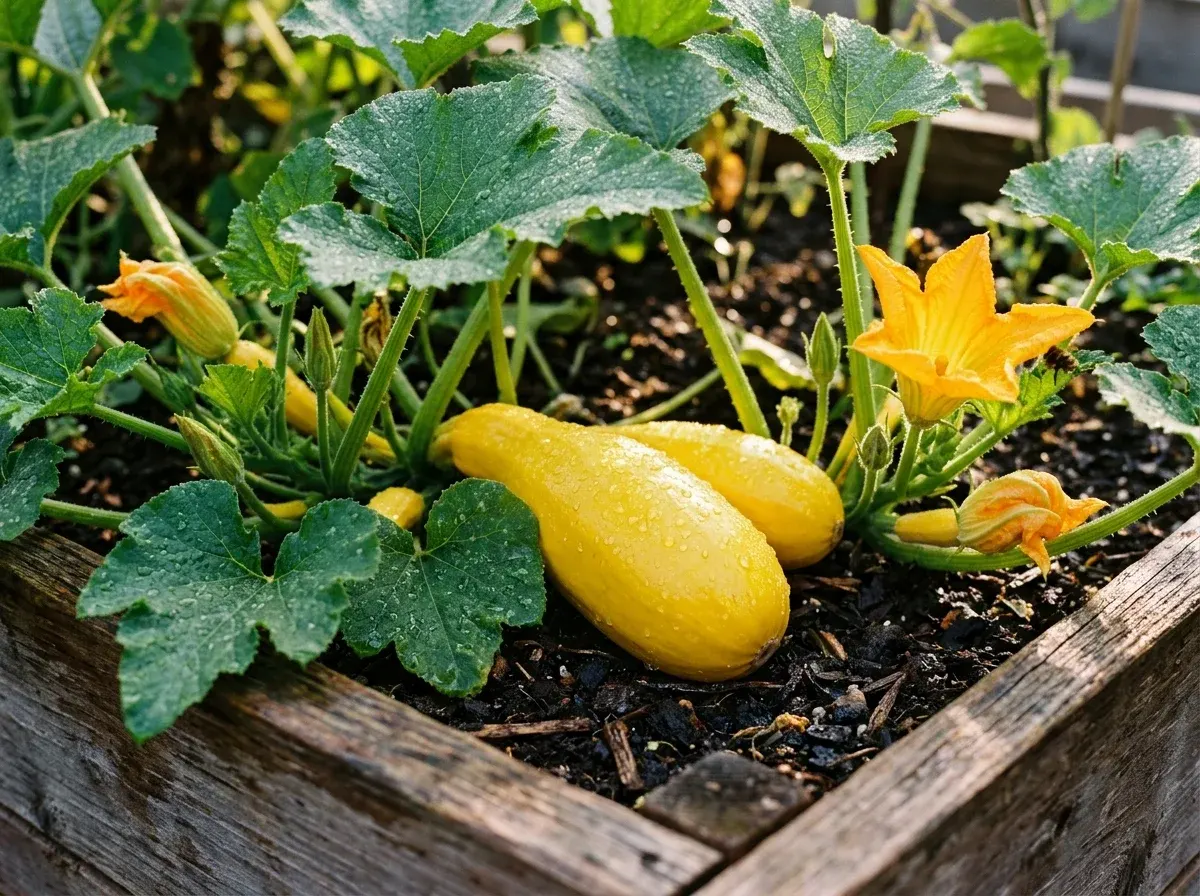
Yellow summer squash (both crookneck and straightneck varieties) is one of the most generous producers in the backyard garden. A single healthy plant will continuously yield 10 to 15 pounds of tender, buttery squash throughout the summer until the first killing frost of autumn.
From direct seeding, fruit is typically ready to harvest in just 45 to 55 days, making it one of the quickest warm-season vegetables you can grow.
When should you plant yellow squash?
Yellow squash is exceptionally frost-sensitive and requires warm soil to germinate without rotting:
- Spring planting: Direct sow outdoors 1 to 2 weeks after your average last spring frost date, once soil temperatures have reached at least 65°F to 70°F.
- Succession sowing: Plant a second hill of seeds in early summer (late June to July). This ensures a fresh, vigorous wave of plants to replace early spring vines that may be succumbing to squash bugs or powdery mildew.
Check your exact spring frost dates using our NOAA frost dates tool.
Spacing and Raised Bed Layout
Yellow squash plants produce an expansive canopy of umbrella-like leaves:
| Planting Method | Spacing | Space Requirement |
|---|---|---|
| In-ground hills | 36 in apart | 3 ft between hills |
| Raised bed bush | 24–36 in apart | 2×2 ft (4 sq ft) grid per plant |
| Vertical stake method | 18–24 in apart | 2 sq ft along a back trellis |
In a standard 4×8 ft raised bed, position no more than two bush-type yellow squash plants, ideally along the southern corners where their broad foliage won't overshadow smaller root crops or leafy greens.
Calculate bed soil and organic compost needs with our Raised Bed Soil Calculator.
Watering and Powdery Mildew Prevention
- Water at soil level: Provide 1 to 1.5 inches of water per week. Yellow squash leaves are highly susceptible to powdery mildew; always apply water directly to the root zone using drip irrigation or a soaker hose rather than overhead sprinklers.
- Mulching: Spread a 2-inch layer of clean straw, pine needles, or shredded wood mulch beneath the canopy. Mulch prevents rain from splashing fungal soil spores onto the lower leaves and keeps ripening fruit clean.
Harvesting Tips
Check plants daily once flowering begins. Squash can grow from a 2-inch blossom to a 7-inch mature vegetable in just 72 hours:
- Use a clean, sharp pruning shear or pocket knife to sever the fruit stem ½ inch above the squash.
- Never twist or yank fruit off the vine, as summer squash stems tear easily, inviting stem rot.
- Harvest edible yellow male blossoms (the ones on long slender stems without tiny fruit at the base) for stuffing with ricotta or frying in batter.
Top Companion Plants for Yellow Squash
- Bush Beans & Peas: Fix atmospheric nitrogen to sustain rapid, leafy squash vine expansion.
- Radishes: Plant around the base of the vine to confuse and deter destructive striped cucumber beetles.
- Marigolds & Nasturtiums: Trap pests and emit pungent aromatic oils that mask squash from squash bugs.
Plan your companion layout with our Companion Planting Compatibility Tool.
Beneficial Companion Plants for Yellow Squash
Plant yellow squash near: Bush Beans, Marigolds, Radishes, Sweet Corn, Dill.
FAQ
What is the difference between crookneck and straightneck yellow squash?
Crookneck squash has a curved, tapered neck and slightly bumpy, pale yellow skin with a rich, nutty flavor. Straightneck varieties have a straight cylindrical shape, smooth golden skin, and are slightly easier to slice uniformly.
Why are my baby yellow squash rotting on the vine before opening?
Blossom end rot or incomplete pollination is the usual trigger. If female flowers aren't visited by bees during their brief morning bloom window, the unfertilized fruit turns yellow-brown and shrivels from the blossom tip. Attract more native pollinators by interplanting marigolds and dill.
How big should yellow squash be when harvested?
Pick squash when they are 5 to 7 inches long and about 1.5 to 2 inches in diameter. Skin should be glossy and tender enough to puncture easily with a fingernail. Overgrown squash become fibrous, seedy, and trigger the vine to slow down new production.
How do I protect yellow squash from squash vine borers?
Wrap the bottom 2 to 3 inches of the central stem in aluminum foil right at transplanting, or mound fresh compost over leaf nodes so the vine can root secondary anchors if the main stem is attacked.
Can yellow squash be grown vertically?
Yes. Staking summer squash to a stout 5-foot wooden stake or tomato cage keeps sprawling leaves off the soil, increases sunlight exposure, and drastically reduces powdery mildew.