Pouring Concrete in Cold Weather: Exact Temperatures, 500 PSI Rule & Blankets

By Efraín Vega · Published November 8, 2026 · Last updated November 15, 2026
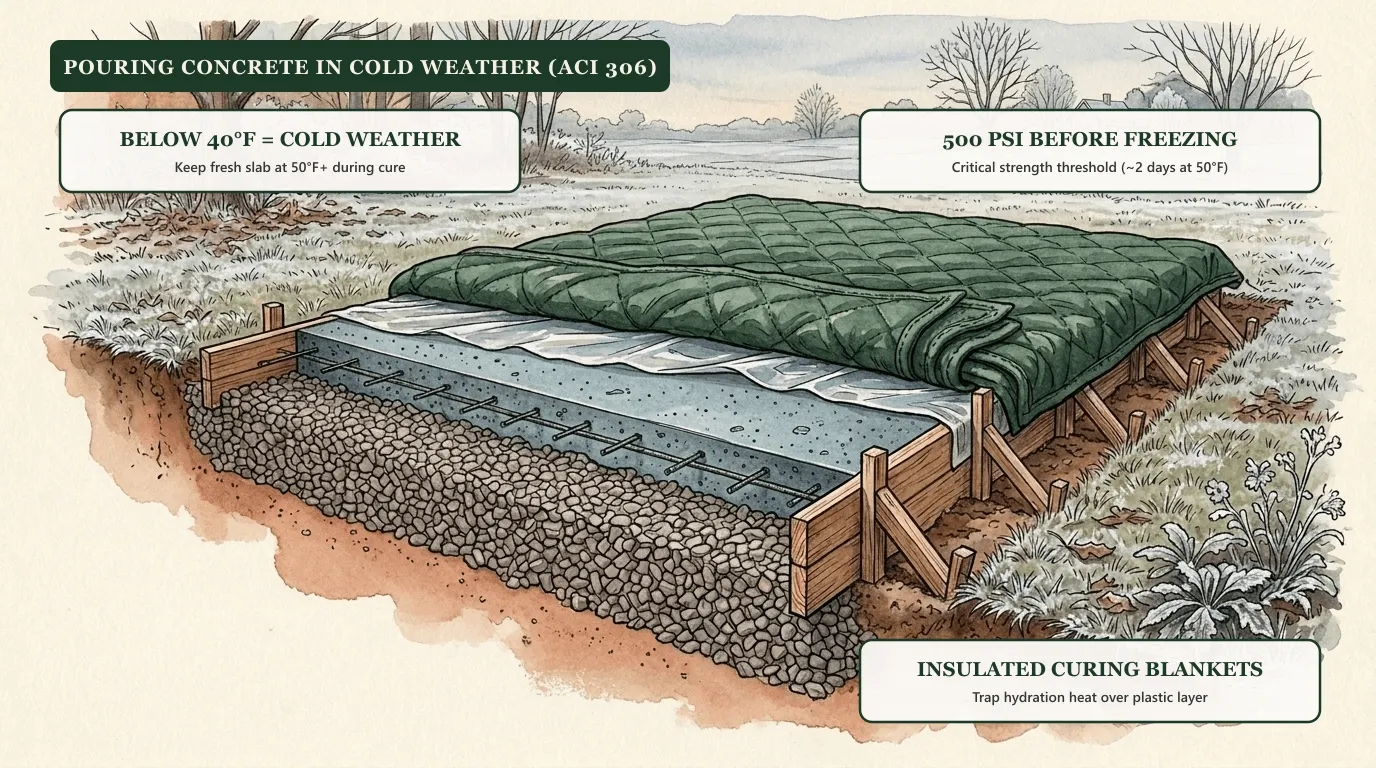
Concrete can be poured in cold weather, but below 40°F it needs protection. Fresh concrete must not freeze until it reaches about 500 psi, which typically takes around 2 days if you keep it at 50°F or warmer. Never pour on frozen ground, and cover the slab with insulated blankets for the first few days.
These thresholds come from the American Concrete Institute's cold-weather guide, ACI 306. Here's how they apply to a backyard slab, footing or post hole.
How cold is too cold to pour concrete?
ACI 306 defines cold weather as any time the air temperature has fallen, or is expected to fall, to 40°F or below during the protection period. That's not a ban on pouring. It's the point where you need a plan to keep the concrete warm.
| Forecast (first 3 days) | What to do |
|---|---|
| Lows above 50°F | Normal pour; keep the surface moist while it cures |
| Lows 40–50°F | Pour early in the day; cover overnight with plastic or blankets |
| Lows 25–40°F | Insulated blankets for 2–3 days minimum; warm water in the mix if you can |
| Lows below 25°F | Postpone small DIY pours, or use heated enclosures and a ready-mix supplier's cold-weather mix |
| Ground frozen or snow in the forms | Don't pour until it's thawed and cleared |
Concrete cures by a chemical reaction (hydration), not by drying, and that reaction slows sharply in the cold. Below about 40°F, a slab can take days to set, and below freezing the water in it can turn to ice.
Why does fresh concrete need to reach 500 psi before freezing?
Fresh concrete is full of water. If that water freezes before the mix has gained strength, it expands and breaks the young cement paste. ACI 306 sets 500 psi as the strength at which concrete can survive a single freeze. Concrete that freezes earlier can lose much of its final strength and develop a weak, scaling surface.
At 50°F, typical concrete reaches 500 psi in about 2 days. Colder concrete takes longer, which is why the protection period matters as much as the temperature on pour day.
ACI 306 also recommends keeping thin sections (under 12 in thick—basically every patio slab, walkway and footing pad) at 55°F or above as placed and during protection.
How do you protect concrete in cold weather?
- Thaw and clear the base. Remove snow and ice from the forms. If the gravel or soil is frozen, cover it with insulated blankets for a day or two before the pour.
- Order or mix warm. Ready-mix plants can supply heated concrete and accelerators for cold weather. Ask for a non-chloride accelerator if the slab has rebar or wire mesh. For bagged mix, use warm (not hot) water and keep the bags indoors beforehand.
- Pour early so the concrete sets during the warmest hours.
- Cover right after finishing. Lay plastic sheeting, then insulated concrete blankets, overlapping the edges and corners where heat escapes first. Use straw bales or rigid foam over plastic if you don't have blankets.
- Keep covers on for 2–3 days minimum, longer in a hard freeze, then remove them gradually.
- Don't use unvented propane or kerosene heaters under an enclosure. ACI 306 warns that exhaust (carbon dioxide) reacts with the fresh surface and leaves it soft and dusty. Vent heaters outside the enclosure.
There's no antifreeze for concrete
Accelerators speed up curing so concrete gains strength before it can freeze. They don't stop it from freezing. Calcium chloride accelerators can corrode rebar and wire mesh, so use non-chloride products in reinforced work.
Can you pour fence posts and footings in winter?
Yes, with the same rules. Small pours actually lose heat faster than big slabs, so:
- Dig below the frozen layer and don't set concrete on frozen soil at the bottom of the hole.
- Cover the tops of fresh footings or post holes with insulated blankets or a few inches of straw.
- Let them cure before loading. Wait longer than in summer before framing a deck or hanging a gate.
The Concrete Footing Calculator gives bags per hole and total bags. The Concrete Slab Calculator covers patios and pads.
What should you do the first winter after pouring?
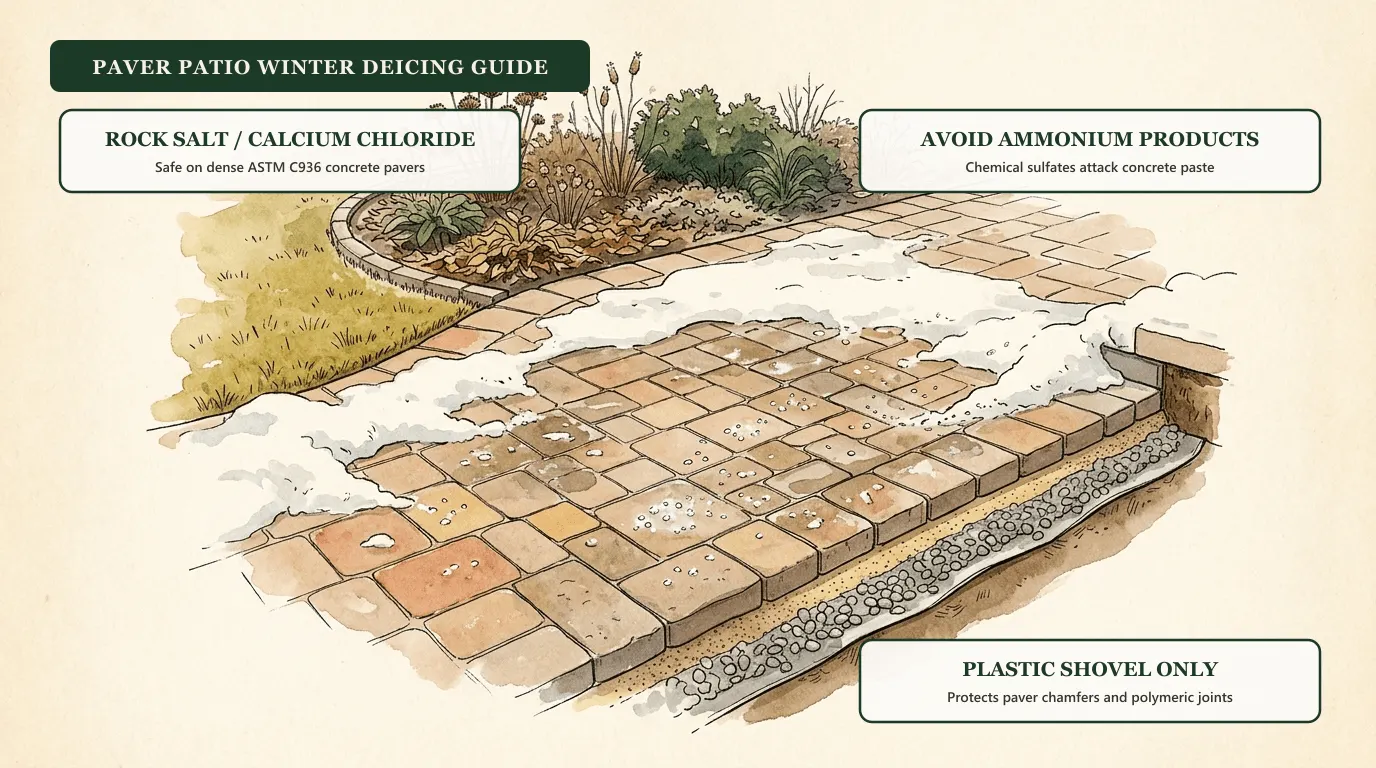
- Don't use deicing salts. PCA advises against deicers on concrete in its first winter. Use sand for traction instead. Once it's cured, salt on pavers and patios explains which deicers are gentler.
- Seal it, if you plan to, only once it's cured and the surface is dry and above the sealer's minimum temperature. Usually that means waiting until spring.
- Keep downspouts and meltwater off the slab so water doesn't pool and refreeze on it.
Planning the pour? How many bags of concrete for a 10x10 slab works through the numbers for a common patio size. If you are building outdoor vertical structures such as a freestanding cedar privacy screen or a retaining wall on a slope, pouring below the frost line with proper insulation blankets is essential.
Protecting winter garden beds from freezing? See our guides on how to build a cold frame and how to build a low tunnel hoop greenhouse.
Sources: American Concrete Institute, ACI 306R, Guide to Cold Weather Concreting; Portland Cement Association (PCA), "Cold Weather Concreting" and guidance on deicer use on new concrete.
FAQ
What is the lowest temperature you can pour concrete?
There isn't a single cutoff, but ACI 306 treats any period when the air drops to 40°F or below as cold weather that needs protection. Below that, you can still pour if the ground isn't frozen and you can keep the concrete warm (about 50–55°F) and unfrozen for the first couple of days.
What happens if concrete freezes before it cures?
If concrete freezes before it reaches about 500 psi, ice crystals expand in the still-wet mix and can permanently cut its strength and leave a scaling, crumbly surface. After it reaches 500 psi—typically about 2 days when kept at 50°F—a single freeze generally won't harm it.
Can I pour concrete on frozen ground?
No. Frozen ground settles as it thaws, leaving the slab unsupported, and it chills the bottom of the concrete. Thaw the subgrade with insulated blankets or ground heaters, and remove all snow and ice from the forms first.
How long should I cover concrete in cold weather?
Keep insulated blankets on for at least the first 2–3 days, and longer if nights stay below freezing. Remove them gradually so the surface doesn't cool too fast and crack.
Can I use salt on new concrete?
Not in its first winter. The Portland Cement Association advises against using deicers on concrete during the first year; use sand for traction instead.