Can You Use Salt on Pavers? Safe Deicers for Patios

By Efraín Vega · Published November 7, 2026
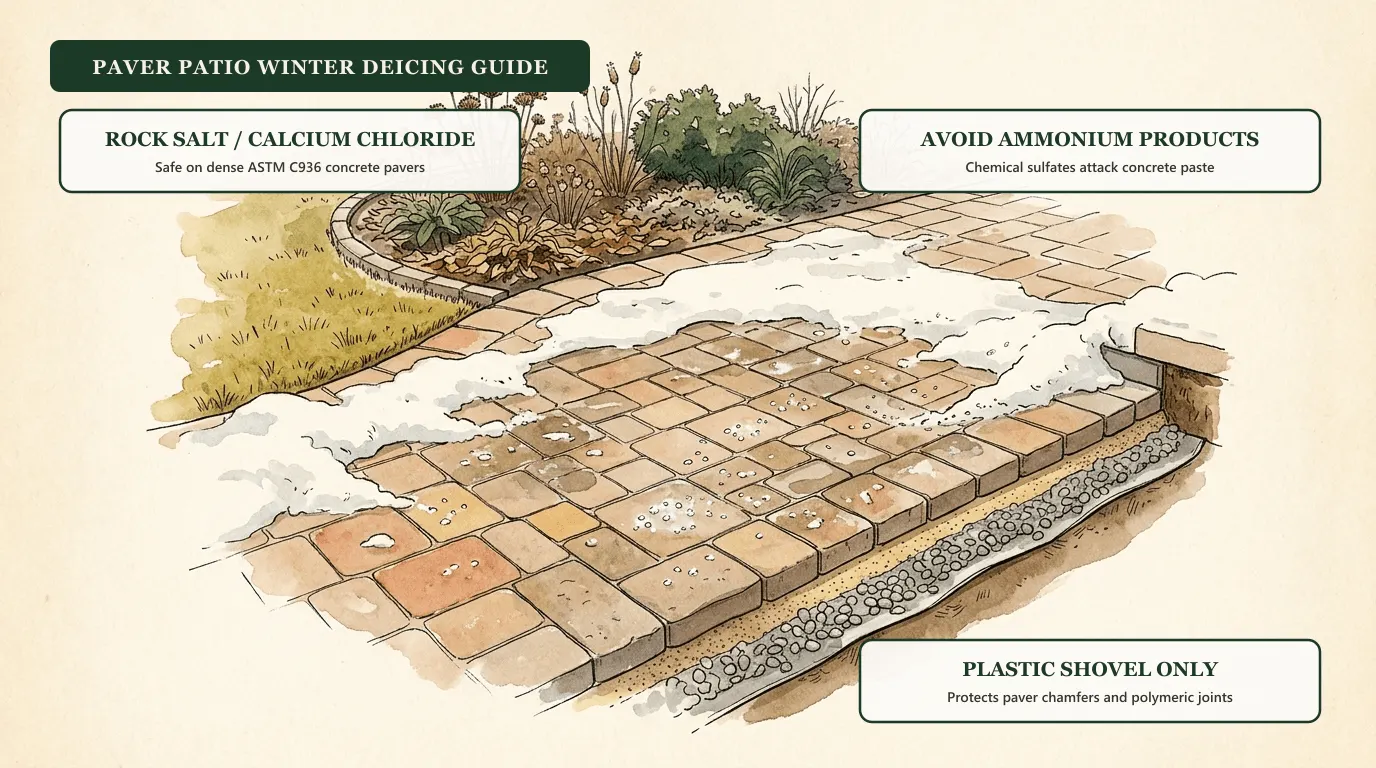
Yes, you can use salt on pavers. Rock salt (sodium chloride) and calcium chloride won't damage concrete pavers made to ASTM C936, the standard most interlocking pavers are made to: it requires dense units that pass freeze–thaw testing in salt water. Avoid ammonium-based deicers, which attack concrete. Use a plastic shovel, and use as little salt as you can near lawns and planting beds.
Will salt damage pavers?
It depends on what the pavers are made of:
| Paver type | Rock salt / calcium chloride | Notes |
|---|---|---|
| Concrete pavers (ASTM C936) | OK | Dense, low absorption, tested for freeze–thaw with deicing salt. |
| Concrete slabs or "patio stones" (not C936) | Use with care | Cheaper cast stones can be more porous. Check the label. |
| Clay brick pavers | Usually OK if rated for exterior paving | Look for ASTM C902 Class SX (severe weathering) pavers. Older soft brick can flake. |
| Natural stone (limestone, sandstone, bluestone) | Use with care | Salt crystallizing in porous stone can cause flaking. Ask the stone supplier. |
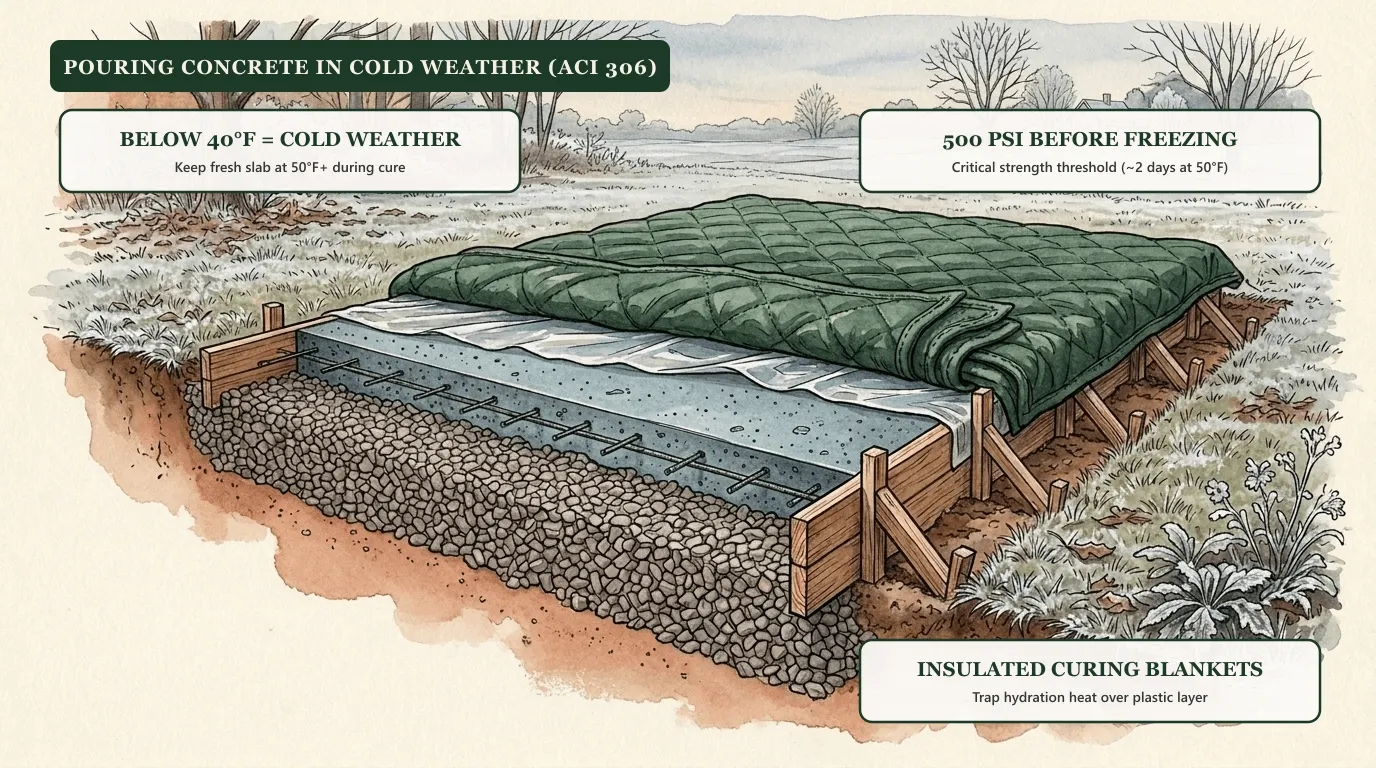
| Freshly poured concrete (not pavers) | Avoid the first winter | New concrete is more vulnerable until it has cured and dried; PCA advises no deicers in its first winter. |
C936 pavers are dense (average absorption of 5% or less, average compressive strength of at least 8,000 psi), which is why salt doesn't get far into them. Most concrete pavers sold for patios and driveways in the US are made to this spec. Check the pallet tag, the manufacturer's site, or the product page.
Which deicers are safe for pavers?
Deicers differ mainly in how cold it can be before they stop working, and what they do to concrete, plants and pets:
| Deicer | Works down to about | Safe on C936 concrete pavers? | Watch out for |
|---|---|---|---|
| Rock salt (sodium chloride) | 15–20°F | Yes | Hardest on lawns and plants; white residue |
| Calcium chloride | Well below 0°F | Yes | Pellets can burn skin and paws; use gloves |
| Magnesium chloride | Around 0°F | Check maker's guide | Some paver makers advise against it |
| Potassium chloride | Around 25°F | Generally yes | Weak in hard cold; mainly a fertilizer salt |
| Calcium magnesium acetate (CMA) | Around 20°F | Yes | Gentler on plants and concrete; costs more |
| Ammonium nitrate / ammonium sulfate | — | No | Chemically attacks concrete |
| Sand or grit | (No melting) | Yes | Traction only; sweep up in spring |
Working temperatures are approximate and vary by product. Below about 15°F, rock salt barely melts ice, so switch to calcium chloride or add sand for traction.
How do you remove snow from pavers without damage?
- Shovel first, salt second. Salt is for the thin layer you can't shovel. The less snow on top, the less salt you need.
- Use a plastic shovel or one with a poly or rubber edge. A steel edge chips paver corners and scrapes off the surface.
- Raise the snowblower skids slightly, so the scraper bar rides just above the pavers.
- Spread thinly. A scattering of pellets a few inches apart works. Piles of salt don't melt faster and leave residue.
- Push the meltwater off the patio before it refreezes, especially at low spots.
White haze in spring?
A white film after winter is usually salt residue or efflorescence, not damage. Rinse and scrub the pavers once temperatures stay above freezing. If it comes back, use a cleaner made for efflorescence on concrete pavers.
What should you check in spring?
- Joint sand: freeze–thaw and shoveling wear sand down. Top up any joints that have dropped below the chamfer. How to apply polymeric sand covers it step by step.
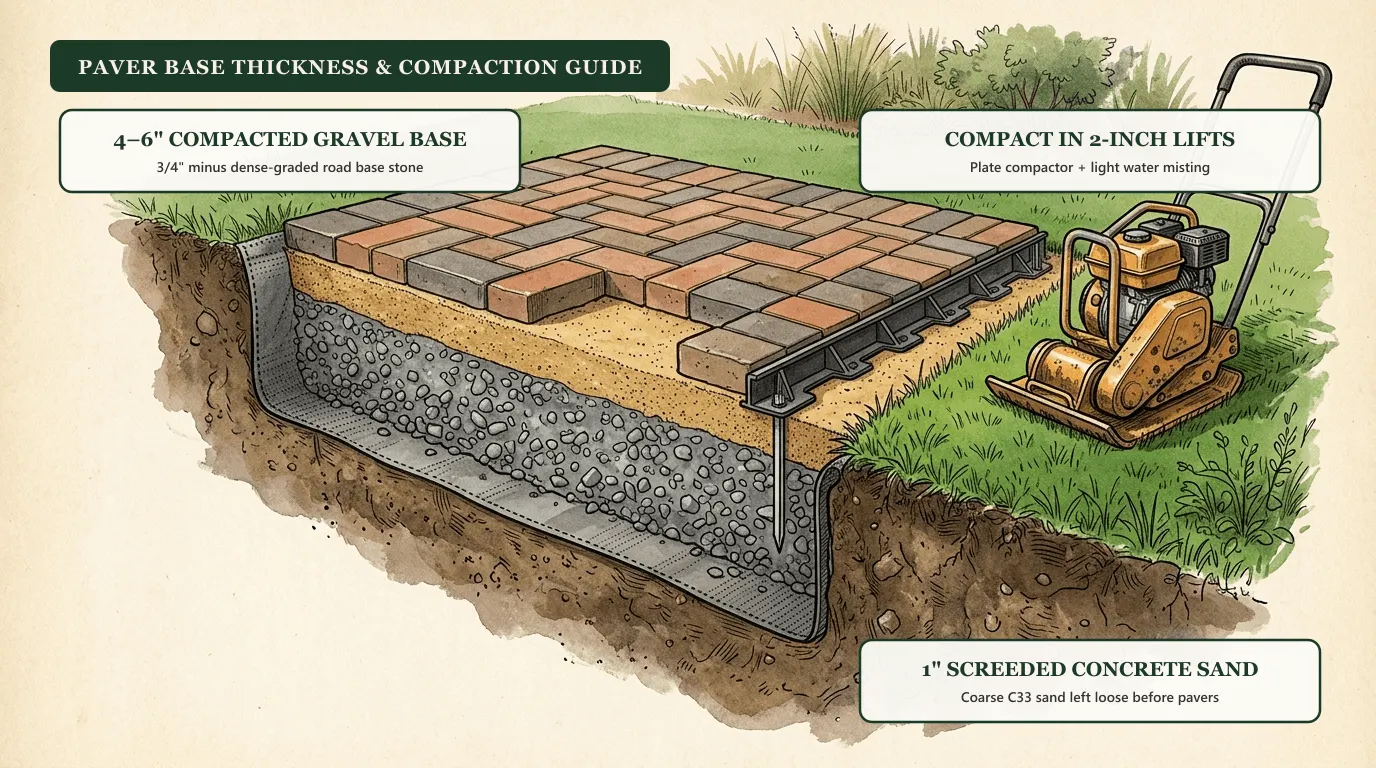
- Low spots and heaved pavers: frost heave usually means water is sitting in the base. Lift those pavers, fix the base, and reset them. What to put under pavers explains the base layers.
- Edges of the lawn and beds: heavy salt use shows up as brown strips. Flush the soil with water and seed or replant.
Building a new patio? The Paver Path Calculator works out pavers, base gravel and bedding sand for any size.
Sources: ASTM C936, Standard Specification for Solid Concrete Interlocking Paving Units; ASTM C902, Standard Specification for Pedestrian and Light Traffic Paving Brick; Concrete Masonry & Hardscapes Association (CMHA) guidance on paver maintenance and deicing; Portland Cement Association (PCA) guidance on deicers and new concrete.
FAQ
Will rock salt damage concrete pavers?
Not if they're made to ASTM C936. That standard requires dense pavers (5% average absorption or less) that pass freeze–thaw testing in salt water, which is why paver makers allow rock salt. Most big-box concrete pavers carry the spec; check the pallet tag or the maker's site.
What ice melt is safe for pavers?
Rock salt (sodium chloride) and calcium chloride are the deicers concrete paver makers generally allow. Avoid products containing ammonium nitrate or ammonium sulfate, which attack concrete. Some makers also advise against magnesium chloride, so read your paver's care guide.
Is salt safe on natural stone or brick pavers?
Be more careful. Soft or porous stones like some limestones, sandstones and bluestone can flake when salt crystallizes in their pores, and older or softer clay brick can too. Use sand for traction or a deicer the stone supplier approves.
Can salt damage polymeric sand?
Salt itself isn't the main problem, but repeated melting, refreezing and shoveling can wear joint sand down. Check the joints in spring and top up any that have dropped below the paver chamfer.
Will salt on pavers kill my grass and plants?
It can. Sodium chloride runoff builds up in the soil along walk edges and burns lawn and shrubs. Shovel first, use only as much as you need, and keep piles of salty snow off planting beds.