How to Apply Polymeric Sand Between Pavers

By Efraín Vega · Published October 11, 2026
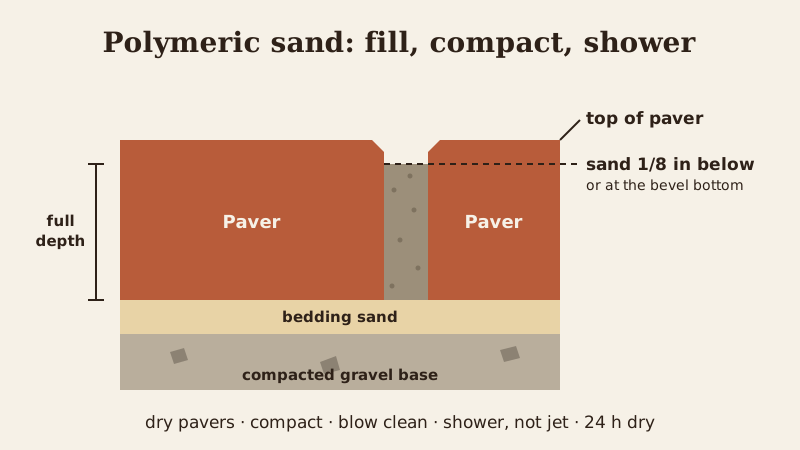
To apply polymeric sand, sweep it into dry paver joints, compact the pavers, top up the joints to 1/8 in below the paver surface, blow every grain off the faces, then shower the area with water in small sections. Keep it dry for about 24 hours. Most failures, like haze, crumbling joints or sand that never hardens, come from skipping one of those steps.
Products differ in joint widths, wetting method and rain windows, so read your bag first. The steps below follow the published instructions from Alliance Gator and Techniseal, two of the most common brands in US stores.
What is polymeric sand?
Polymeric sand is fine sand mixed with a binder that activates with water. Once it cures, the joint firms up instead of washing out. That helps resist erosion, weeds and ants better than plain joint sand. It's the last step after you lay the pavers and compact them into the bedding sand.
It isn't mortar. The joints stay slightly flexible, so the pavers can still move a little with frost without cracking. It's made for pavers set on sand over a gravel base, not for stones mortared onto concrete.
When should you apply it?
- Dry weather with no rain forecast for 24 hours. Some sands are rain-safe much sooner. Alliance Gator lists 15 minutes for its G2 products on a standard base. Treat 24 hours as the safe plan unless your bag says otherwise.
- Above freezing. Alliance Gator's polymeric sand needs temperatures above 32°F, and Techniseal says to stay above freezing for the whole drying period, at least 48 hours. Some products need more warmth; Gator Dust needs 59°F.
- Completely dry pavers and joints. Wait a day after rain or after hosing down the patio. Early morning dew counts as wet.
- Low humidity if possible. Alliance Gator ties haze to damp surfaces and humid air.
Step by step
- Check the joints. They need to be clean and the right depth. Techniseal's RG+ lists a 1½ in minimum depth. If you're replacing old sand, rake or blow it out at least 1½ in deep. Check your product's joint width range too. Techniseal's RG+, for example, is made for joints 1/16 in to 1 in wide. Wider joints in natural stone need a wide-joint product.
- Pour and sweep. Dump the sand in small piles and sweep it across the surface with a push broom until the joints are full.
- Compact. Run a plate compactor over the pavers (with a pad if you have one) to settle the sand. Alliance Gator warns that 30–50% of the sand is missing from joints that aren't compacted. For thin slabs or natural stone that a compactor could crack, tap with a rubber mallet or a 2×4 instead.
- Top up and repeat. Sweep in more sand and compact again until the joints stay full to 1/8 in below the top of the paver, or to the bottom of the bevel (chamfer) on beveled pavers.
- Clean the surface. Sweep with a fine-bristle broom, then use a leaf blower at a low angle until no dust rises from the faces. Any sand left on top will harden into haze.
- Wet it in sections. Use a hose nozzle on the shower setting, never a jet that blasts sand out. Alliance Gator says to shower about 50 sq ft for 90 seconds, or until water ponds in the joints. Techniseal's RG+ method works in 200 sq ft sections: about 30 seconds of shower, a short pause, then 30 seconds more, starting at the low end of the slope. Poke a joint with a small screwdriver to confirm it's wet 1½ in deep, then move straight to the next section.
- Clear standing water on textured pavers. Techniseal suggests blowing excess water off textured pavers right after wetting a section, which removes leftover sand and polymer before it can dry into haze.
- Keep it dry and off-limits. Let it cure for the time on your bag. Alliance Gator allows foot and vehicle traffic after 24 hours if it stays dry; Techniseal says 24 to 48 hours before driving on RG+.
Wear a dust mask
Pouring and sweeping polymeric sand raises fine dust. Wear a dust mask and eye protection while you spread it and blow off the surface.
Common mistakes and what causes them
| Problem | Usual cause | Fix next time |
|---|---|---|
| White or gray haze on pavers | Sand left on the surface, or pavers were damp | Blow the faces until no dust rises; only install on dry pavers |
| Joints soft or crumbling | Not enough water, or water didn't soak the full depth | Shower each section until water ponds in the joints |
| Joints low or cracked | Sand not compacted, so it settled | Compact and top up before wetting |
| Sand washed out of joints | Hose on jet setting, or rain before it set | Shower setting only; check the rain window |
| Sand never hardened | Joints too shallow, or applied in the cold | Clean joints 1½ in deep; respect the temperature minimum |
How much polymeric sand do you need?
It depends on the joint width and the paver size. Techniseal rates one 50 lb (22.7 kg) bag of RG+ at:
| Joints | Coverage per 50 lb bag | Bags for a 10 × 12 ft patio (120 sq ft) |
|---|---|---|
| Narrow | 60–120 sq ft | 1–2 |
| Wide | 25–40 sq ft | 3–5 |
Small pavers with wide joints sit at the low end of the range; large slabs with tight joints at the high end. Other brands print a similar chart on the bag. Buy one extra bag. Running short mid-job and wetting only half the patio leaves you with an uneven finish.
Planning the whole patio? The Paver Path Calculator works out pavers, base gravel and bedding sand for your size, and how deep to dig for pavers covers the base below it.
Sources: Gator Jointing Material FAQ — Alliance Gator, RG+ Polymeric Sand technical data sheet — Techniseal.
FAQ
Can you put polymeric sand down on wet pavers?
No. The pavers and the joints must be completely dry. Moisture activates the binder early, so sand sticks to the paver faces and leaves a haze, and the joints harden before they're full.
How long does polymeric sand need to stay dry?
Plan on 24 hours without rain. Some products tolerate a surprise shower sooner: Alliance Gator lists 15 minutes for its G2 sands on a standard base, and Techniseal says RG+ resists rain 90 minutes after installation. Both still build the job around a dry forecast, so check your bag.
How deep does polymeric sand need to be?
Full joint depth, filled to 1/8 in below the top of the paver or the bottom of its bevel. Techniseal's RG+ lists a 1½ in minimum joint depth. When you redo old joints, Alliance Gator says to clean them out at least 1½ in deep.
When can you walk on polymeric sand?
Alliance Gator says its polymeric sand can take foot and vehicle traffic after 24 hours as long as it stays dry. Check your product's label, since cure times vary with temperature and joint width.